

Testing the Vessel How to Test a Pressure Vessel Step by Step

Why Testing the Vessel Matters
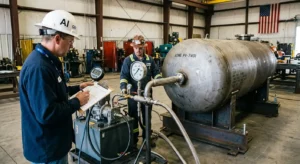
Testing the vessel is essential to ensure safety, integrity, and compliance in industrial operations. Pressure vessels contain materials under high pressure and stress, and failures can lead to catastrophic damage and regulatory penalties. This guide will explain testing the vessel step by step, covering methods, standards, and best practices you need to know to ensure your equipment is reliable and meets legal requirements.
Key Regulations and Standards
To properly test a pressure vessel, you must follow recognized standards such as the ASME Boiler and Pressure Vessel Code, API 510, and relevant ISO standards. These define test pressures, acceptable deformation, wall thickness criteria, material specifications, and recordkeeping. For example, in the U.S. ASME Section VIII sets the rules for design, fabrication, testing, and certification of pressure vessels.
For more detailed background on regulations, see our article on ASME Pressure Vessel Standards: Ensuring Safety Quality.
Methods of Testing the Vessel
Visual Inspection
Start by visually inspecting the exterior and accessible interior surfaces of the vessel. Look for dents, corrosion, welding defects, leaks, or distortion. Check all valves, fittings, flange joints, bolt connections. This simple method catches many early warning signs.
Hydrostatic Testing
Hydrostatic testing fills the vessel with a liquid (typically water), pressurizes it beyond its maximum operating pressure, then checks for leaks or permanent deformation. Since water is incompressible, it’s safer if a failure occurs. The allowed pressure, duration, and leak thresholds are specified by codes such as ASME.
Scientific research supports hydrostatic testing as an effective benchmark for structural integrity, especially when combined with other methods.
Pneumatic Testing
Pneumatic testing uses compressed air or inert gas instead of liquid. Because gases are compressible, there’s more stored energy and potentially greater hazard in case of failure. Testing pressures are usually lower; safety protocols must include slow pressure ramp-up, venting, and protective barriers.
Non‑Destructive Testing (NDT) Techniques
To detect hidden or internal defects without damaging the vessel, use NDT. Key techniques include:
Ultrasonic Testing (UT) for measuring wall thickness and detecting internal defects
Radiographic Testing (RT) using X‑rays or gamma rays to examine welds and internal structure
Magnetic Particle Testing (MT) for surface and near‑surface cracks on ferromagnetic materials
Liquid Penetrant Testing (PT) reveals surface cracks via dye or fluorescent liquid
There are also additional advanced NDT methods emerging in recent literature, such as those used for composite vessels and new approaches to structural integrity assessments.
Supporting Evaluations & Safety Measures
Pressure Relief Valve Testing
Ensure safety devices like pressure relief valves function correctly. Test opening/closing pressures, response time, and leakage under load.
Stress and Finite Element Analysis (FEA)
For complex vessels or those under varying loads, perform stress analysis or simulations (FEA) to predict behavior, identify weak zones, optimize design.
Corrosion & Material Inspection
Check both internal and external surfaces for corrosion, erosion, or chemical attack. Use ultrasonic thickness measurement or corrosion probes. Material degradation can be gradual and hidden.
Documentation, Compliance, and Lifecycle Maintenance
Proper documentation of all tests, results, repairs, and modifications is critical. Keep histories for regulatory inspections, audits, and future maintenance.
Testing the vessel is not a one-time action — schedule periodic testing and maintenance based on usage, environment, and regulatory mandates. Keep staff trained and certified. Stay updated with evolving standards.
Internal Links to Expand Understanding
While focusing on testing the vessel, gain more context from these related RedRiver resources:
Read about Understanding the ISO Standard for Pressure Vessels for global standard compliance.
Explore Calculating the Thickness of a Pressure Vessel: A Comprehensive Guide to see how wall thickness affects safety and test thresholds.
See our topic on Sizing a Pressure Vessel: A Comprehensive Guide for how dimensions, pressure, and material tie into testing procedures.
Ensuring Your Vessel Passes with Confidence
Testing the vessel properly is about combining the right methods, adhering to standards, performing safety evaluations, and documenting everything. Whether you use hydrostatic, pneumatic, or NDT techniques, the goal is the same: to confirm the vessel operates safely under its intended conditions, without leaks, defects, or unexpected failures.
Partner with Experts Who Know Testing the Vessel
At Red River, we specialize in designing and fabricating pressure vessels built to meet or exceed global safety and quality standards. Contact us today to discuss testing the vessel in your facility, ensure compliance, and protect your operations.
Frequently Asked Questions
What does “testing the vessel” involve?
Testing the vessel involves a sequence of inspections and procedures—visual review, hydrostatic or pneumatic pressurization, non‑destructive tests, safety device checks—to confirm structural integrity and safe operation.
How often should a pressure vessel be tested?
Frequency depends on many factors: vessel age, usage, operating pressure, environmental exposure, industry regulations. In many industries annual inspections and tests are typical; more frequent if the vessel sees harsh conditions.
Which method is safest for testing the vessel?
Hydrostatic testing is generally considered safer because liquid’s incompressibility reduces risk. However each case may demand pneumatic or other tests depending on vessel design and operating environment.
What standards govern testing the vessel?
Key standards include ASME Boiler and Pressure Vessel Code, API 510, ISO standards (where applicable), and local regulations. These define test pressures, material specs, inspection intervals, and documentation requirements.
Can non‑destructive testing replace hydrostatic testing?
Not entirely. NDT methods are excellent for detecting internal flaws, cracks, or corrosion without harming the vessel, but hydrostatic testing is needed to confirm overall pressure integrity and leak‑proof performance under load.
What are common mistakes people make when testing the vessel?
Skipping proper safety protocols during pneumatic testing
Not following standards’ required pressures or durations
Poor documentation or missing repair records
Not inspecting valves, fittings, or welds carefully
Allowing corrosion or material degradation to go unchecked
What should I do if the vessel fails a test?
Stop using it, document the failure, evaluate the specific defect (e.g. crack, deformation), repair or replace, re-test after repair, ensure all safety devices are re‑certified before returning to service.
Key Takeaways
Testing the vessel means multiple methods—visual, hydrostatic, pneumatic, and non‑destructive—to verify safety and compliance
Standards like ASME, API, ISO guide what tests, pressures, and documentation are required
Regular maintenance, material inspection, and staff training are essential for ongoing safety
Proper documentation and recordkeeping support audits and long‑term reliability
Use of advanced testing (FEA, NDT) complements traditional methods for thorough evaluation
Related Blog Post
- What is a pressure vessel API?
- How do you test a pressure vessel?
- How do you size a pressure vessel?
- What pressure should a pressure vessel be?
- What is the ISO standard for pressure vessels?
- How is thickness of a pressure vessel calculated?
- Which software is used for pressure vessel design?
- What is the minimum thickness for a pressure vessel?
- What is the difference between a vessel and a pressure vessel?
- What is the difference between vertical and horizontal pressure vessels?
- What is the difference between open end and closed end pressure vessels?
- What is the difference between a pressure vessel and a high pressure vessel?
- Are pipes considered pressure vessels?
- Do I need a pressure vessel?
- What is the ASME definition of a pressure vessel?
- What are the dangers of high pressure vessels?
Solutions
In the realm of industrial solutions, Red River emerges as a pioneer, offering a diverse range of custom-engineered products and facilities. Among our specialties is the design and production of Custom/OEM Pressure Vessels, meticulously crafted to meet individual client requirements, ensuring performance under various pressure conditions. Our expertise extends to the domain of prefabrication, where Red River leads with distinction.
The company excels in creating prefabricated facilities, modules, and packages, reinforcing its stance as a forerunner in innovation and quality. This proficiency is further mirrored in their Modular Skids offering, where they provide an array of Modular Fabricated Skid Packages and Packaged equipment. Each piece is tailored to client specifications, underlining their commitment to delivering precision and excellence in every project they undertake.


Related Blog Post
Condensate Tanks: Types, Fabrication, and ASME Code
Which Tests Validate Deaeration in Pressure Systems?
Equalization Tanks: Design, Sizing, and Fabrication
What Are Thermal Storage Testing Standards for TES Vessels?
What Hydro Tests Are Required for Pressure Vessels?
No subpillar set for this blog post.
About Author
