
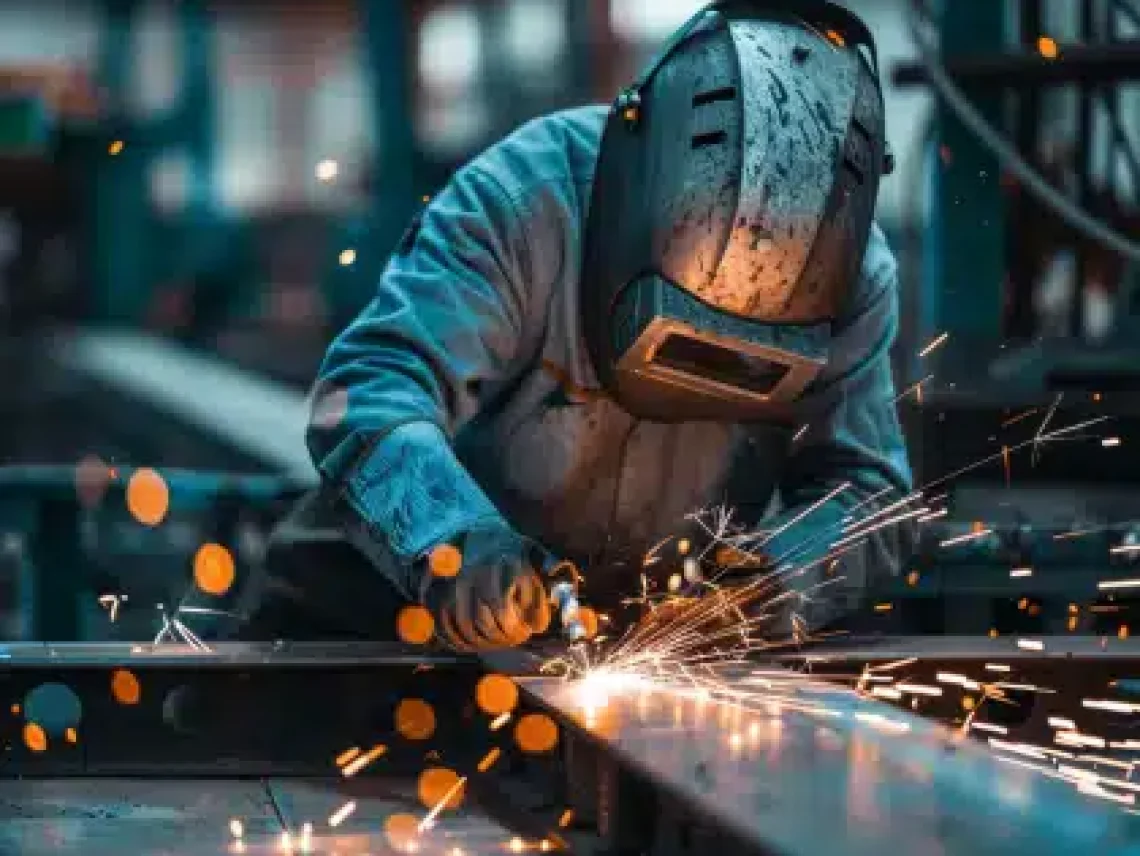
Welding certifications vary broadly; in fact, each one is specifically designed to assess a welder’s ability and understanding of various techniques and environments. From primary to advanced levels, these certifications not only ensure that welders are well-prepared, but they also verify their capability to meet the highest standards of fine and protective welding. Among these certifications, the AWS certified welder test stands out as both an entry point and a significant challenge for welders seeking professional recognition. The AWS certified welder test demands not only technical proficiency but also the ability to perform consistently under examination conditions.
Achieving a prestigious welding certification no longer just enhances a welder’s skill set; rather, it also creates valuable opportunities for career growth. Moreover, it opens doors to advanced professional possibilities, particularly in specialized fields like pressure vessel manufacturing, where precision and reliability are absolutely essential.
Several organizations play a crucial role in setting the industry benchmark for welding excellence. For instance, the American Welding Society (AWS), the Canadian Welding Bureau (CWB), and the European Welding Federation (EWF) all work collectively to establish international certification standards. As a result, these certifications are widely recognized and highly regarded across the industry.
The difficulty of a welding certification can be measured based on various factors. Specifically, it depends on the technical requirements, the level of skill needed, and the rigorous testing procedures involved. Additionally, certifications that demand mastery of complex welding techniques and materials are often considered the most challenging to obtain. GTAW welding certification exemplifies these challenges, requiring mastery of precise torch manipulation, independent filler metal control, and the ability to produce defect-free welds on various materials including stainless steel and aluminum commonly used in pressure vessel construction.
Obtaining a welding certification, especially in pressure vessel manufacturing, presents several challenges. First, the required technical skills are advanced, demanding a deep understanding of complex welding techniques and the ability to apply them precisely. Second, the certification process includes rigorous testing, featuring both written assessments and hands-on demonstrations of skill. Lastly, pressure vessel welding certifications require a thorough knowledge of specific codes and standards, including those set by the American Society of Mechanical Engineers (ASME), which ensure the safety and quality of pressure vessels. Meeting these high standards requires significant investments of time, effort, and continuous learning.
The AWS certified welder test is a hands-on practical examination that evaluates a welder’s ability to produce quality welds in specific positions and processes. Unlike written exams, the AWS certified welder test focuses entirely on demonstrating welding skills through actual welding performance. The test typically involves welding test plates or pipes that are then subjected to visual inspection and often destructive testing such as bend tests. The challenge lies not just in producing a good-looking weld, but in creating welds that meet strict mechanical and visual acceptance criteria throughout the entire test piece. For pressure vessel applications, passing the AWS certified welder test often serves as a prerequisite before attempting more specialized certifications.
The AWS Certified Welding Inspector (CWI) certification ranks among the most challenging due to its broad scope. This exam evaluates not only a candidate’s welding knowledge but also their expertise in inspection techniques, codes, and documentation. The CWI certification requires both theoretical knowledge and practical skills, making it a rigorous test even for experienced welding professionals. Additionally, maintaining this certification demands ongoing education and periodic re-certification, ensuring that CWIs stay up to date with industry standards and practices.
Underwater and aerospace welding certifications cater to highly specialized fields with unique demands. Underwater welding certifications, for example, require expertise in both welding and commercial diving, covering safety protocols and techniques for working in submerged environments. Aerospace welding certifications, on the other hand, focus on precision welding for aircraft and spacecraft components, often involving unfamiliar materials and stringent quality standards.
Welding certifications are essential for maintaining the safety and quality of pressure vessels. They verify that welders possess the necessary skills and expertise to perform their work at the highest standards. Certifications follow industry requirements, including those set by ASME, ensuring that welders understand the specific demands of pressure vessel fabrication, such as material selection, welding techniques, and inspection processes.
While a basic welding certification demonstrates foundational skills, specialized certifications are typically required for working on pressure vessels. The critical nature of pressure vessels and the risks associated with their failure necessitate additional qualifications. Certifications focused on the ASME Boiler and Pressure Vessel Code ensure that welders have the specialized knowledge and capabilities needed to perform welding tasks accurately and safely.
In the realm of industrial solutions, Red River emerges as a pioneer, offering a diverse range of custom-engineered products and facilities. Among our specialties is the design and production of Custom/OEM Pressure Vessels, meticulously crafted to meet individual client requirements, ensuring performance under various pressure conditions. Our expertise extends to the domain of prefabrication, where Red River leads with distinction.
The company excels in creating prefabricated facilities, modules, and packages, reinforcing its stance as a forerunner in innovation and quality. This proficiency is further mirrored in their Modular Skids offering, where they provide an array of Modular Fabricated Skid Packages and Packaged equipment. Each piece is tailored to client specifications, underlining their commitment to delivering precision and excellence in every project they undertake.


