
Unveiling the Toughest Welding Certification Challenges

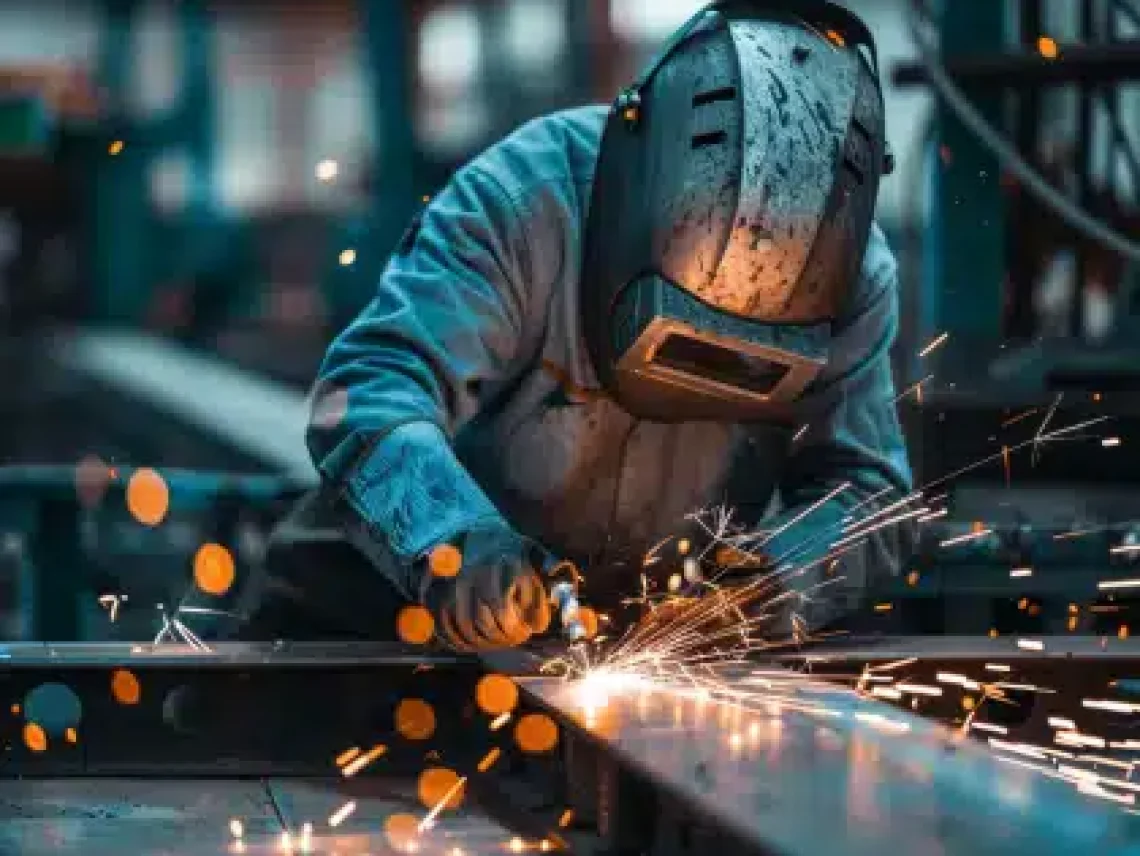
A welder working on a metal beam, sparks flying as they use a welding torch in a workshop environment.
[ez-toc]

Introduction to the Hardest Welding Certification Challenges

Welding certifications vary broadly; in fact, each one is specifically designed to assess a welder’s ability and understanding of various techniques and environments. From primary to advanced levels, these certifications not only ensure that welders are well-prepared, but they also verify their capability to meet the highest standards of fine and protective welding. Among these certifications, the AWS certified welder test stands out as both an entry point and a significant challenge for welders seeking professional recognition. The AWS certified welder test demands not only technical proficiency but also the ability to perform consistently under examination conditions.

Hardest Welding Certification Challenges: The Role of Welding Certifications in Career Advancement

Achieving a prestigious welding certification no longer just enhances a welder’s skill set; rather, it also creates valuable opportunities for career growth. Moreover, it opens doors to advanced professional possibilities, particularly in specialized fields like pressure vessel manufacturing, where precision and reliability are absolutely essential.

Hardest Welding Certification Challenges: Key Organizations Offering Welding Certifications

Several organizations play a crucial role in setting the industry benchmark for welding excellence. For instance, the American Welding Society (AWS), the Canadian Welding Bureau (CWB), and the European Welding Federation (EWF) all work collectively to establish international certification standards. As a result, these certifications are widely recognized and highly regarded across the industry.

Hardest Welding Certification Challenges: AWS Certified Welder Test Requirements

While the AWS Certified Welding Inspector represents the pinnacle of welding expertise, the AWS certified welder test serves as the foundation for professional welding careers. The AWS certified welder test evaluates practical welding skills across various positions and processes, including SMAW, GMAW, FCAW, and GTAW welding certification requirements. Among these, GTAW welding certification stands out as particularly challenging due to its precision requirements and the manual dexterity needed for tungsten inert gas welding. GTAW welding certification demands exceptional skill in controlling heat input, filler metal addition, and maintaining proper arc length, making it one of the most technically demanding certifications for pressure vessel applications.
Successfully passing an AWS certified welder test requires demonstrating proficiency in specific welding positions such as 1G, 2G, 3G, and 4G, with each position presenting unique challenges that test a welder’s technical abilities and consistency. For GTAW welding certification specifically, these positions become exponentially more difficult as welders must maintain precise torch angles and steady hands while independently controlling multiple variables.
The difficulty of the AWS certified welder test lies not only in the technical execution but also in the strict acceptance criteria. Test pieces undergo rigorous visual inspection and often destructive testing such as bend tests to verify weld quality. This comprehensive evaluation process makes the AWS certified welder test a true measure of welding competency, particularly for those working in critical applications like pressure vessel manufacturing where weld integrity is paramount.

The Quest for the Hardest Welding Certification Challenges

Criteria for Determining Difficulty Levels

The difficulty of a welding certification can be measured based on various factors. Specifically, it depends on the technical requirements, the level of skill needed, and the rigorous testing procedures involved. Additionally, certifications that demand mastery of complex welding techniques and materials are often considered the most challenging to obtain. GTAW welding certification exemplifies these challenges, requiring mastery of precise torch manipulation, independent filler metal control, and the ability to produce defect-free welds on various materials including stainless steel and aluminum commonly used in pressure vessel construction.

Hardest Welding Certification Challenges: Overview of Notoriously Challenging Certifications

Among the vast array of welding certifications, a few stand out due to their complexity and the prestige they offer to those who achieve them. The AWS certified welder test, while considered an entry-level certification, presents significant challenges with its practical testing requirements and strict acceptance criteria. More advanced certifications include the AWS Certified Welding Inspector (CWI) certification, as well as certifications in specialized fields like underwater and aerospace welding.
GTAW welding certification deserves special mention among these challenging certifications, as it requires a unique combination of technical knowledge and manual dexterity that many welders find difficult to master. Because of the extensive knowledge and expertise required, these certifications are among the most difficult to earn, with each building upon the foundational skills validated through examinations like the AWS certified welder test. For pressure vessel manufacturing specifically, GTAW welding certification often serves as a gateway to higher-paying specialized positions due to the precision and quality requirements of pressure vessel fabrication.

GTAW Welding Certification: The Precision Challenge

GTAW welding certification represents one of the most technically demanding certifications in the welding industry. Unlike other welding processes, GTAW welding certification requires welders to demonstrate exceptional hand-eye coordination and precise control over multiple variables simultaneously. The GTAW welding certification process tests a welder’s ability to maintain consistent arc length, control heat input with a foot pedal or finger control, and add filler metal independently – all while producing X-ray quality welds.
For pressure vessel manufacturing, GTAW welding certification is often mandatory due to the superior weld quality and precision this process provides. The certification testing for GTAW welding certification typically involves welding on stainless steel, aluminum, and exotic alloys commonly used in high-pressure applications, making it essential for welders specializing in critical pressure vessel components. The manual dexterity required for GTAW welding certification often takes years to develop, as welders must coordinate their dominant hand controlling the torch, their non-dominant hand feeding filler rod, and their foot controlling amperage – all while maintaining perfect arc length and travel speed.
What sets GTAW welding certification apart from other welding certifications is the unforgiving nature of the process. Any tremor in hand movement, inconsistent filler rod addition, or improper heat control immediately shows in the weld appearance and quality, making GTAW welding certification one of the most challenging tests of a welder’s fundamental skills.

Need a reliable partner?​

Red River specializes in the design and manufacturing of pressure vessels. We also fabricate related items such as prefabricated spools and skid packages.

Reach Out to us today and experience the Red River difference. Where American Made and American Values come together, we care more.

Frequently Asked Questions

What makes GTAW welding certification particularly challenging compared to other welding certifications?

GTAW welding certification is considered one of the most challenging due to the precise manual control required. Unlike other welding processes, GTAW welding certification testing requires welders to independently control the tungsten electrode, filler rod, and heat input while maintaining a steady hand and consistent travel speed. The GTAW welding certification process often involves welding thin materials and exotic alloys used in pressure vessel manufacturing, where any defects can compromise vessel integrity.
Additionally, GTAW welding certification typically requires achieving X-ray quality welds with minimal post-weld cleanup, demanding a level of precision that takes years to master. For pressure vessel applications, GTAW welding certification becomes even more critical as the process is often used for root passes and critical welds where failure could result in catastrophic pressure vessel failure. The certification testing standards for GTAW welding certification are particularly stringent, often requiring 100% penetration with perfect bead appearance and zero defects visible under visual inspection.

What makes a welding certification "difficult" or challenging to attain inside the context of pressure vessel manufacturing?

Obtaining a welding certification, especially in pressure vessel manufacturing, presents several challenges. First, the required technical skills are advanced, demanding a deep understanding of complex welding techniques and the ability to apply them precisely. Second, the certification process includes rigorous testing, featuring both written assessments and hands-on demonstrations of skill. Lastly, pressure vessel welding certifications require a thorough knowledge of specific codes and standards, including those set by the American Society of Mechanical Engineers (ASME), which ensure the safety and quality of pressure vessels. Meeting these high standards requires significant investments of time, effort, and continuous learning.

What does the AWS certified welder test involve and how challenging is it?

The AWS certified welder test is a hands-on practical examination that evaluates a welder’s ability to produce quality welds in specific positions and processes. Unlike written exams, the AWS certified welder test focuses entirely on demonstrating welding skills through actual welding performance. The test typically involves welding test plates or pipes that are then subjected to visual inspection and often destructive testing such as bend tests. The challenge lies not just in producing a good-looking weld, but in creating welds that meet strict mechanical and visual acceptance criteria throughout the entire test piece. For pressure vessel applications, passing the AWS certified welder test often serves as a prerequisite before attempting more specialized certifications.

Why is the AWS Certified Welding Inspector (CWI) certification considered one of the toughest?

The AWS Certified Welding Inspector (CWI) certification ranks among the most challenging due to its broad scope. This exam evaluates not only a candidate’s welding knowledge but also their expertise in inspection techniques, codes, and documentation. The CWI certification requires both theoretical knowledge and practical skills, making it a rigorous test even for experienced welding professionals. Additionally, maintaining this certification demands ongoing education and periodic re-certification, ensuring that CWIs stay up to date with industry standards and practices.

How do underwater and aerospace welding certifications vary from popular welding certifications?

Underwater and aerospace welding certifications cater to highly specialized fields with unique demands. Underwater welding certifications, for example, require expertise in both welding and commercial diving, covering safety protocols and techniques for working in submerged environments. Aerospace welding certifications, on the other hand, focus on precision welding for aircraft and spacecraft components, often involving unfamiliar materials and stringent quality standards.

What position do welding certifications play in ensuring the protection and pleasantness of pressure vessels?

Welding certifications are essential for maintaining the safety and quality of pressure vessels. They verify that welders possess the necessary skills and expertise to perform their work at the highest standards. Certifications follow industry requirements, including those set by ASME, ensuring that welders understand the specific demands of pressure vessel fabrication, such as material selection, welding techniques, and inspection processes.

Can a welder with a primary certification work on pressure vessels, or are specialized certifications required?

While a basic welding certification demonstrates foundational skills, specialized certifications are typically required for working on pressure vessels. The critical nature of pressure vessels and the risks associated with their failure necessitate additional qualifications. Certifications focused on the ASME Boiler and Pressure Vessel Code ensure that welders have the specialized knowledge and capabilities needed to perform welding tasks accurately and safely.

Solutions

In the realm of industrial solutions, Red River emerges as a pioneer, offering a diverse range of custom-engineered products and facilities. Among our specialties is the design and production of Custom/OEM Pressure Vessels, meticulously crafted to meet individual client requirements, ensuring performance under various pressure conditions. Our expertise extends to the domain of prefabrication, where Red River leads with distinction.

The company excels in creating prefabricated facilities, modules, and packages, reinforcing its stance as a forerunner in innovation and quality. This proficiency is further mirrored in their Modular Skids offering, where they provide an array of Modular Fabricated Skid Packages and Packaged equipment. Each piece is tailored to client specifications, underlining their commitment to delivering precision and excellence in every project they undertake.

Pressure Vessel line art

Pressure Vessels

Custom/OEM Pressure Vessels designed to fit your needs.

explore
Prefabrication line art

Prefabrication

Red River is a leader in prefabricated facilities, modules and packages.

explore
Modular skid line art

Modular Skids

Modular Fabricated Skid Packages and Packaged equipment manufactured to your specifications.

explore