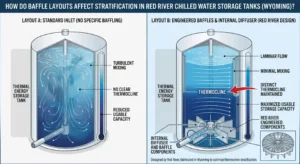
SAW pressure vessel welding is the go-to method for fabricating high-integrity, ASME-compliant pressure vessels in demanding industries. Red River offers expert solutions with deep weld penetration, fewer defects, and fast, cost-effective production.
Understanding SAW Pressure Vessel Welding & SAW Pressure Vessel Welding Technology
Pressure vessels are critical in industrial fabrication, demanding precision, quality, and reliability. SAW pressure vessel welding is widely recognized as one of the most dependable methods. Among welding techniques, Submerged Arc Welding (SAW) has become the preferred choice for large-scale pressure-vessel welding across multiple industries. This process offers unmatched advantages in weld integrity, productivity, and cost-effectiveness, making it ideal for these demanding applications.
What is SAW Pressure Vessel Welding?
Submerged Arc Welding, fundamental to SAW pressure vessel welding, is a sophisticated fusion welding process that differs significantly from conventional techniques. In SAW, the welding arc operates completely submerged beneath a blanket of granular flux material. This unique setup creates several advantages: the arc is invisible, there’s virtually no splatter, minimal fumes are produced, and UV radiation is contained.
The process works by feeding a continuous wire electrode through a welding gun while depositing flux ahead of the weld pool. The heat of the arc melts the base metal and electrode, while the flux forms a protective slag. In SAW pressure vessel welding, this slag shields the molten metal from contamination and is removed after solidification, revealing a clean, high-quality weld.
Unlike other common welding methods, such as GMAW (MIG) or SMAW (stick welding), SAW welding maintains high deposition rates while producing consistent, deep-penetrating welds. These characteristics are essential for fabricating pressure vessels that contain hazardous or high-pressure materials.
Key Advantages of SAW Pressure Vessel Welding
Superior Weld Quality and Integrity
SAW welding delivers superior weld quality and integrity, which is vital when manufacturing pressure vessels.
Deep penetration with results in strong joints with excellent fusion between the base metals. This is especially valuable for thick-walled vessels, where incomplete fusion could lead to critical failures.
SAW pressure-vessel welding ensures uniform penetration and weld profiles, which are crucial for long weld runs in large vessels.
The flux blanket in SAW pressure vessel welding minimizes porosity, inclusions, and other weld discontinuities that could compromise vessel safety.
Enhanced Productivity Factors
High deposition rates and automation potential significantly boost productivity.
SAW can reach up to 100 pounds per hour, drastically shortening production time.
SAW pressure vessel welding can be integrated with CNC systems for high-volume precision fabrication.
Since the arc is submerged, operators are shielded from intense light, heat, and fumes, improving workplace safety and comfort.
Economic Benefits for Large-Scale Production
The economic advantages of SAW go beyond productivity.
Deep penetration in SAW pressure vessel welding allows for narrower groove angles and fewer weld passes, reducing material usage.
High weld quality minimizes the need for costly post-weld repairs and radiographic inspections.
SAW pressure vessel welding uses more of the input energy for the weld process, reducing energy waste.
Material Compatibility and Compliance
For carbon steels and low-alloy steels, SAW welding remains the industry standard. By selecting proper flux and wire combinations, fabricators can fine-tune parameters for specific material grades. Most importantly, SAW meets stringent ASME Boiler and Pressure Vessel Code standards, supporting documentation, and traceability.
Practical Applications Across Industries
SAW pressure vessel welding is widely used in several sectors.
In oil and gas, SAW is used for large tanks, reactors, and separators requiring reliable welds.
In chemical environments, ensure safe handling of corrosive substances under high pressure.
SAW is critical in manufacturing thick-walled components like steam drums and heat exchangers in power generation.
In water treatment applications, SAW pressure vessel welding guarantees integrity in storage and filtration vessels.
Need a Reliable SAW Pressure Vessel Welding Partner?
Red River specializes in the design and fabrication of SAW pressure vessel welding solutions. We also manufacture related products such as prefabricated spools and skid packages.
Reach out to us today and experience the Red River difference, where American-made quality and values lead the way.
Frequently Asked Questions
1. Can SAW pressure vessel welding be used for all pressure vessel materials?
SAW works excellently with carbon and low-alloy steels commonly used in pressure vessels, but has limitations with non-ferrous or thin materials.
2. What thickness range is optimal for SAW?
SAW pressure vessel welding excels in medium to thick materials, typically from 5mm to 50mm.
3. Is SAW welding more expensive than other methods?
While initial equipment cost may be higher, SAW pressure vessel welding lowers total production costs via higher productivity and fewer repairs.
4. How does SAW welding help meet safety standards?
It produces consistent welds with high mechanical strength, helping manufacturers comply with ASME and other international codes.
5. What are the limitations of SAW pressure vessel welding?
It is less suitable for positional welding, involves high heat input, and may require more setup for smaller jobs.
Key Takeaways
- SAW pressure vessel welding ensures superior weld quality with deep penetration and minimal defects
- It boosts productivity for large-scale applications with high deposition rates and automation compatibility
- It offers cost savings through reduced labor, material efficiency, and less rework
- SAW pressure vessel welding aligns with critical ASME codes and excels across major industrial sectors
Related Blog Post
Can Condensate Storage Improve Reliability?
Where Do Condensate Tanks Fit in a Steam System?
Which Nozzles Simplify Maintenance on Pressure Vessels?
How to Vent Condensate Tanks in Steam Systems