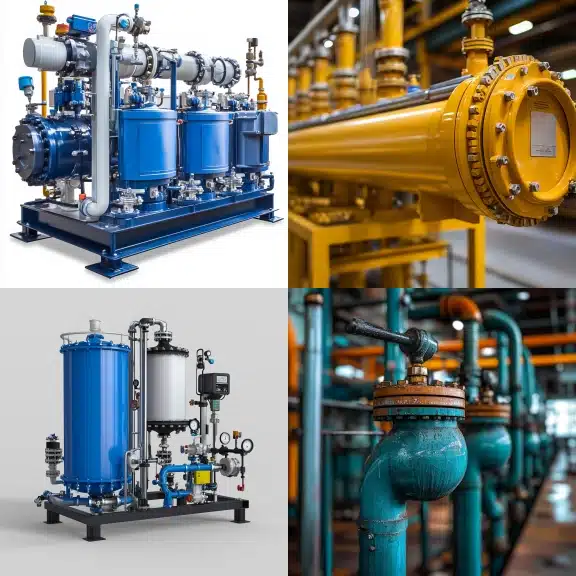
A molecular sieve is a highly selective filtration material that separates molecules based on size using precise pore structures. Common in gas drying, petrochemical processing, and industrial filtration systems, sieves like 3A, 4A, and 5A enable targeted removal of moisture and impurities. Zeolites and activated carbon are typical examples used in pressure vessels to optimize separation efficiency. Red River provides tailored pressure vessel solutions that enhance molecular sieve performance and longevity.
What is a Molecular Sieve?
At RedRiver, we understand how important it is to choose appropriate materials for your various needs in industrial applications, and one of these vital materials is the molecular sieve. But what is a molecular sieve, and why is this material so important in industrial processes?
Molecular Sieve: Definition and Basic Principles
A molecular sieve is a material that separates molecules based on size using extremely small, uniform pores. These pores are typically measured in angstroms and allow certain molecules to pass through while trapping others. This process is known as adsorption and is widely used in industrial separation and purification.
To understand the core principle behind this process, it helps to review the basic function of a sieve and how particle separation works at different scales.
Molecular sieves are commonly made from materials such as zeolites, activated carbon, and silica gel. Each type has unique adsorption properties suited for specific industrial applications such as gas dehydration, solvent purification, and petrochemical processing. These materials are often integrated into engineered systems like pressure vessels to maintain efficient filtration and separation processes.
Industrial Uses of Molecular Sieves
Why Molecular Sieves are Critical in Filtration Systems
Filtration systems are the backbone of many industrial processes, and their efficiency mostly depends on the quality of molecular sieves used. Because molecular sieves can separate molecules with such precision, they are ideal for removing contaminants, moisture, and other impurities from various products.
For example, in gas processing, molecular sieves play an important role in removing water vapor and other impurities that can adversely affect the quality of the finished product. This not only ensures that products conform to industry standards but also prolongs equipment lifecycles by preventing corrosion and other forms of damage.
Examples of Molecular Sieves in Action
3A, 4A, and 5A Molecular Sieves: What’s the Difference?
Different molecular sieves are classified based on their pore sizes:
3A Molecular Sieve
The 3A sieve has pores approximately 3 angstroms wide. It is commonly used for ethanol dehydration and natural gas drying because it selectively removes water molecules without adsorbing larger hydrocarbons. For a deeper technical overview, see this 3A molecular sieve guide.
4A Molecular Sieve
The 4A sieve has slightly larger pores and is widely used for drying air and purifying natural gas. Its versatility makes it one of the most common desiccants used in industrial gas treatment systems.
5A Molecular Sieve
With a pore size of 5 angstroms, 5A sieves are capable of separating larger hydrocarbons and are frequently used in petrochemical refining and gas purification.
Understanding these pore differences is essential when selecting the right molecular sieve for industrial processes.
Application of Zeolites as a Prime Example of Molecular Sieves
Zeolites are crystalline aluminosilicate minerals with highly uniform pore structures. Their rigid frameworks allow them to selectively trap molecules of specific sizes, making them ideal for catalysis, adsorption, and ion exchange.
In petrochemical processing and gas purification systems, zeolite-based sieves are commonly installed in specialized separator pressure vessels designed to manage high-pressure adsorption processes.
Activated Carbon as a Universal Molecular Sieve
Activated carbon also functions as a molecular sieve due to its large surface area and porous structure. It is widely used for removing impurities from gases and liquids.
Common applications include:
- Air purification systems
- Water treatment facilities
- Chemical processing
- Pharmaceutical filtration
In many cases, activated carbon is used alongside desiccant air dryer systems to ensure moisture and contaminants are removed effectively.
Application Case Study: Molecular Sieves in Gas Drying
One of the most common industrial uses of molecular sieves is gas dehydration. In these systems, sieves adsorb water molecules from gas streams before transportation or storage.
For example, 4A molecular sieves are frequently used to prevent corrosion in natural gas pipelines. These drying systems are often installed in engineered vessels that follow strict pressure vessel design and fabrication standards.
Proper vessel sizing is also critical for system performance. Engineers typically calculate dimensions using industry formulas such as those described in calculating the thickness of a pressure vessel.
Selection of the Correct Type of Molecular Sieves
Some Considerations in Choosing the Right Molecular Sieve
Pore size, material composition, and operating conditions are a few factors to consider when selecting a molecular sieve. Pore size will allow for the determination of the types of molecules that will be adsorbed; therefore, it needs to be related to the specific contaminants you want to remove. Material composition, such as zeolite or activated carbon, impacts durability alongside its applicability in several environments. Operating temperature and pressure are key variables to take into consideration since this might affect its effectiveness.
Industry-Specific Examples of Molecular Sieve Selection
With different industries varying in their needs, it is the case that 5A molecular sieves are chosen when it comes to separating hydrocarbons in the petrochemical industry. In the pharmaceutical industry, however, the application of activated carbon may be chosen with a view toward its superior capacity for adsorption regarding organic compounds. Understanding the specific demands of your industry will make your decision more rational.
Tips to Increase the Efficiency of Molecular Sieves
This, however, requires proper maintenance and the periodic regeneration process, where the temperature heats up to remove the adsorbed contaminants and renew the active surface area. Besides, the right pressure vessel enclosing a molecular sieve will enhance performance, offering ideal flow conditions and minimizing the pressure drop. RedRiver LLC provides custom designs for pressure vessels supporting efficient molecular sieve operation, ensuring you make the most out of your investment.
Optimize Your Molecular Sieve Performance with the Right Pressure Vessel
Efficient molecular sieve filtration depends on proper vessel design, flow control, and operating conditions. Red River engineers and manufactures pressure vessels specifically designed to support gas drying, adsorption systems, and petrochemical processing.
Contact Red River today to discuss a custom pressure vessel solution that improves molecular sieve efficiency, reliability, and long-term system performance.
Frequently Asked Questions
1. What are the major types of molecular sieves, and what is the difference among them?
3A, 4A, and 5A sieves differ by pore size, allowing selective adsorption of specific molecules. 3A is best for water removal, 4A for air drying, and 5A for separating larger hydrocarbons.
2. How does the molecular sieve compare to other filtration media such as activated alumina or silica gel?
Molecular sieves offer precise selectivity due to their uniform pore sizes. Unlike other media, they adsorb only molecules small enough to fit their pores, making them ideal for gas separation and drying.
3. How long does a molecular sieve last, and at what frequency should it be replaced?
Molecular sieves can last 3 to 10 years with proper maintenance and regular regeneration. Harsh conditions may shorten their lifespan and require more frequent monitoring.
4. Is regeneration of molecular sieves possible? If yes, then how is it done?
Yes, molecular sieves are regenerated by heating or purging to remove adsorbed contaminants. This restores their adsorption capacity and extends their service life.
5. How do I know if the molecular sieve is right for my application?
Choose based on your specific contaminants, temperature, pressure, and purification goals. Consult with an expert to match the right sieve type to your process needs.
Key Takeaways:
- Molecular sieves separate molecules by size using angstrom-scale pores.
- 3A, 4A, and 5A types are used in gas drying, petrochemical, and refining industries.
- Zeolites and activated carbon are key materials with high selectivity and durability.
- Regular regeneration and proper vessel design are essential for optimal efficiency.
- Red River designs pressure vessels that maximize molecular sieve effectiveness.
Related Blog Post
Condensate Tanks: Types, Fabrication, and ASME Code
Which Tests Validate Deaeration in Pressure Systems?
Equalization Tanks: Design, Sizing, and Fabrication
What Are Thermal Storage Testing Standards for TES Vessels?
What Hydro Tests Are Required for Pressure Vessels?
No subpillar set for this blog post.
About Author