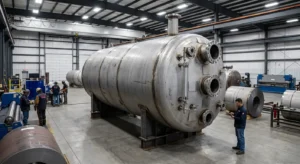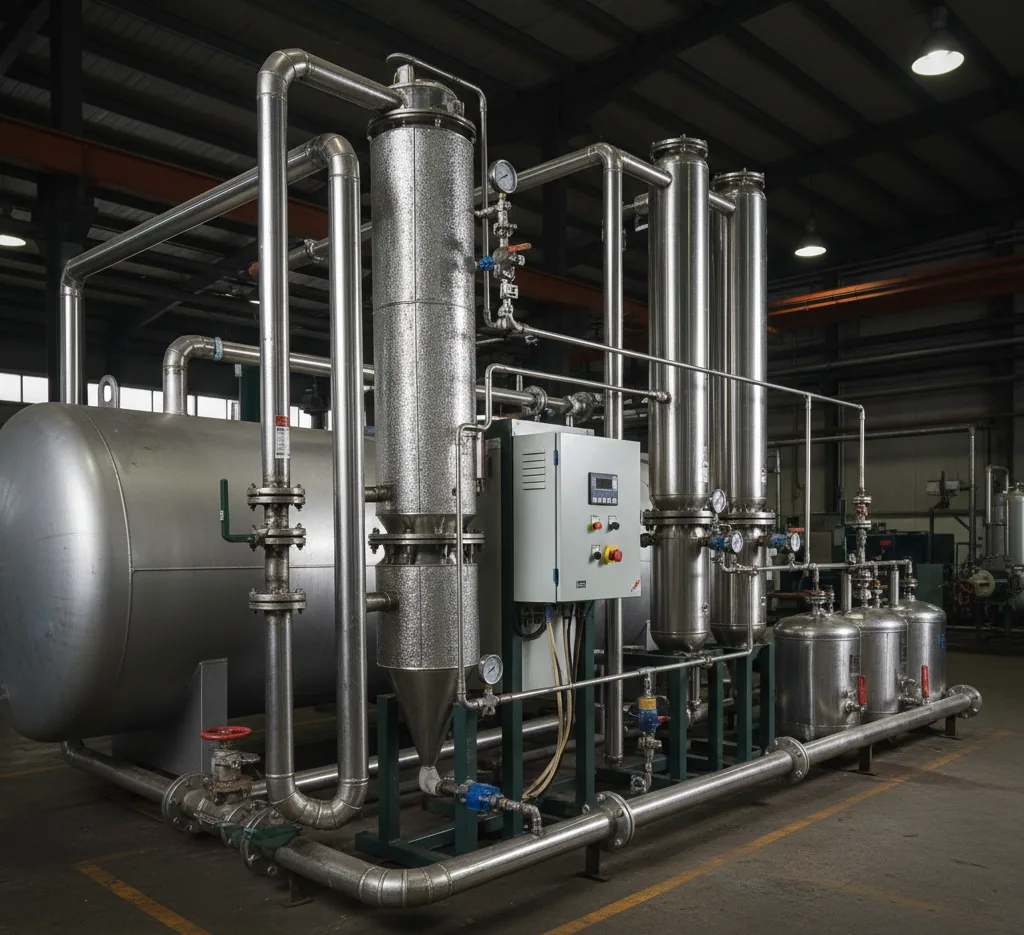
Heated desiccant dryers use external heat to regenerate desiccant and offer high efficiency for large industrial applications, while heatless dryers use purge air for regeneration and are more energy-efficient and simpler to maintain. Choosing between them depends on moisture-control needs, energy usage, and operational cost considerations.
Introduction to Desiccant Dryers
Overview of Desiccant Drying Technology
Desiccant dryers are crucial in numerous industries for casting off moisture from compressed air and gases. By using desiccant materials like silica gel or activated alumina, these dryers ensure the removal of moisture, which is vital for retaining the integrity and performance of industrial systems.
For a deeper look at how adsorption systems function, explore our guide on Understanding Adsorption Air Dryers and Understanding Desiccant Dryers: Key to Optimized Air Quality in Industrial Applications.
Desiccant drying systems are frequently integrated into larger compressed air packages that include Air Receiver Tanks and Air Receiver Vessels, which stabilize pressure and improve overall efficiency.
To better understand how compressed air storage works, review Understanding Air Receiver Tanks as Pressure Vessels and Understanding Compressed Air Tanks as Pressure Vessels.
Importance of Moisture Control in Industrial Applications
In sectors such as oil and gas, power generation, and biogas, controlling moisture levels is critical. Excess moisture can lead to corrosion, freezing of control lines, contamination, and reduced operational efficiency.
Our article on Water Presence in Pressure Vessels: Considerations and Implications highlights how trapped moisture can significantly impact vessel integrity.
Additionally, proper moisture management plays a key role in compliance and system reliability, as outlined in Safety and Compliance in Pressure Vessel Design and Understanding Pressure Vessels: A Comprehensive Guide.
Moisture-related failures can also contribute to mechanical stress and structural degradation, discussed further in Types of Failure in Pressure Vessels and Failure Criteria for Pressure Vessels.
Understanding Heated Desiccant Dryers
How Heated Desiccant Dryers Work
Heated desiccant dryers use external heat sources to regenerate the desiccant material. This process involves raising the temperature of the desiccant to release absorbed moisture, restoring its drying capacity.
If you’re evaluating system sizing, visit Size a Desiccant Dryer for practical considerations.
Heated systems are often deployed in high-capacity operations where efficiency and throughput are essential. These systems are commonly mounted on Modular Skids or incorporated into complete system packages through our Prefabrication Services.
Types of Heated Desiccant Dryers
Common heated dryer configurations include externally heated, blower purge, and heat-of-compression dryers. Each method differs in how regeneration heat is introduced and managed.
For more insight into drying performance and efficiency comparisons, explore The Advantages of Desiccant Air Dryers and Most Efficient Desiccant.
You may also benefit from reviewing Types of Desiccant Materials Guide and The Basics Behind Molecular Sieves to better understand media selection.
Exploring Heatless Desiccant Dryers
How Heatless Desiccant Dryers Operate
Heatless desiccant dryers, also known as pressure swing dryers, regenerate desiccant without external heat. Instead, they use a portion of dried compressed air to purge moisture from the saturated tower.
To understand cost comparisons, review Cheaper to Run Compressor or Desiccant Dehumidifier and Vacuum Drying Expensive.
For additional system comparisons, see The Difference Between a Water Separator and a Desiccant Dryer and Understanding Water Separation in Industrial Applications.
Variations in Heatless Desiccant Dryers
Heatless dryers are available in dual-tower and modular configurations, accommodating varying capacities and plant layouts. In complex facilities, they may operate alongside advanced separation equipment such as 2-Phase Vertical Separators or systems described in The Importance of Separator Technology.
For facilities integrating full pressure containment systems, explore Types of Industrial Pressure Vessels and Pressure Vessel Manufacturing Process.
Common Uses for Heatless Desiccant Dryers
Heatless dryers are widely used in applications requiring low dew points, such as instrument air systems, pharmaceutical production, and food processing.
They are also critical in compressed air networks supported by The Critical Role of Air Tanks and The Essential Roles of Air Receivers in Compressed Air Systems.
Choosing the Right Desiccant Dryer for Your Application
Heated and heatless desiccant dryers both play vital roles in delivering dry, reliable compressed air, but they serve different operational priorities. Heated dryers excel in high-capacity, continuous industrial settings where maximum drying efficiency and minimal purge loss are critical, despite higher energy use and capital cost. Heatless dryers, meanwhile, offer simplicity, lower upfront investment, and energy savings, making them ideal for smaller systems or applications focused on reduced maintenance and operating expenses. Ultimately, the best choice depends on your required dew point, system size, energy strategy, and total cost of ownership. By carefully matching dryer type to application demands, organizations can protect equipment, improve process reliability, and achieve long-term operational efficiency.
Need a reliable partner?
Red River specializes in the design and manufacturing of pressure vessels. We also fabricate related items such as prefabricated spools and skid packages.
Reach Out to us today and experience the Red River difference. Where American Made and American Values come together, we care more.
Frequently Asked Questions
1. What factors ought to I don’t forget while selecting among heated and heatless desiccant dryers?
When deciding between heated and heatless desiccant dryers, keep in mind numerous factors of energy intake, preliminary and operational charges, renovation necessities, and your precise moisture control desires. Heated desiccant dryers are extra energy-in depth however provide excessive efficiency and sturdiness, making them suitable for massive-scale commercial programs. On the other hand, heatless desiccant dryers are greater electricity-green and easier to preserve, making them best for smaller operations or in which power financial savings are a concern.
2. How do the preliminary expenses evaluate between heated and heatless desiccant dryers?
Heated desiccant dryers commonly have better initial expenses due to the extra components required for the heating procedure, which include warmers and blowers. In comparison, heatless desiccant dryers commonly have a lower premature value because they rely upon the prevailing compressed air for regeneration. However, it’s important to remember the lengthy time of operational costs and financial savings while comparing the full price of ownership for both forms of dryers.
3. Can I use heated desiccant dryers in all business environments?
Heated desiccant dryers are versatile and may be utilized in a wide variety of industrial environments, however, they may be especially useful in programs that demand consistent and reliable moisture elimination. These dryers are properly ideal for industries inclusive of oil and fuel, petrochemicals, and energy technology. However, the surroundings’s specific conditions, which include ambient temperature and humidity degrees, have to be taken into consideration when choosing the perfect dryer type.
4. How does the purge air requirement impact the efficiency of heatless desiccant dryers?
Heatless desiccant dryers use a part of the dried compressed air for the regeneration system, referred to as purge air. This requirement can reduce the general performance of the system when you consider that a number of the generated air is used for regeneration instead of being available for the number one software. The efficiency loss is generally around 15-20%, however, this can vary depending on the precise design and operational situations of the dryer.
5. Are there any new improvements in desiccant dryer generation?
Yes, there have been numerous recent improvements in the desiccant dryer era geared toward improving performance and lowering operational charges. For instance, a few more recent models of heated desiccant dryers include power-healing systems that seize and reuse warmth from the regeneration method. Additionally, improvements in desiccant materials have brought about stepped-forward moisture absorption talents and longer carrier life. Innovations in control systems have additionally greater the precision and reliability of desiccant dryers, allowing for higher tracking and optimization of the drying system.
Key Takeaways
- Heated dryers provide strong regeneration performance but require more energy and have higher upfront costs.
- Heatless dryers use dried compressed air for regeneration, making them simpler and more energy-efficient but with some loss of usable airflow.
- Both types are essential for preventing moisture-related issues like corrosion, freezing, and reduced system efficiency.
- Selection should consider application size, required dew point, budget, and long-term operational efficiency.
Related Blog Post
Which Materials Suit Make-Up Water Service?
How Big Should Make-Up Water Tanks Be?
Make-Up Water Tanks: Design, Sizing, and Fabrication
When to Spec Equalization Tanks for Industrial Systems