

This guide from Red River covers everything you need to know about pressure vessel design—from foundational concepts and safety standards (like ASME) to advanced engineering practices, including material selection, stress analysis, and non-destructive testing. Red River emphasizes a safety-first, customer-centric approach, blending American values with modern technologies like automation and robotics. Whether you need custom solutions for oil, gas, or energy sectors, Red River delivers durable, compliant, and efficient pressure vessels tailored to your needs. Plus, their commitment to sustainability and continuous inspection ensures long-term performance and environmental responsibility.
Introduction to Pressure Vessel Design
At Red River, we know that the adventure to crafting notable pressure vessels begins with a strong foundation inside the fundamentals. Pressure vessels, of their essence, are bins designed to preserve gases or drinks at a pressure appreciably extraordinary from the ambient pressure. Their programs span across various industries, from oil and fuel to biogas and strength generation. The design of these vessels is vital because it includes careful attention to things like cloth selection, pressure and temperature conditions, and compliance with protection standards.
The Importance of Pressure Vessel Safety
Safety isn’t always only a phrase for us at Red River; it is a commitment woven into the cloth of the whole lot we do. Designing pressure vessels needs a deep understanding of the capacity risks and the implementation of safety measures to mitigate them. This includes adhering to stringent standards like the ASME requirements and making sure every vessel can withstand the unique demanding situations of its supposed environment. Our willpower for safety is meditated in our non-stop development ethos, in which we try to exceed mere compliance and foster a tradition wherein protection is a necessary part of our operational DNA.
Red River Approach to Pressure Vessel Design
At Red River, we mix our rich history of American values with modern-day technology to supply pressure vessel solutions that aren’t simply effective but additionally resonate with the ethos of difficult work, reliability, and excellence. Our method is patron-centric, expertise that every venture is precise and needs a tailor-made answer. Whether it’s for the oil and gas area, industrial initiatives, or energy generation, our group is prepared to address the complexities and nuances of every industry.
Key Factors in Pressure Vessel Engineering
Material Selection for Durability and Efficiency
Choosing the proper materials is essential in pressure vessel design. At Red River, we prioritize materials that provide both durability and efficiency, making sure long-term performance underneath various operational situations.
Impact of Design Pressure and Temperature
Design pressure and temperature are pivotal in determining the vessel’s functionality to address excessive situations. Our engineering procedure meticulously accounts for these elements to ensure sure most desirable overall performance.
Considering the Operating Environment
The operating environment performs a widespread function in our design system. We tailor our pressure vessels to healthy specific environmental conditions, improving their reliability and lifespan.
Overview of ASME Standards
Adherence to ASME requirements is non-negotiable at Red River. These requirements manual our design and manufacturing strategies, making sure the pinnacle tier is pleasant and safe.
International Compliance and Regulations
Our designs follow international policies, making our pressure vessels suitable for worldwide packages.
Ensuring Quality and Safety in Design
Quality and protection are the cornerstones of our design philosophy. We integrate rigorous checking out and first-rate assessments to uphold these standards.
Advanced Design Considerations
Stress Analysis in Pressure Vessel Design
Stress analysis is integral to our design process, ensuring structural integrity under various operational stresses.
Fatigue and Fracture Mechanics
We consider fatigue and fracture mechanics to enhance the vessel’s resilience and longevity.
Corrosion Considerations and Material Compatibility
Corrosion resistance and material compatibility are key to maintaining the vessel’s integrity over time.
Safety Features in Pressure Vessel Design
Pressure Relief Systems
Our vessels are geared up with advanced pressure alleviation systems for superior protection.
Safety Valves and Alarms
Safety valves and alarms are crucial additives, imparting essential signals in emergencies.
Emergency Shutdown Systems
We comprise emergency shutdown structures to make certain immediate reactions throughout critical scenarios.
Innovative Technologies in Pressure Vessel Fabrication
The Role of Automation and Robotics
At Red River, we include automation and robotics to enhance precision and performance in pressure vessel fabrication. This era guarantees consistent great and quicker production instances.
Advancements in Welding Techniques
We continuously undertake superior welding techniques, making sure strong, reliable joints are crucial for the integrity of pressure vessels.
Non-destructive Testing Methods
Our use of non-damaging methods ensures the detection of capacity flaws without compromising the vessel’s structure.
Custom Design Solutions by Red River
Tailored Designs for Specific Industry Needs
We focus on developing custom designs that cater to the unique wishes of different industries, ensuring ideal performance and secure
Case Studies: Successful Projects
Our portfolio of success initiatives showcases our capability to handle diverse and complex necessities.
Client Testimonials and Feedback
Positive remarks from our clients display our commitment to excellence and client pride.
Maintenance and Inspection of Pressure Vessels
Routine Maintenance Practices
Regular preservation is fundamental to the longevity of our pressure vessels, ensuring they stay in top circumstances.
Inspection Schedules and Techniques
We adhere to strict inspection schedules and employ advanced strategies to ensure ongoing reliability and safety.
Longevity and Performance Optimization
Our awareness of toughness and overall performance optimization guarantees that our vessels always deliver peak overall performance.
Environmental and Sustainability Considerations
Eco-friendly Materials and Practices
We prioritize green substances and practices in our production procedures, contributing to environmental sustainability.
Energy Efficiency in Design
Our design’s purpose is for power performance, lowering operational prices, and environmental effects.
Reducing Environmental Impact
Reducing the environmental effect of our merchandise and tactics is a key intention at Red River LLC, reflecting our dedication to a sustainable destiny.
Need a reliable partner?
Red River specializes in the design and manufacturing of pressure vessels. We also fabricate related items such as prefabricated spools and skid packages.
Reach Out to us today and experience the Red River difference. Where American Made and American Values come together, we care more.
FAQs: About Pressure Vessel Manufacturing
What are the key factors to consider in the material selection for pressure vessels?
Material selection for pressure vessels is crucial and depends on factors like the vessel’s intended use, the sort of contents it’ll preserve (fuel, liquid, or aggregate), working temperature and pressure, and ability to corrosion dangers. Materials generally used encompass carbon metal, stainless steel, and alloys like Hastelloy, Inconel, and Monel, every presenting exceptional strengths and resistance to corrosion and temperature.
How do design pressure and temperature impact the construction of a pressure vessel?
Design pressure and temperature are essential in determining the thickness and grade of the fabric used for a pressure vessel. They without delay affect the vessel’s potential to face up to internal pressures and extreme temperatures without deforming or failing. Overestimating those factors can lead to unnecessary prices while underestimating them can compromise protection.
What are the most advanced welding techniques used in pressure vessel fabrication?
Advanced welding techniques in pressure vessel fabrication include Tungsten Inert Gas (TIG) welding, Metal Inert Gas (MIG) welding, and Submerged Arc Welding (SAW). These strategies offer greater management, deeper penetration, and cleanser joins, vital for keeping the integrity of pressure vessels below excessive pressure situations.
Can you explain the importance of non-destructive testing (NDT) in pressure vessel manufacturing?
NDT is vital in pressure vessel production because it allows for the inspection of materials, additives, and connections without causing damage. Techniques like ultrasonic checking out, radiographic checking out, and magnetic particle inspection assist come across surface and subsurface flaws, making sure the vessel’s protection and reliability without impairing its capability.
What role does prefabrication play in pressure vessel manufacturing, and what are its benefits?
Prefabrication in pressure vessel manufacturing entails pre-assembling elements or sections of the vessel in a controlled manufacturing facility surroundings before transporting them to the very last web page for installation. This technique gives numerous advantages, which include more advantageous great manipulation, reduced construction time, decreased expenses because of economies of scale, and minimized on-site dangers related to climate or different environmental elements.
Key Takeaways:
Safety is Paramount: Red River designs all pressure vessels with a deep commitment to safety, meeting and exceeding ASME and international standards.
Custom-Tailored Engineering: Every project receives a personalized approach, ensuring materials, dimensions, and features align with unique industry requirements.
Advanced Fabrication: Use of automation, robotics, and cutting-edge welding techniques ensures high precision, faster turnaround, and structural integrity.
Non-Destructive Testing (NDT): Critical inspections like ultrasonic and radiographic testing detect flaws without compromising the vessel’s integrity.
Sustainability Focus: Designs prioritize energy efficiency and eco-friendly materials, aligning with modern environmental goals.
Comprehensive Lifecycle Support: Red River provides routine maintenance schedules, inspection plans, and long-term performance strategies.
Proven Track Record: Case studies and testimonials highlight successful projects across oil, gas, industrial, and energy sectors.
Related Blog Post
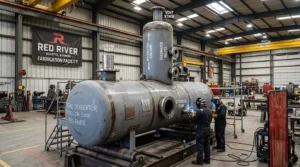
When Are Deaerators Required in Pressure Systems?
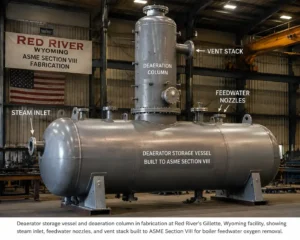
How Do Deaerator Tanks Cut Oxygen in Boiler Systems?
Deaerator Tanks: ASME Fabrication for Steam Systems
Which Connections Fit Receiver Tanks?
How Do Receiver Tanks Affect Cycle Time?
No subpillar set for this blog post.
About Author



