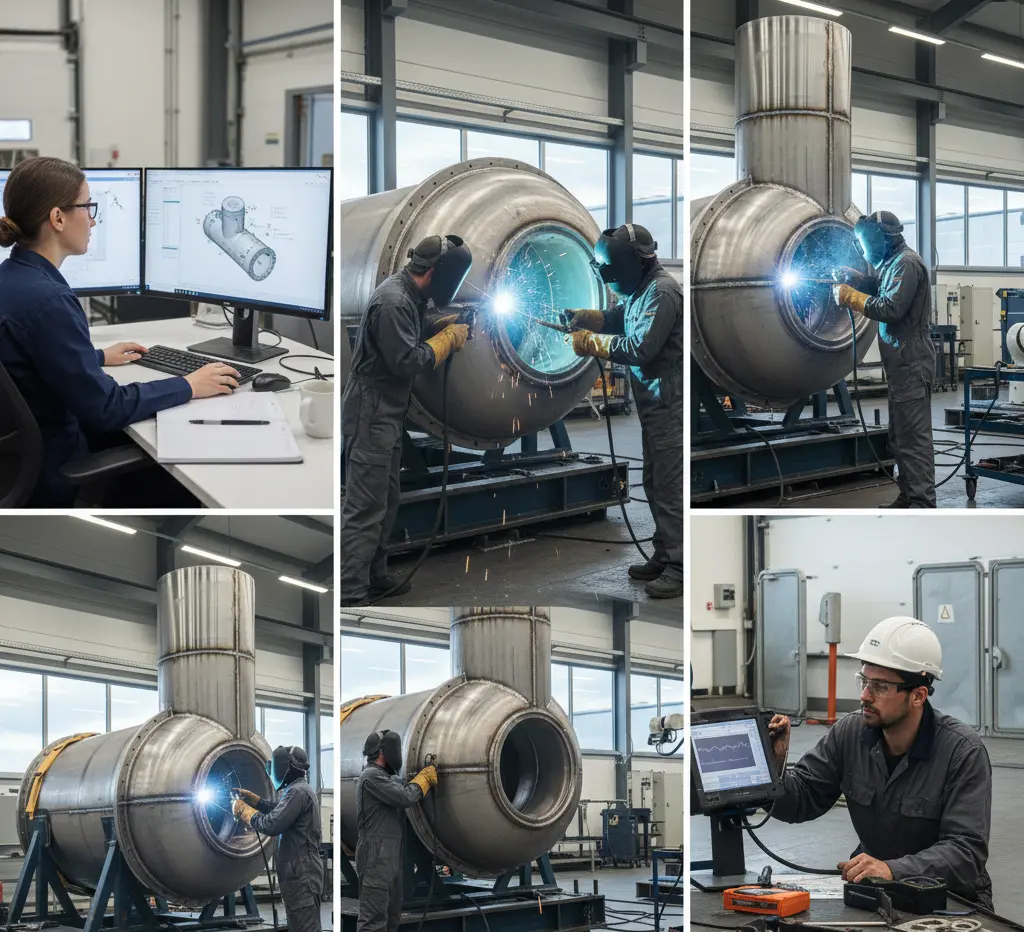
Pressure vessel fabrication and manufacturing is the complex process of designing, constructing, and testing durable containers built to hold pressurized liquids or gases. This blog explores how vessels are designed, fabricated, and inspected, the materials used, and how RedRiver LLC stands as an industry leader in quality and innovation.
Understanding Pressure Vessel Fabrication and Manufacturing
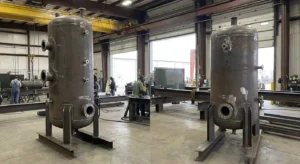
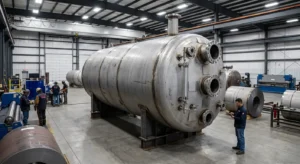
Pressure vessel fabrication and manufacturing combines engineering precision, metallurgical expertise, and rigorous safety standards to create vessels capable of withstanding extreme pressures and temperatures. These vessels are essential components in industries such as energy, chemical processing, pharmaceuticals, and food production.
Every stage of the process from design and material selection to welding and inspection demands technical excellence. Companies like RedRiver LLC deliver superior craftsmanship and strict adherence to industry codes to ensure every vessel performs safely and reliably over its lifespan.
What Is Pressure Vessel Fabrication and Manufacturing
What is pressure vessel fabrication and manufacturing? Pressure vessel fabrication and manufacturing is the engineering practice of constructing containers that can safely store pressurized substances. These vessels must resist rupture or leakage even when exposed to internal or external forces that exceed normal environmental pressures.
The process integrates multiple disciplines of mechanical engineering, materials science, and industrial design to produce vessels that comply with the ASME Boiler and Pressure Vessel Code (BPVC). Each vessel is customized for its intended use, whether that involves high-pressure gases, corrosive chemicals, or cryogenic liquids.
Key stages in the fabrication process include:
- Conceptual design and engineering analysis
- Selection of materials suited to the operating environment
- Metal forming and precise welding
- Surface finishing and corrosion protection
- Quality control and pressure testing
Through precise design, material selection, forming, welding, and inspection, Pressure Vessel Fabrication and Manufacturing ensures each vessel meets stringent safety and performance standards. Advanced techniques in automation, heat treatment, and surface finishing enhance durability and reliability. By adhering to rigorous codes and quality controls, Pressure Vessel Fabrication and Manufacturing delivers vessels capable of withstanding extreme pressures and temperatures. Experienced engineers oversee every step, guaranteeing that Pressure Vessel Fabrication and Manufacturing produces safe, efficient, and long-lasting pressure vessels for diverse industrial applications.
How Pressure Vessel Fabrication Is Done
Pressure Vessel Fabrication and Manufacturing involves a carefully sequenced workflow designed to guarantee safety, compliance, and precision. From initial design and engineering calculations to material selection and metal forming, each stage is executed with meticulous attention to detail. Skilled welders and technicians apply advanced techniques, while non-destructive testing ensures structural integrity. Post-weld heat treatment, surface finishing, and rigorous inspection enhance durability and performance. By following strict codes and quality standards, Pressure Vessel Fabrication and Manufacturing delivers vessels that withstand extreme pressures and temperatures. Ultimately, Pressure Vessel Fabrication and Manufacturing provides safe, reliable, and long-lasting solutions for diverse industrial applications.
Design and Engineering
Pressure Vessel Fabrication and Manufacturing begins with precise design calculations and modeling tools to determine vessel dimensions, wall thickness, and structural integrity. In Pressure Vessel Fabrication and Manufacturing, engineers use these modeling tools to simulate stress points, temperature variations, and internal pressure loads. Accurate design calculations and modeling tools ensure all components comply with regulatory and performance standards. During Pressure Vessel Fabrication and Manufacturing, inspections and quality checks verify that the vessel meets safety requirements. Ultimately, thorough Pressure Vessel Fabrication and Manufacturing guarantees reliable operation, structural strength, and compliance throughout the vessel’s service life.
Material Selection
When determining what materials are used in pressure vessel manufacturing, engineers choose metals that balance strength, ductility, and corrosion resistance. Common materials include:
- Carbon steel for general-purpose and high-strength applications
- Stainless steel for corrosion resistance and sanitary environments
- Duplex and super duplex alloys for durability in aggressive conditions
- Nickel-based alloys for heat and chemical resistance
- Titanium and aluminum alloys for lightweight and specialized uses
Material choice is guided by factors such as pressure level, fluid type, temperature exposure, and operating environment. At RedRiver LLC, engineers carefully evaluate these aspects to select materials that ensure optimal performance and longevity.
Forming and Welding
After materials are selected, metal sheets are cut and shaped into cylindrical or spherical shells using rolling machines and presses. Welding specialists then join these components using methods like gas tungsten arc welding (GTAW) or submerged arc welding (SAW). Precision is critical; even the smallest flaw can compromise the vessel’s safety.
Non-destructive testing (NDT) techniques such as radiographic, ultrasonic, or magnetic particle inspection are used to confirm the quality of each weld.
Heat Treatment and Stress Relief
Vessels often undergo post-weld heat treatment to reduce residual stress and enhance mechanical properties. This improves the vessel’s ability to endure high pressures and cyclic loading without cracking or deformation.
Surface Finishing
Surface finishing protects vessels from corrosion, oxidation, and contamination, using methods such as polishing, passivation, epoxy coating, and galvanization. Proper finishing extends the vessel’s lifespan and ensures compliance with hygiene standards in industries like food and pharmaceuticals. In Pressure Vessel Fabrication and Manufacturing, such attention to detail is critical for durability and safety. Every stage, from welding to testing, contributes to a vessel that performs reliably under pressure. By integrating quality control, advanced materials, and precise workmanship, Pressure Vessel Fabrication and Manufacturing produces vessels that meet stringent standards. Ultimately, Pressure Vessel Fabrication and Manufacturing ensures long-lasting, safe, and efficient pressure vessels for industrial applications.
Testing and Inspection
Pressure Vessel Fabrication and Manufacturing requires strict adherence to codes and standards to ensure safety and reliability. During Pressure Vessel Fabrication and Manufacturing, vessels undergo meticulous inspections to check for defects, weld quality, and material integrity. Before a vessel is approved for service, it must pass rigorous inspections and hydrostatic or pneumatic pressure tests. These inspections confirm that the vessel can withstand its design pressure without leaks or deformation. High-quality Pressure Vessel Fabrication and Manufacturing not only ensures structural strength but also guarantees compliance, operational safety, and long-term performance.
Materials Used in Pressure Vessel Manufacturing
Choosing the correct material is one of the most crucial aspects of pressure vessel fabrication and manufacturing. The materials must withstand the vessel’s internal pressure while resisting corrosion, temperature fluctuations, and chemical reactions.
Common materials include:
- Carbon Steel: strength and cost-effective, used in boilers, air receivers, and general-purpose applications
- Stainless Steel: excellent corrosion resistance, ideal for food, pharmaceutical, and chemical sectors
- Alloy Steels (Cr-Mo, Ni-Mo): Used in high-pressure and high-temperature conditions.
- Nickel-Based Alloys (Inconel, Monel): Suitable for extremely corrosive or heat-intensive processes.
- Titanium: Lightweight and corrosion-resistant, often used in specialized industrial and marine applications.
Each material is selected based on the environment it will operate in. RedRiver LLC applies advanced material testing and engineering analysis to ensure every vessel is crafted from metals that meet strict performance requirements.
Modern Methods in Pressure Vessel Fabrication and Manufacturing
Technological innovation continues to enhance efficiency, accuracy, and safety in pressure vessel fabrication and manufacturing.
Modern advancements include:
- Automation and robotics: CNC cutting, robotic welding, and automated forming systems enhance precision and consistency.
- Finite Element Analysis (FEA): Used to simulate how vessels respond to stress, pressure, and temperature changes before fabrication.
- Laser Cutting and Plasma Arc Systems: Provide high precision and clean edges for forming and assembly.
- Digital inspection and Non-Destructive Testing (NDT): Advanced imaging ensures welds and materials meet strict quality standards.
- Sustainable Manufacturing: Processes that minimize waste, optimize energy use, and utilize recyclable materials.
Through these technologies, companies like RedRiver LLC continue to improve production speed, reliability, and environmental responsibility.
Applications of Pressure Vessel Fabrication and Manufacturing
Pressure Vessel Fabrication and Manufacturing is crucial for industries handling energy, fluids, or gases. These vessels are versatile, serving functions such as storage, separation, and heat transfer. Through careful engineering, design calculations, and inspections, each vessel ensures safety, reliability, and compliance, supporting efficient operations across a wide range of industrial applications.
Typical applications include:
- Boilers, heat exchangers, and condensers in power generation
- Reactors and separators in chemical and petrochemical plants
- Sanitary storage and processing tanks in food and beverage production
- Sterile mixing vessels in pharmaceutical manufacturing
- Cryogenic tanks and gas storage systems in industrial gas facilities
Each industry requires specific design considerations, such as resistance to pressure cycling, temperature variation, or corrosive media. RedRiver LLC has the expertise to deliver vessels that meet those specialized demands with precision and reliability.
Safety Standards and Quality Assurance
Safety is the foundation of pressure vessel fabrication and manufacturing. Every vessel must meet international safety and performance codes to prevent catastrophic failure.
Essential standards include:
- ASME Section VIII: Governs the design, fabrication, inspection, and testing of pressure vessels.
- API Standards: Define requirements for vessels used in oil and gas industries.
- ISO 9001: Ensures consistent quality management practices across all production phases.
- NBIC (National Board Inspection Code): Provides guidelines for inspection, repair, and alteration.
RedRiver LLC incorporates these standards into every project through a multi-tiered quality control system that includes documentation reviews, third-party inspections, and continuous process improvement.
Challenges in Pressure Vessel Fabrication and Manufacturing
Despite technological progress, fabricators encounter ongoing challenges in achieving high-quality results.
Key challenges include:
- Maintaining consistency under variable operating pressures and temperatures
- Meeting evolving regulatory requirements
- Managing the cost and availability of specialized materials
- Ensuring flawless welding and inspection under tight deadlines
- Preventing corrosion and fatigue through superior coatings and maintenance
By leveraging innovation, precision equipment, and skilled professionals, RedRiver LLC overcomes these challenges to deliver durable and compliant vessels.
Innovation and the Future of Pressure Vessel Manufacturing
The future of pressure vessel fabrication and manufacturing is driven by digital transformation and sustainable design. New tools and methods are helping fabricators enhance performance, traceability, and efficiency.
Emerging trends include:
- Use of digital twins for lifecycle management and predictive maintenance
- Integration of AI-based quality control for defect detection
- Application of 3D printing and additive manufacturing for complex parts
- Development of composite pressure vessels with lightweight, high-strength materials
- Expansion of data-driven process monitoring to improve safety and reliability
As an industry innovator, RedRiver LLC is committed to adopting these technologies to continue advancing precision, sustainability, and client satisfaction.
Pressure Vessel Fabrication and Manufacturing
Pressure vessel fabrication and manufacturing is both a science and an art blending engineering accuracy, material expertise, and strict safety compliance. From initial design to final testing, each phase demands meticulous attention to detail to produce vessels that operate safely and efficiently in demanding environments.
With a reputation for excellence, RedRiver LLC provides clients with custom-engineered pressure vessels that meet the highest standards of performance, safety, and quality.
Partner with RedRiver LLC
If you need reliable, high-quality pressure vessel solutions, trust RedRiver LLC. Our team of expert engineers, certified welders, and quality specialists delivers precision-crafted vessels tailored to your exact specifications.
Ready to build safer, stronger, code-perfect vessels?
Discover how RedRiver’s advanced manufacturing can power your next project visit RedRiver.team now.
Frequently Asked Questions
1. What is pressure vessel fabrication and manufacturing?
It is the process of designing, building, and testing sealed containers that safely hold pressurized liquids or gases under strict industry standards.
2. How is pressure vessel fabrication done?
The process includes design, material selection, forming, welding, heat treatment, surface finishing, and pressure testing to ensure safety and durability.
3. What materials are used in pressure vessel manufacturing?
Common materials include carbon steel, stainless steel, nickel alloys, and titanium, chosen for strength, corrosion resistance, and temperature endurance.
4. What standards govern pressure vessel manufacturing?
Standards such as ASME Section VIII, API codes, and ISO 9001 establish design and inspection requirements for safe and compliant fabrication.
5. What industries use pressure vessels?
Pressure vessels are used in power generation, chemical processing, pharmaceuticals, food production, and energy sectors.
6. How are vessels tested for safety?
Manufacturers perform hydrostatic or pneumatic testing and non-destructive examinations to verify the vessel’s strength and integrity.
7. What are the advantages of working with RedRiver LLC?
RedRiver LLC offers complete in-house fabrication, certified quality control, and a reputation for dependable, custom-engineered pressure vessels.
8. What role does automation play in modern manufacturing?
Automation improves precision, reduces production time, and enhances safety through robotic welding and digital inspection systems.
Key Takeaways
- Pressure vessel fabrication and manufacturing requires precision, expertise, and strict adherence to safety codes.
- Material selection such as carbon steel, stainless steel, and nickel alloys determines performance and longevity.
- Automation, digital testing, and sustainable methods are transforming modern fabrication.
- Compliance with ASME, API, and ISO standards ensures safe and reliable vessel operation.
- RedRiver LLC is a trusted leader in engineering and manufacturing high-quality, custom pressure vessels built for excellence.
Related Blog Post
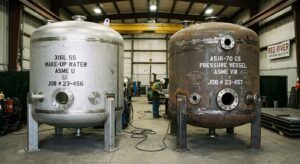
Which Materials Suit Make-Up Water Service?
How Big Should Make-Up Water Tanks Be?
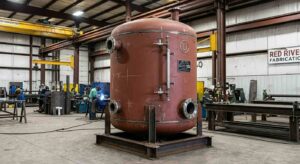
Make-Up Water Tanks: Design, Sizing, and Fabrication
When to Spec Equalization Tanks for Industrial Systems
How Do Equalization Tanks Balance Flow?
About Author