
Digital Radiography vs. Film for Weld Defect Analysis
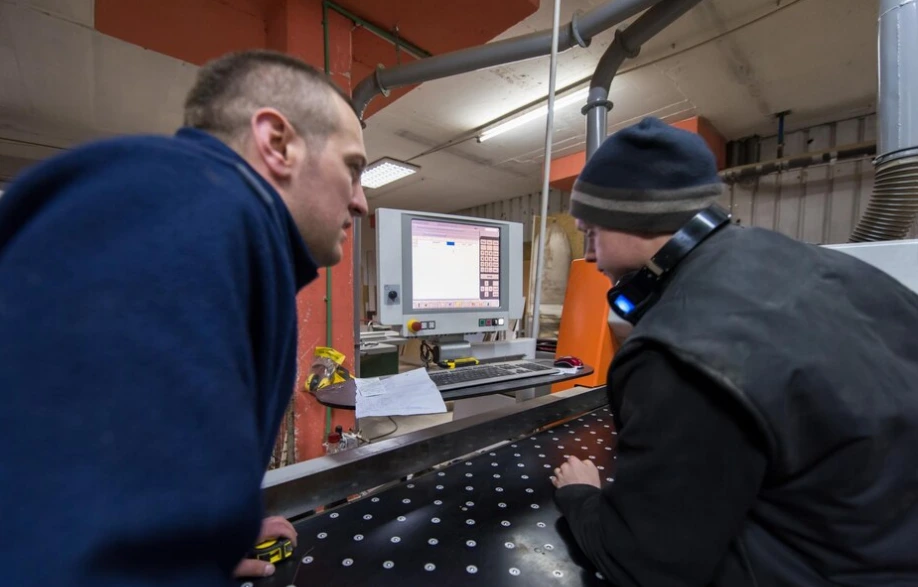
Digital radiography vs. film is a critical decision in weld defect analysis. Digital methods offer speed, safety, and efficiency, while film radiography remains relevant for legacy compliance and ultra-high-resolution needs. Why Digital Radiography vs. Film Matters in Weld Defect Analysis Digital radiography vs. film directly impacts how weld defects are detected, interpreted, and documented. In […]
Acoustic Emission Monitoring During Pressure Tests

Acoustic emission monitoring provides real-time detection of structural changes during pressure testing. It enhances safety, reduces downtime, and ensures regulatory compliance for pressure vessels and components. Why Acoustic Emission Monitoring Matters in Pressure Testing Acoustic emission (AE) monitoring captures stress-induced signals in real time, enabling early detection of defects in pressure vessels and related components. […]
Weld Inspection Using Phased-Array Ultrasonic Testing

Phased-array ultrasonic testing (PAUT) is an advanced non-destructive inspection method that delivers precise, real-time insights into weld quality. It improves efficiency, safety, and compliance in pressure vessel fabrication and other high-integrity applications. Understanding Phased-Array Ultrasonic Testing (PAUT) What is phased-array ultrasonic testing? Phased-array ultrasonic testing (PAUT) uses multiple small elements within a probe to send […]
HAZ Hardness Profile Mapping in Welded Components

Why HAZ Hardness Profile Mapping Is Essential for Weld Integrity Welding is a foundational process in the fabrication of pressure vessels, structural components, and mission-critical infrastructure. While it serves to permanently join metals, it also alters the material’s microstructure—especially in the heat-affected zone (HAZ). This transitional area, located adjacent to the weld, experiences thermal cycles […]
Dye Penetrant Inspection (DPI) for Surface Crack Detection

Understanding Dye Penetrant Inspection Dye Penetrant Inspection (DPI), also known as Liquid Penetrant Testing (LPT), is a critical non-destructive testing (NDT) method used to identify surface-level flaws in solid, non-porous materials. This testing method plays a pivotal role in industries that demand absolute material integrity, such as the pressure vessel, aerospace, and petrochemical sectors. DPI […]
Subsurface Defect Ultrasonic Testing Techniques for Detecting Defects
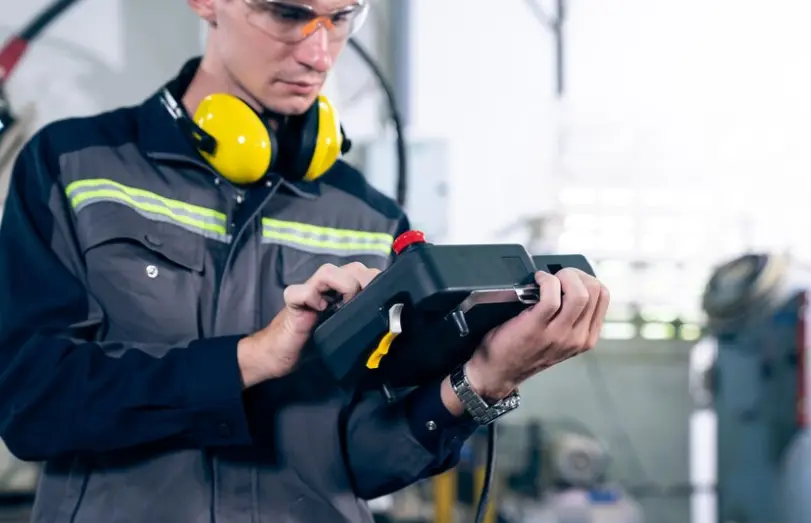
The Importance of Subsurface Defect Ultrasonic Testing in Industrial Applications In the world of industrial fabrication, subsurface defect ultrasonic testing plays a crucial role in ensuring safety and reliability. Whether it’s a pressure vessel in a chemical plant or a structural component in heavy industry, identifying flaws before they lead to failure is critical. That’s […]
Embedded OEM Quality Control in Pressure Vessel Manufacturing
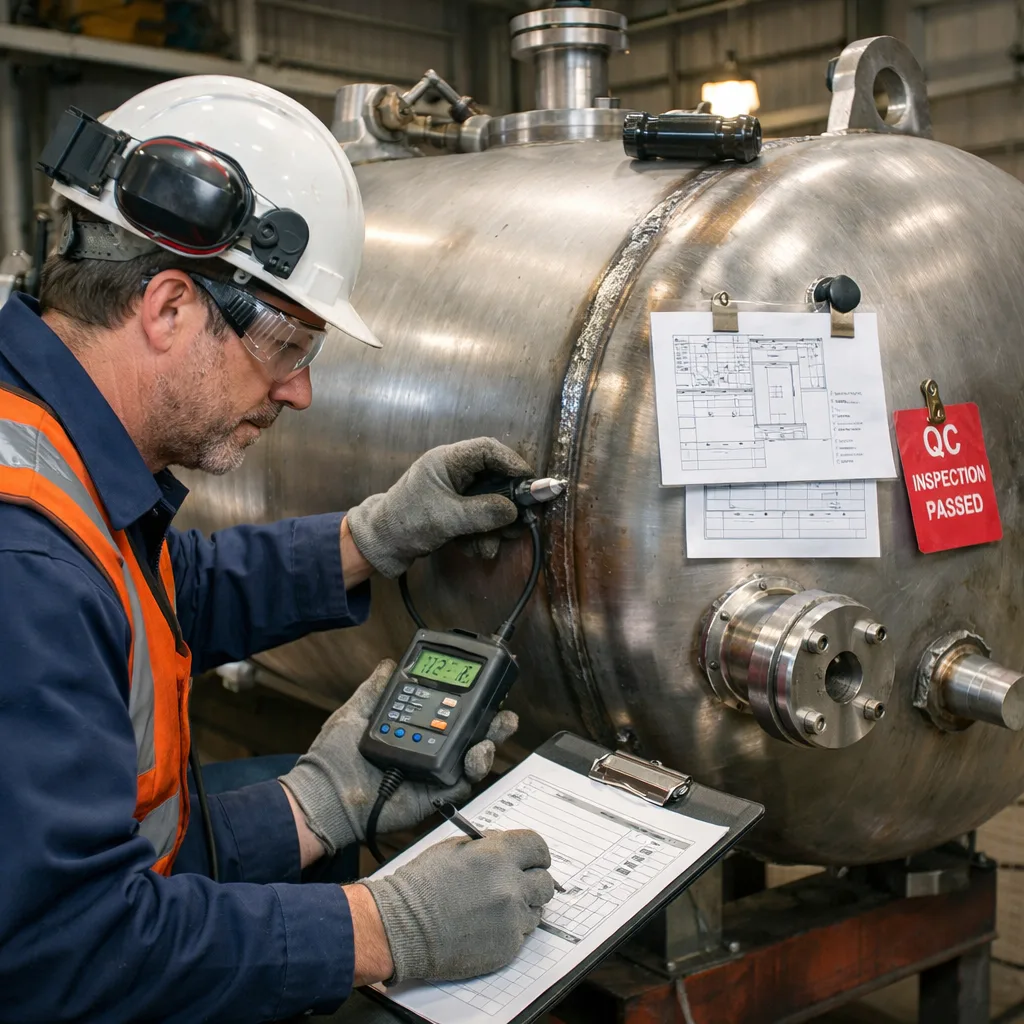
Embedded OEM quality control integrates inspection, testing, and documentation into every stage of pressure vessel manufacturing, ensuring safety, compliance, and consistent performance from design through delivery. This proactive approach reduces rework, improves traceability, meets strict OEM and ASME requirements, and enables faster, more reliable production without sacrificing efficiency. Why Embedded OEM Quality Control Is Critical […]
OEM Pressure Vessel Alignment and Piping Best Practices

The Importance of OEM Pressure Vessel Alignment Precision OEM pressure vessel alignment is a critical aspect of designing and installing pressure systems in high-performance equipment. Proper OEM pressure vessel alignment ensures structural stability, system integrity, and long-term operational efficiency. In robotics-driven and automated manufacturing environments, where precision and uptime are vital, even minor misalignments can […]
Supporting High-Mix, Low-Volume OEM Needs with Flexible Pressure Vessel Design
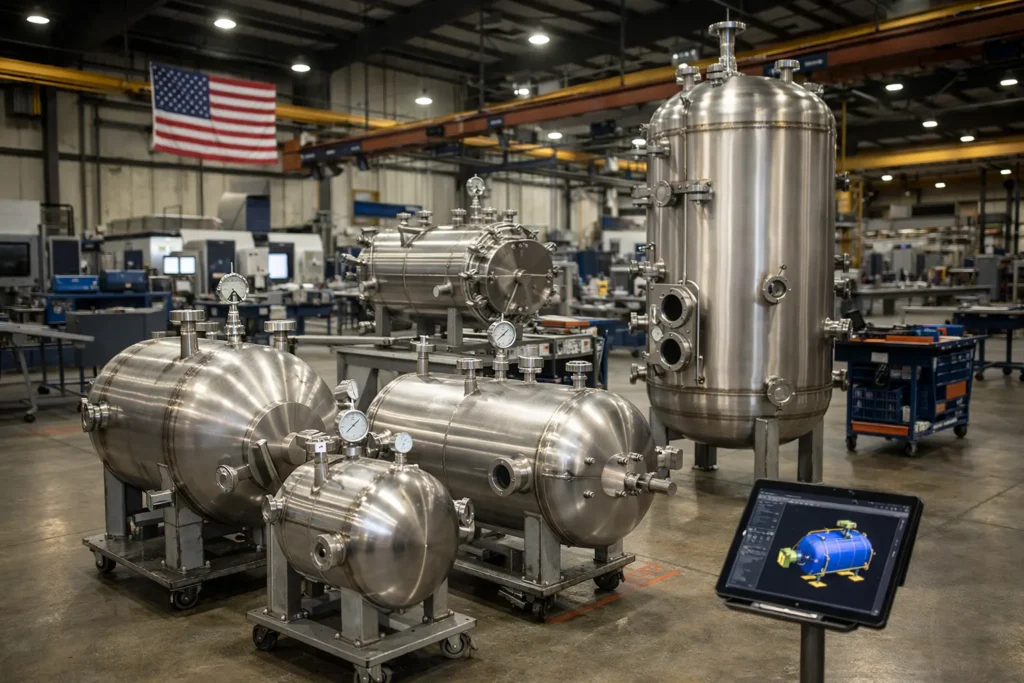
Flexible pressure vessel design lets high-mix, low-volume OEMs quickly adapt to changing product specifications, reduce engineering time, and lower costs while maintaining safety and compliance. Modular, interchangeable, and scalable components enable faster changeovers, multi-industry applications, and future-proof operations. Why Flexible Pressure Vessel Design Is Vital for High-Mix OEM Production In today’s fast-paced industrial landscape, OEMs […]
Third-Party OEM Compliance Testing in Skid and Control Panel Integration
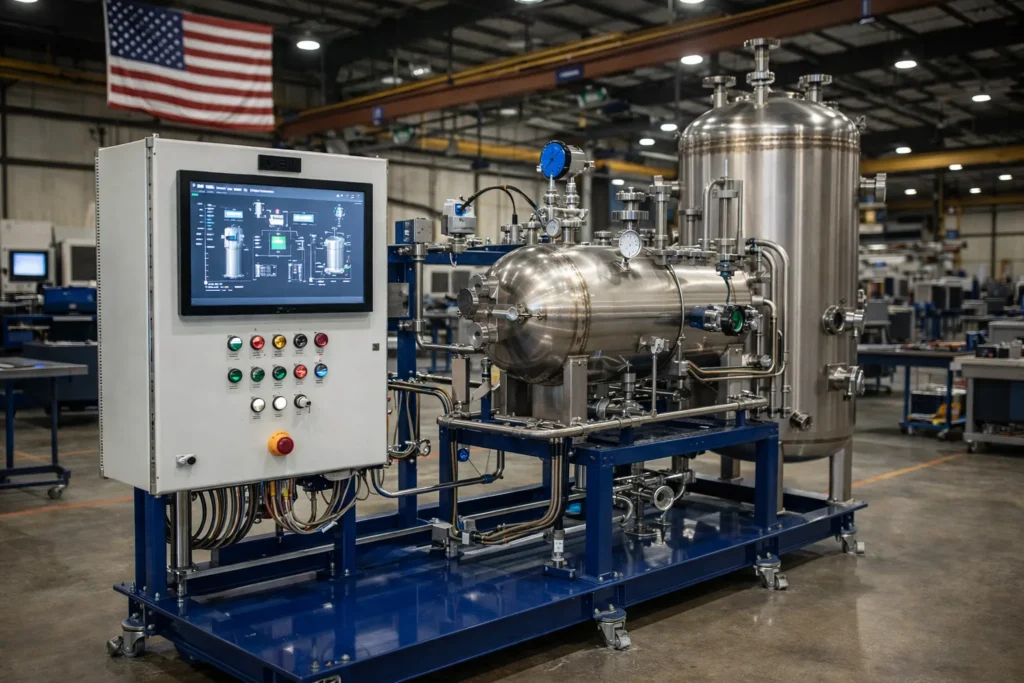
Third-party OEM compliance testing ensures pressure vessel skids integrate safely and reliably into OEM control panels, supporting centralized monitoring, automation, and regulatory compliance. This validation enhances operational efficiency, safety, and scalability across industries like water treatment, chemical processing, and oil and gas. How Third-Party OEM Compliance Testing Enhances System Reliability Third-party OEM compliance testing is […]