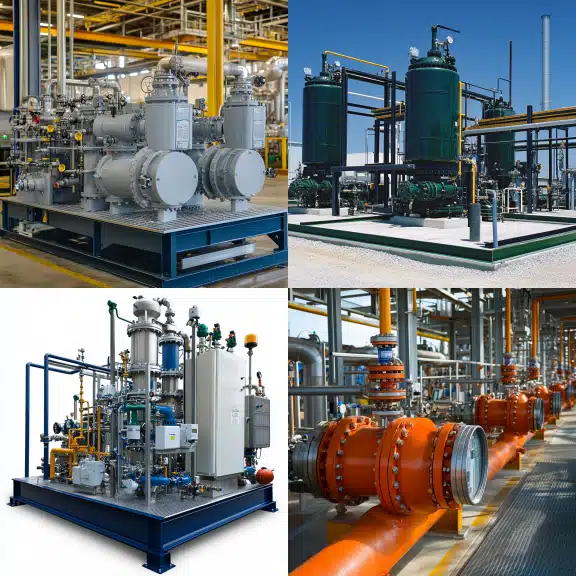
Free Water Knockouts (FWKOs) are specialized vessels designed to efficiently separate water from crude oil, making them ideal for upstream operations. Separators, on the other hand, can handle oil, gas, and water simultaneously, making them better suited for more complex processes. Choosing between the two depends on your operation’s specific needs, with FWKOs being more cost-effective and easier to maintain.
What is a Free Water Knockout?
In the oil and gas industry, separating free water from crude oil is crucial for ensuring high-quality output and preventing equipment damage. Free Water Knockouts (FWKOs) are specialized vessels that efficiently perform this critical task. These devices are essential for improving the quality of oil by reducing its water content and preparing it for downstream processing. In this article, we will compare FWKOs with separators, examining their unique functions and helping you determine when to use each.
A Detailed Exploration of Free Water Knockouts and Separators
What is a Free Water Knockout (FWKO)?
FWKOs are designed to remove free water from crude oil using a combination of engineering features. The key components include:
- Inlet Diverters: They direct incoming fluids to optimize separation.
- Coalescing Plates: These plates help combine smaller water droplets into larger ones, making removal easier.
- Water Outlet: This allows the separated water to exit, leaving only oil with minimal moisture content for further processing.
These components work in unison to maximize the efficiency of water separation. For a deeper dive, explore understanding molecular sieves and their role in solvent drying, which complements FWKO operations in dehydration systems.
What is a Separator?
A separator is a versatile piece of equipment used to separate oil, gas, and water from crude oil. Unlike FWKOs, separators handle multiple phases at once. There are two primary types:
- 2-Phase Separators: They separate gas and liquids, ideal when only oil and gas need processing.
- 3-Phase Separators: These manage oil, water, and gas simultaneously for more complex operations.
Key Differences Between Free Water Knockouts and Separators:
- Functionality: FWKOs focus on water separation, while separators handle oil, water, and gas together.
- Design: FWKOs feature coalescing plates and inlet diverters, whereas separators include mist extractors and additional components to handle multi-phase mixtures.
- Applications: FWKOs are ideal for upstream oil operations, while separators suit midstream and downstream processes.
For more insights, read understanding the main components of a pressure vessel and separator symbols in modern technology.
When to Use a Free Water Knockout vs. a Separator
Free Water Knockouts:
- Ideal when the main need is water removal.
- Used in upstream operations, especially for water-heavy crude.
- Helps prevent corrosion and protects downstream equipment.
Separators:
- Suitable for separating oil, water, and gas simultaneously.
- Common in offshore or complex operations.
- Explore the distinction between a gas scrubber and a gas separator for additional context.
For more guidance, check understanding when to use horizontal and vertical separators and separator types and their applications.
Benefits of Free Water Knockouts
- Efficient Water Removal: FWKOs are specifically designed to efficiently remove water from crude oil, ensuring that only oil with minimal water content moves downstream.
- Protection of Equipment: By removing water, FWKOs help prevent damage to downstream equipment, which could otherwise be caused by water contamination.
- Cost-Effective: FWKOs are simpler and more cost-effective to maintain compared to separators, making them a more affordable option for operations that primarily need to separate water from oil.
Other relevant references include understanding coalescing oil separators and separator symbols in modern technology.
Optimize Your Oil and Gas Operations
Ensure reliable performance and protect your equipment by selecting the right separation technology.
Explore our range of Free Water Knockouts and Separators, and contact us today to consult with our experts and find the ideal solution for your operation.
Frequently Asked Questions
1. What is the difference between a Free Water Knockout and a Separator?
A Free Water Knockout (FWKO) focuses on separating free water from crude oil, while a separator can separate oil, gas, and water simultaneously. FWKOs are specialized, whereas separators are versatile.
2. When should I use a Free Water Knockout?
FWKOs are ideal for removing water from crude oil before further refining. They are best used in upstream operations where water-heavy crude oil is processed.
3. Can separators be used to remove water from crude oil?
Yes, separators can handle the separation of oil, water, and gas, but they are generally used for more complex operations where all three phases need to be separated.
4. Are Free Water Knockouts more cost-effective than Separators?
Yes, FWKOs are simpler and more cost-effective to maintain compared to separators, which require more components and more frequent checks.
5. What are the maintenance requirements for a Free Water Knockout?
FWKOs are easier to maintain than separators. Regular inspection of coalescing plates and cleaning of sediment buildup are the primary maintenance tasks.
Key Takeaways:
- Free Water Knockouts (FWKOs) are designed to remove water from crude oil, making them ideal for upstream operations.
- Separators handle oil, water, and gas simultaneously and are better suited for complex processes.
- FWKOs are more cost-effective and simpler to maintain compared to separators.
- To select the right equipment, consider whether your operation requires only water removal or needs to separate multiple phases.
- For more on separators, check out our article on the difference between 2-phase and split-phase separators.
Related Blog Post
Pressure Vessel Design & Engineering: Concept to Launch
What is Pressure Vessel Design and Engineering: Code-Ready Guide
What are the Key Factors in Pressure Vessel Engineering
How Do You Design a Pressure Vessel: A Step-By-Step Guide
What is Pressure Vessel Fabrication and Manufacturing
About Author