
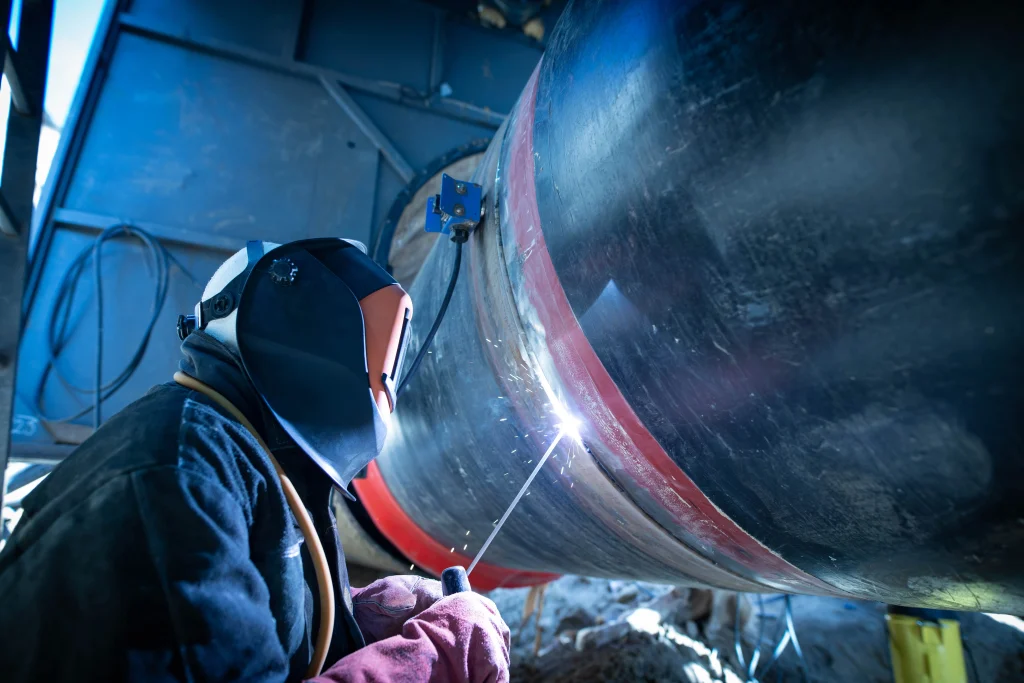
Magnetic testing pressure vessels using MPT helps identify surface flaws in ferromagnetic materials, ensuring safety and compliance. This non-destructive method is essential for industries relying on pressure vessels under extreme conditions.
What Is Magnetic Particle Testing (MPT)?
Magnetic Particle Testing (MPT) is a precise and reliable non-destructive testing (NDT) method used to detect surface and near-surface flaws in ferromagnetic materials such as carbon steel and iron alloys. During magnetic testing of pressure vessels, a magnetic field is applied to the component. When discontinuities such as cracks or seams disrupt the field, magnetic particles accumulate at the flaw, making it visible to inspectors.
This method excels at revealing critical defects like laps, lack of fusion, and grinding tears that threaten the integrity of pressure vessels. MPT is widely used in industries where safety and compliance are non-negotiable, including oil & gas, power generation, and chemical processing.
Why Magnetic Testing Matters for Pressure Vessels
Pressure vessels operate under high pressure and temperature, making early flaw detection critical. Magnetic testing pressure vessels helps catch structural weaknesses during manufacturing or maintenance phases, reducing the risk of catastrophic failure.
By integrating magnetic testing pressure vessels into your quality assurance process, you enhance compliance with industry standards like ASME Section VIII and API 510 while preventing costly downtime or environmental hazards.
Step-by-Step Magnetic Particle Testing Process
Surface Preparation: Clean the component thoroughly to remove oil, rust, paint, and grease.
Magnetization: Direct: Passing current through the vessel. Indirect: Using a yoke or coil to induce a magnetic field.
Application of Magnetic Particles: Dry: Used under white light. Wet fluorescent: Used with UV light for higher sensitivity.
Inspection: Trained technicians look for particle build-ups at discontinuities.
Demagnetization: Essential step to eliminate residual magnetic fields.
Key Standards and Compliance Codes
Magnetic testing of pressure vessels must follow ASME Section V, Guidelines for NDT procedures. ASTM E709, Techniques for magnetic particle inspections. API 510, Pressure vessel inspection regulations.
Only certified technicians (SNT-TC-1A or ISO 9712) should perform magnetic testing to ensure accurate and credible results.
Benefits of MPT in Industrial Applications
Identifies critical flaws early. Doesn’t damage the component. Increases confidence in welds and joints. Cost-effective for high-volume inspections. Supports other NDT methods like UT and RT.
Magnetic Testing vs. Other NDT Methods
Compared to ultrasonic or radiographic testing, magnetic testing of pressure vessels offers faster turnaround and higher sensitivity for surface flaws. However, for internal defects, UT remains superior. Combining methods often delivers the most reliable integrity assessment.
Ensuring Pressure Vessel Safety with Magnetic Testing
By adopting magnetic testing for pressure vessels regularly, companies reinforce their safety protocols and regulatory compliance. MPT ensures weld zones and structural surfaces are free from defects, extending equipment lifespan and protecting human lives.
Need a Reliable Partner?
Red River specializes in designing and manufacturing ASME-certified pressure vessels and providing inspection services.
Contact us to see how our American-made solutions protect your operations.
Frequently Asked Questions
1. What types of pressure vessels require magnetic testing?
Ferromagnetic pressure vessels are especially used in critical-use environments like the chemical and energy sectors.
2. How does magnetic testing compare to ultrasonic inspection?
MPT is more sensitive to surface defects. UT is better for subsurface flaws.
3. Can magnetic particle testing be automated?
Yes, automation improves speed and consistency, especially in production environments.
4. What flaws can magnetic testing detect?
Surface cracks, laps, lack of fusion, grinding tears, and weld defects.
5. Does MPT require both sides of the vessel?
No, only one side is needed if the magnetic field is properly induced.
6. Is MPT safe in all environments?
Generally, yes, though UV-based testing requires eye and skin protection.
7. How long does a typical inspection take?
30–60 minutes depending on vessel size and complexity.
8. What’s the inspection frequency?
As per industry codes, typically at fabrication and routine service intervals.
Key Takeaways
- Magnetic testing of pressure vessels helps ensure structural reliability.
- MPT detects flaws early, preventing failures.
- It complements UT and RT for comprehensive inspection.
- Following ASME, ASTM, and API standards is essential.
- Certified technicians must con
Related Blog Post
Pressure Vessel Design & Engineering: Concept to Launch

What is Pressure Vessel Design and Engineering: Code-Ready Guide
What are the Key Factors in Pressure Vessel Engineering
How Do You Design a Pressure Vessel: A Step-By-Step Guide
What is Pressure Vessel Fabrication and Manufacturing
- Vessel Weld Radiographic Inspection Procedures
- Statistical Process Control Welding in Manufacturing
- Acoustic Emission Monitoring During Pressure Tests
- Phased-Array Ultrasonic Testing for Weld Inspection
- HAZ Hardness Profile Mapping in Welded Components
- Dye Penetrant Inspection (DPI) for Surface Crack Detection



