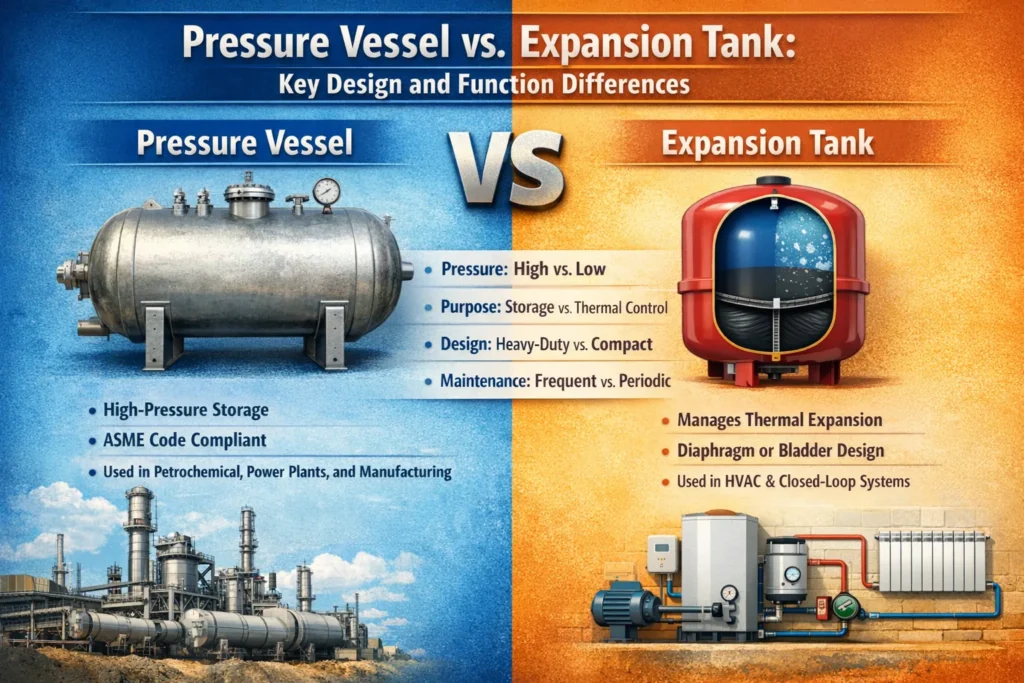
Pressure vessels are designed for storing or processing gases and liquids at high pressures, typically used in industries like petrochemical and power generation. They adhere to strict safety and regulatory standards, such as the ASME Boiler and Pressure Vessel Code (BPVC). On the other hand, expansion tanks are specialized components that manage thermal expansion in closed-loop systems, such as HVAC and cooling systems, by providing a compressible gas cushion. They operate at lower pressures and have less stringent maintenance requirements compared to pressure vessels, which require more frequent inspections due to higher operating risks.
Understanding the Fundamentals
In industrial applications and closed-loop systems, pressure vessels and expansion tanks are essential components for safe and efficient operations. While both equipment types contain pressurized fluids, they serve distinct functions and are designed according to different specifications. This comprehensive guide examines the key differences between pressure vessels and expansion tanks, helping engineers and facility managers make informed equipment selection decisions.
What is a Pressure Vessel?
A pressure vessel is a closed container engineered to hold gases or liquids at pressures significantly different from ambient atmospheric pressure. These vessels are critical components in industries such as petrochemical processing, power generation, and manufacturing, where they store, process, or transport pressurized substances safely and efficiently.
Key Characteristics:
Operating pressures are typically above 15 PSI
Constructed from carbon steel, stainless steel, or specialized alloys
Designed according to ASME Boiler and Pressure Vessel Code (BPVC)
Available in various configurations: horizontal, vertical, spherical
What is an Expansion Tank?
An Expansion Tank is a specialized pressure vessel designed to accommodate thermal expansion and contraction of fluids in closed-loop systems. These tanks maintain system pressure within acceptable ranges by providing a cushion of compressible gas (typically air or nitrogen) that absorbs volume changes as fluid temperatures fluctuate.
Key Characteristics:
Operating pressures typically 12-75 PSI for HVAC applications
Features diaphragm or bladder separation between air and liquid
Designed to ASME Section VIII or specialized Expansion Tank standards
Compact design optimized for thermal expansion management
Primary Functions and Applications
Pressure Vessel Functions
Storage Applications:
Compressed air storage in pneumatic systems
Fuel gas storage for industrial processes
Chemical feedstock storage in refineries
Steam accumulation in power plants
Process Applications:
Reaction vessels in chemical manufacturing
Separation vessels for oil and gas processing
Heat exchangers in various industries
Distillation columns in refineries
Expansion Tank Functions
Thermal Management:
Absorbing fluid expansion in heating systems
Preventing pressure spikes during temperature changes
Maintaining consistent system pressure
Protecting pumps and piping from pressure damage
System Applications:
Hydronic heating systems
Chilled water cooling systems
Solar thermal systems
Closed-loop process cooling
Design and Construction Differences
Pressure Vessel Design Standards
| Design Aspect | Specification |
| Purpose | Code Compliance (ASME BPVC Section VIII) |
| Material Selection | Carbon steel, stainless steel, exotic alloys |
| Wall Thickness | Calculated per pressure and temperature |
| Safety Features | Relief valves, rupture discs, pressure gauges |
Expansion Tank Design Features
| Component | Function | Benefit |
| Diaphragm/Bladder | Separates air and liquid | Prevents air absorption and maintains pre-charge |
| Pre-charge Chamber | Contains compressed air/nitrogen | Provides expansion volume |
| System Connection | Connects to liquid piping | Allows fluid movement during expansion |
| Air Valve | Enables pre-charge adjustment | Maintains proper operating pressure |
Regulatory Requirements and Safety Standards
Pressure Vessel Regulations
Design calculations must be certified by Professional Engineer
Material certification and traceability required
Hydrostatic testing mandatory before operation
Periodic inspection intervals specified (typically 3-10 years)
National Board registration for vessels over certain thresholds
Additional Standards:
Local jurisdiction requirements
Expansion Tank Standards
Applicable Codes:
ASME Section VIII (for larger tanks)
ANSI/NSF Standard 61 (for potable water systems)
UL 2418 (for commercial applications)
Local plumbing codes
Inspection Requirements:
Annual visual inspection recommended
Pre-charge pressure verification
Diaphragm integrity assessment
Less stringent than general pressure vessels
Key Differences Between Pressure Vessels and Expansion Tanks
Pressure vessels and expansion tanks are essential components in many industrial systems, but they serve distinct functions. While pressure vessels are designed for high-pressure storage and processing, expansion tanks play a critical role in managing thermal expansion within closed-loop systems. Understanding the differences between these two types of equipment ensures the selection of the right solution for a given application.
Need a Reliable Partner?
Red River specializes in the design and manufacturing of pressure vessels. We also fabricate related items such as prefabricated spools and skid packages.
Reach out to us today and experience the Red River difference, where American-made products and American values come together. We care more.
Frequently Asked Questions
1. What is the primary function of a pressure vessel compared to an expansion tank?
Pressure vessels store or process fluids at high pressures, while expansion tanks manage thermal expansion and maintain system pressure in closed-loop systems.
2. How do safety requirements differ between pressure vessels and expansion tanks?
Pressure vessels comply with strict ASME BPVC standards, including design calculations, material traceability, and testing. Expansion tanks follow less stringent safety regulations for thermal management.
3. Can an expansion tank be used as a pressure vessel in industrial applications?
No, expansion tanks are specialized for thermal expansion and cannot handle the high pressures or diverse applications required by industrial pressure vessels.
4. What are the maintenance considerations for pressure vessels and expansion tanks?
Pressure vessels require frequent inspections and rigorous maintenance, while expansion tanks need periodic pre-charge checks and diaphragm integrity testing with less intense upkeep overall.
5. How does the design process differ between pressure vessels and expansion tanks?
Pressure vessel design involves extensive calculations, material selection, and ASME code compliance, while expansion tanks focus on thermal expansion management and typically use standardized designs.
Related Blog Post
Condensate Tanks: Types, Fabrication, and ASME Code
Which Tests Validate Deaeration in Pressure Systems?
Equalization Tanks: Design, Sizing, and Fabrication
What Are Thermal Storage Testing Standards for TES Vessels?
What Hydro Tests Are Required for Pressure Vessels?
No subpillar set for this blog post.