
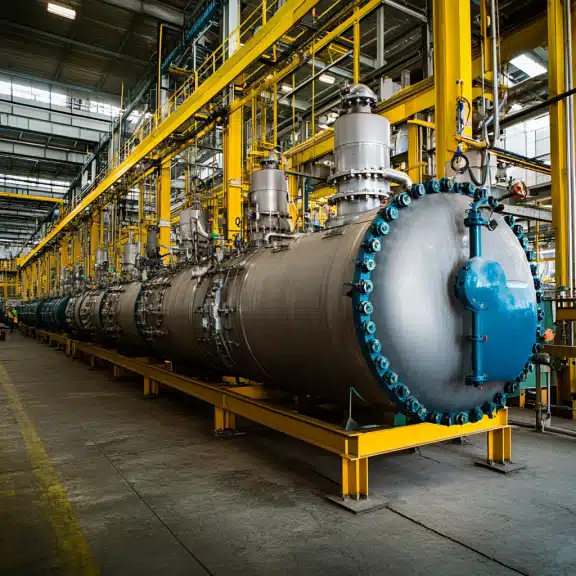
Understanding cryogenic temperature and pressure is critical for designing pressure vessels that operate safely and efficiently under extreme conditions. At Red River, we specialize in fabricating pressure vessels capable of maintaining cryogenic environments for a wide range of industrial, medical, and technological applications.
The Science Behind Cryogenic Temperatures
Cryogenics involves achieving extremely low temperatures to stabilize substances that would normally evaporate. Pressure vessels designed for cryogenic use must handle these extreme conditions while maintaining safety and performance. Red River’s expertise ensures that materials like liquid nitrogen and helium remain stable, with vessels engineered to minimize temperature fluctuations and prevent material degradation. Learn more about the role of pressure vessels in cryogenic storage and cryogenic vessel material composition.
Defining Cryogenic Temperature Ranges
Cryogenic temperatures typically fall below –150 °C (–238 °F). At these levels, gases like nitrogen, helium, and oxygen remain liquid and must be stored and transported under carefully controlled conditions. Proper vessel design ensures safety, reliability, and long-term operational stability.
How Cryogenic Temperatures Are Achieved
Cryogenic pressure vessels rely on advanced cooling systems:
- Liquid nitrogen and helium cooling – maintain extreme low temperatures efficiently
- Insulation and containment – minimize heat ingress and evaporation
- Precision engineering – ensures vessels withstand thermal contraction and expansion
These systems are critical for industries requiring consistent cryogenic conditions.
Materials Suitable for Cryogenic Temperatures
Materials used in cryogenic pressure vessels must resist embrittlement, maintain ductility, and handle repeated thermal cycling. Common materials include:
- Austenitic stainless steels – high ductility and corrosion resistance
- Aluminum alloys – excellent thermal conductivity and strength
- Low-temperature carbon steels – used where compatible with the cryogenic fluid
Selecting the right material ensures vessel longevity and safety in extreme environments.
The Role of Pressure in Cryogenic Storage
Cryogenic pressure vessels must maintain optimal pressure to:
- Prevent rapid evaporation of cryogenic liquids.
- Ensure material stability during storage and transport.
- Enable safe, controlled dispensing of fluids.
Pressure is carefully monitored and controlled using valves, automated systems, and engineered safety mechanisms. Dive deeper into pressure management systems for cryogenic applications.
Understanding Cryogenic Pressure Systems
Cryogenic systems require specialized pressure management to maintain safe operation:
- Automated pressure relief valves prevent over-pressurization.
- Burst disks provide a fail-safe in emergency conditions.
- Continuous monitoring ensures consistent pressure and temperature levels.
At Red River, our vessels integrate these systems for maximum reliability. Explore pressure relief systems in cryogenic environments.
Applications of Cryogenic Temperature and Pressure
Aerospace and Space Exploration
Cryogenic fuel storage is critical for rockets and spacecraft. Red River vessels meet the stringent requirements of the aerospace industry, providing reliable performance under extreme conditions. Explore cryogenic applications in aerospace.
Medical and Healthcare Applications
Cryogenic vessels support:
- Cryopreservation of biological samples.
- MRI cooling systems.
- Advanced medical research requiring controlled low temperatures.
Precision temperature and pressure control are essential for safety and efficacy. Learn more about cryogenic vessels in healthcare.
Computing and Electronics
Cryogenics enables the development of:
- Superconducting materials.
- Quantum computing systems.
- High-performance electronics requiring low-temperature operation.
Red River ensures vessels maintain precise cryogenic conditions for advanced technology applications. Read about cryogenic technologies in electronics.
Need a Trusted Partner for Cryogenic Solutions?
At Red River, we specialize in designing and manufacturing high-performance pressure vessels for cryogenic applications. Whether you need custom fabrication, reliable storage systems, or advanced pressure management, we are here to ensure your systems perform at their best.
Contact us today to learn how our expertise can support your cryogenic needs, from aerospace to healthcare and beyond. Experience the Red River difference where innovation meets American-made quality and reliability.
Frequently Asked Questions
1. What are the key considerations in designing cryogenic pressure vessels?
Design must account for material behavior at low temperatures, thermal contraction, and embrittlement to ensure long-term reliability.
2. How is safety ensured for cryogenic pressure vessels?
Safety is achieved through ASME Boiler and Pressure Vessel Code compliance, pressure relief valves, burst disks, and rigorous quality control.
3. Can cryogenic pressure vessels be customized?
Yes. Customization options include vessel size, pressure rating, material selection, and internal components such as heat exchangers or mixers.
4. What recent improvements enhance cryogenic monitoring?
Fiber-optic temperature sensors and wireless monitoring systems provide real-time data to improve operational efficiency and safety.
5. How does material selection affect cryogenic vessel performance?
Materials must exhibit low-temperature ductility, resistance to embrittlement, and compatibility with cryogenic fluids. Austenitic stainless steel and aluminum alloys are preferred for durability and thermal performance.
Key Takeaways
- Cryogenic pressure vessels maintain extreme low temperatures and carefully controlled pressure levels.
- Material selection and pressure management are critical to vessel safety and performance.
- Applications span aerospace, medical, and high-tech industries.
- Red River designs vessels that meet rigorous operational and safety standards.
- Expertise in cryogenic systems ensures long-term reliability and precision performance.
Related Blog Post
Can Condensate Storage Improve Reliability?
Where Do Condensate Tanks Fit in a Steam System?
Which Nozzles Simplify Maintenance on Pressure Vessels?
How to Vent Condensate Tanks in Steam Systems
How Do Baffle Layouts Affect Stratification in TES Tanks?
About Author



