
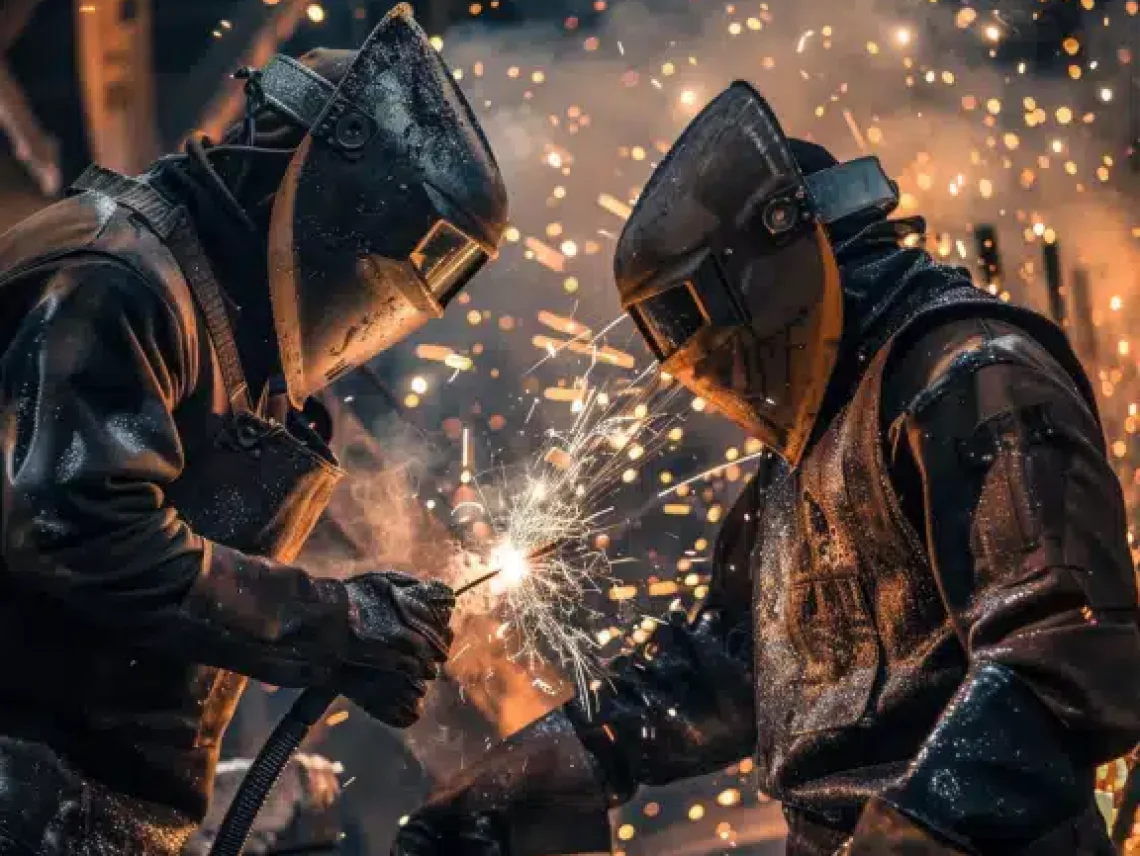
Forging engineering is the practice of designing and applying metal deformation processes—such as open-die, closed-die, and rotary forging—to enhance mechanical properties, structural integrity, and component performance in engineering systems (Wikipedia – Forging). Unlike welding, which fuses separate components, forging reshapes metal under high compressive forces often at elevated temperatures to align grain structure and optimise strength (UArk – Forging in Mechanical Design).
Superior Mechanical Properties: Through plastic deformation, forging enhances strength, toughness, and fatigue resistance by aligning internal microstructure.
High Structural Integrity: Fewer internal defects (like porosity) and continuous grain flow deliver unmatched reliability.
Precision and Efficiency: Advanced methods such as GFM rotary forging yield excellent surface finish and tighter tolerances.
Complex Tooling & Cost: Closed-die forging demands precision die design and investment in robust machinery.
Temperature Control Challenges: Each material has specific forging temperature windows (e.g., aluminium ~350–550 °C), and deviating can induce flaws or inefficient forming.
Design Constraints: Sharp corners or intricate geometries can cause stress concentrations and defects. Forging engineers must apply design principles like draft angles and corner radii to prevent these.
| Aspect | Forging Engineering | Welding |
|---|---|---|
| Structural Strength | Superior grain structure and impact resistance | Potential heat-affected zones and residual stress |
| Design Flexibility | Limited to simpler geometries and additional machining | High flexibility; enables complex geometries |
| Material Integrity | High—less inclusion, porosity | May introduce defects if not controlled |
| Cost & Complexity | Higher upfront tooling and temperature control needed | Lower tooling cost; careful heat management required |
For components in high-stress environments such as pressure vessels forging engineering offers unmatched durability and reliability. For detailed guidance, check our section on Choosing the Right Materials and Construction Techniques for Custom Pressure Tanks.
In contrast, welding may suit intricate designs or low-volume builds. Learn more in our exploration of Quality Assurance in Pressure Vessel Manufacturing.
Also, you might find our overview of Pressure Vessels – A Comprehensive Guide helpful, and explore our broader Pressure Vessels category for more engineering insights.
Need expert guidance on integrating forging engineering into your next pressure vessel project? Contact Red River today where American Made meets American Values. Discover how we can bring precision and strength to your designs.
Forging engineering involves designing metal deformation processes to shape components while enhancing strength, integrity, and mechanical performance.
Welding joins materials through heat and filler; forging reshapes material under compression, improving grain flow and structural strength.
Metals like steel, aluminium, titanium, and copper alloys are frequently forged, each requiring specific temperature control (UArk – Forging Guide)
Forged parts resist fatigue, impacts, and high pressures better due to aligned microstructure and lower defect rates.
Yes, but they require precision die design and may increase cost; for intricate geometry, welding may be more practical.
Forging engineering refines component strength through controlled deformation and enhanced grain structure.
It delivers superior structural integrity ideal for high-pressure, high-stress applications like pressure vessels.
Process control—from temperature to die design—is critical to avoiding defects and ensuring quality.
Use forging for strength-critical parts, and welding when design flexibility is paramount.
Explore Red River’s resources for deeper insights, especially in pressure vessel material selection and construction methods.
In the realm of industrial solutions, Red River emerges as a pioneer, offering a diverse range of custom-engineered products and facilities. Among our specialties is the design and production of Custom/OEM Pressure Vessels, meticulously crafted to meet individual client requirements, ensuring performance under various pressure conditions. Our expertise extends to the domain of prefabrication, where Red River leads with distinction.
The company excels in creating prefabricated facilities, modules, and packages, reinforcing its stance as a forerunner in innovation and quality. This proficiency is further mirrored in their Modular Skids offering, where they provide an array of Modular Fabricated Skid Packages and Packaged equipment. Each piece is tailored to client specifications, underlining their commitment to delivering precision and excellence in every project they undertake.


