

The pros and cons of vertical integration influence how companies manage supply chains, production quality, and operational efficiency. This strategy helps organizations maintain control over production stages while reducing dependency on external vendors. However, it also introduces challenges such as increased management complexity and reduced flexibility. Understanding the pros and cons of vertical integration enables businesses to make informed strategic decisions and optimize long-term performance.
Understanding the Pros and Cons of Vertical Integration
Vertical integration is a business strategy where companies control multiple stages of their production process internally, rather than relying on external suppliers and partners.
According to McKinsey research, 67% of manufacturing companies are considering vertical integration to reduce supply chain vulnerabilities post-2020.
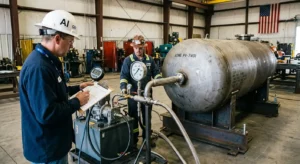
Real-world example: Instead of buying steel from a supplier, a pressure vessel manufacturer might purchase the steel mill itself. This gives them complete control over material quality, costs, and delivery timing.
The Two Types of Vertical Integration
Backward Integration
- What it means: Taking control of your suppliers
- Example: A car manufacturer buying a tire factory
- Primary benefit: Guaranteed supply and cost control
Forward Integration
- What it means: Taking control of distribution or sales
- Example: A manufacturer opening their own retail stores
- Primary benefit: Higher profit margins and customer control
Key Benefits of Vertical Integration
1. Complete Supply Chain Control
What this means for your business:
- No more supplier delays disrupting production
- Materials meet your exact specifications every time
- Real-time visibility into every production stage
- Ability to prioritize urgent orders internally
Case Study: Boeing’s vertical integration allows them to maintain aerospace-grade quality standards across all components, something that would be difficult to guarantee with multiple external suppliers.
2. Significant Cost Savings
Typical cost reductions include:
- 10-15% reduction in material costs (eliminated middleman markups)
- 5-20% decrease in production delays
- Reduced transaction costs from fewer vendor contracts
- Bulk purchasing advantages for raw materials
Industry Benchmark: Manufacturing companies typically see 12-18% total cost reduction within 24 months of successful vertical integration.
3. Competitive Market Advantages
How vertical integration creates competitive edge:
| Traditional Approach | Vertically Integrated Approach |
| 2-4 weeks response time | Same-day to 1-week response |
| Limited customization | Full customization capability |
| Price tied to supplier costs | Flexible pricing strategies |
| Quality depends on vendors | Complete quality control |
4. Enhanced Quality and Compliance
Quality improvements you can expect:
- Consistent standards across all production stages
- Faster issue resolution (no vendor negotiations)
- Better regulatory compliance (direct oversight)
- Customization capabilities for specific requirements
Major Drawbacks to Consider
1. High Initial Investment Requirements
Typical costs include:
- Facility acquisition: $500K – $50M+ depending on industry
- Equipment and technology: 20-40% of facility costs
- Additional workforce: $100K+ per specialized role
- Working capital: 15-25% increase for expanded operations
Planning Tip: Budget for 18-24 months of integration costs before expecting positive returns.
2. Increased Management Complexity
New challenges you’ll face:
- Managing diverse skill sets across different operational areas
- Coordinating between previously separate business functions
- Allocating resources across multiple priorities
- Monitoring performance across various business units
Mitigation Strategy: Invest in integrated management systems and cross-functional training programs.
3. Reduced Operational Flexibility
Flexibility limitations:
- Fixed capacity in owned facilities limits scaling options
- Technology upgrades become more expensive and complex
- Market changes may require costly operational adjustments
- Switching costs increase when better options emerge
4. Risk of Overextension
Warning signs of overextension:
- Declining performance in core business areas
- Management attention spread too thin
- Quality issues in newly integrated areas
- Cash flow strain from multiple operational needs
Decision Framework: Is Vertical Integration Right for You?
Step 1: Financial Readiness Assessment
Complete this checklist:
- Capital availability: Can you fund 18-24 months of integration costs?
- Cash flow stability: Will current operations sustain expanded overhead?
- Financing options: Do you have access to additional capital if needed?
- ROI timeline: Can you wait 2-3 years for full returns?
Step 2: Operational Readiness Evaluation
Key capability requirements:
- Management expertise in target integration areas
- Infrastructure capacity to support expanded operations
- Quality systems capable of scaling
- Workforce availability for specialized roles
Step 3: Industry Suitability Analysis
Vertical integration works best when:
- Quality requirements are extremely high
- Supplier markets are volatile or unreliable
- Transportation costs are significant
- Customization is a key competitive advantage
Consider alternatives when:
- Technology changes rapidly
- Reliable suppliers are readily available
- Profit margins are already thin
- Regulatory complexity is high
Expert Insights and Industry Trends
2024 Manufacturing Integration Trends
Key developments affecting vertical integration decisions:
- Supply Chain Resilience: 73% of manufacturers are reshoring operations
- Technology Integration: AI and IoT making integration more manageable
- Sustainability Requirements: Environmental compliance driving internal control
- Skilled Labor Shortage: Integration helping optimize workforce utilization
Industry Expert Quote
“The most successful vertical integration strategies focus on core competencies first. Companies that try to integrate everything at once typically struggle with execution.”
– Sarah Chen, Manufacturing Strategy Consultant, Deloitte
Real-World Success Stories
Case Study 1: Tesla’s Battery Integration
Challenge: Dependence on external battery suppliers limiting innovation
Solution: Acquired battery technology and built Gigafactories
Results:
- 30% cost reduction in battery production
- Faster innovation cycles
- Better quality control
- Enhanced competitive positioning
Case Study 2: Aerospace Component Manufacturer
Challenge: Quality issues with critical component suppliers
Solution: Acquired key supplier and integrated operations
Results:
- 40% reduction in quality defects
- 25% faster production times
- $2M annual cost savings
- Improved customer satisfaction scores
Evaluating the Pros and Cons of Vertical Integration
The pros and cons of vertical integration provide a clear framework for understanding how internalizing production stages affects efficiency, quality, and long-term performance. While this strategy strengthens control and compliance, it also demands careful management and planning.
When executed thoughtfully, vertical integration can enhance operational reliability, reduce risks, and improve production efficiency. Companies that prioritize quality, safety, and long-term dependability can benefit significantly from this approach.
Need a reliable partner?
Red River specializes in the design and manufacturing of pressure vessels. We also fabricate related items such as prefabricated spools and skid packages.
Reach out to us today and experience the Red River difference. Where American-made products and American Values come together, we care more.
Frequently Asked Questions
1. What’s the Difference Between Vertical and Horizontal Integration?
Vertical integration controls different stages of the supply chain, while horizontal integration involves acquiring similar-level companies. Vertical integration focuses on internal control, efficiency, and quality oversight, whereas horizontal integration centers on expanding market presence.
2. How Long Does Vertical Integration Usually Take?
The timeline depends on operational scale, internal expertise, training, and process complexity. Larger or more technical operations generally require more time to complete integration successfully.
3. Which Industries Benefit Most From Vertical Integration?
Industries with strict quality requirements, complex supply chains, and regulatory compliance needs benefit most. Manufacturing, aerospace, defense, energy, and precision-driven sectors often see the greatest advantages.
4. How Can Companies Maintain Supplier Relationships While Integrating?
Maintaining clear communication, collaborating on non-integrated services, and keeping backup suppliers for risk management helps preserve healthy supplier relationships during integration.
5. What Are the Common Tax Considerations for Vertical Integration?
Tax considerations may include equipment depreciation, inventory valuation adjustments, internal transfer pricing, and compliance with reporting requirements. Organizations should consult financial experts when evaluating these implications.
Key Takeaways
- Vertical integration improves control over quality, timelines, and compliance.
- This strategy enhances oversight of inspection and safety processes.
- Operational complexity increases and requires strong internal management.
- Long-term benefits depend on readiness, resources, and internal capabilities.
- Careful evaluation of advantages and challenges ensures successful integration.
Related Blog Post
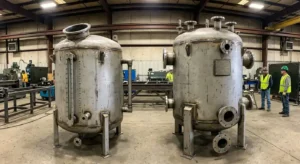
Condensate Tanks: Types, Fabrication, and ASME Code
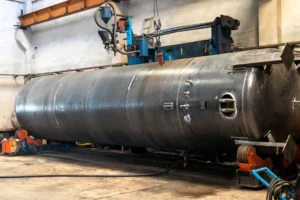
Which Tests Validate Deaeration in Pressure Systems?
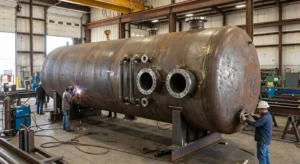
Equalization Tanks: Design, Sizing, and Fabrication
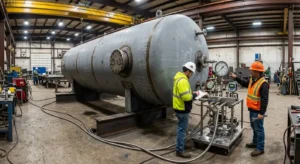
What Are Thermal Storage Testing Standards for TES Vessels?
What Hydro Tests Are Required for Pressure Vessels?
No subpillar set for this blog post.
About Author



