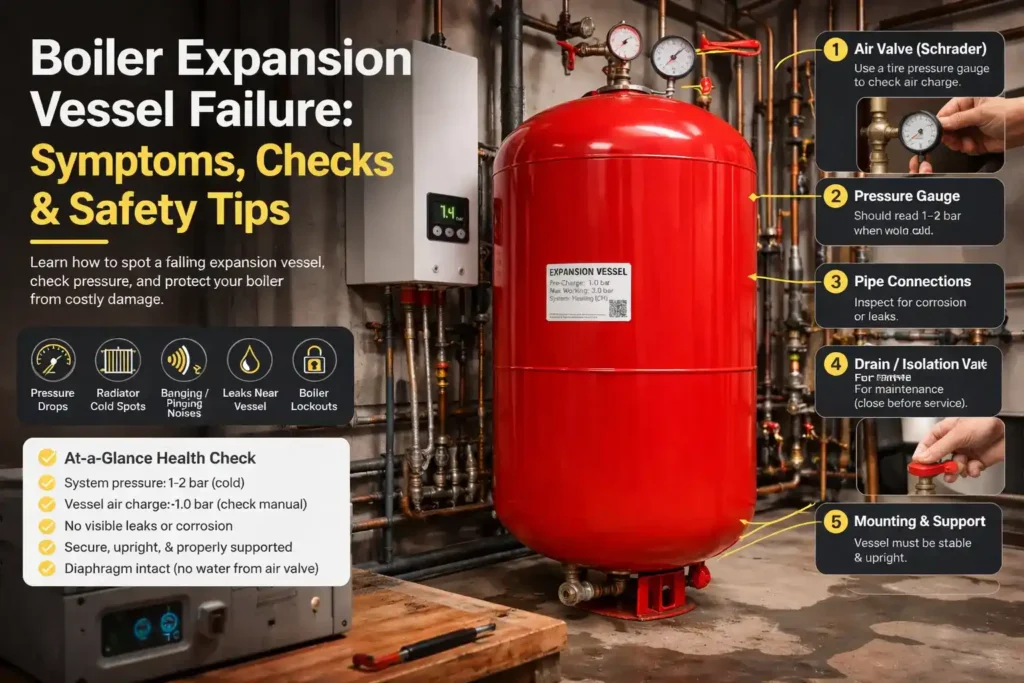
Is your boiler losing pressure or making odd noises? A faulty expansion vessel could be the cause. This guide will walk you through how to spot the signs, check your vessel, and know when to call a professional to keep your heating system running smoothly.
The Importance of Boiler Expansion Vessel Maintenance
Is your boiler acting up, losing pressure, or making strange noises? A common but often overlooked issue could be a faulty expansion vessel. In this guide, we’ll walk you through the signs to watch for, how to check your vessel, and when to call in a professional to keep your heating system running smoothly and safely.
A boiler expansion vessel is a key component of your heating system that helps manage the pressure created when water expands as it heats up. Without it, the rising pressure could damage your pipes or cause the boiler to fail. Essentially, the expansion vessel acts as a safeguard to protect the system from potentially costly or dangerous issues.
Here’s how it works: The expansion vessel has two sides separated by a flexible diaphragm. One side holds water, while the other contains compressed air. When the water heats up and expands, it pushes against the diaphragm, compressing the air to absorb excess pressure. As the water cools and contracts, the diaphragm returns to its original position, keeping the system’s pressure balanced.
Why it’s crucial: A working expansion vessel ensures your boiler’s pressure stays under control. Without it, pressure can spike as the water heats, triggering the pressure relief valve or causing serious damage. The expansion vessel essentially protects your entire system from dangerous pressure surges.
For a deeper dive into boiler components and maintenance services, feel free to explore our boiler system offerings at Red River.
Signs Your Boiler Expansion Vessel Might Be Failing
Catching the signs of a failing expansion vessel early can help you avoid expensive repairs. If you want a more detailed breakdown of failure symptoms and detection methods, check out our article on deciphering the signs of a faulty expansion vessel
1. Pressure Fluctuations and Drops
If your boiler’s pressure gauge is constantly swinging from high to low, it could mean the expansion vessel isn’t doing its job of absorbing pressure properly.
2. Water Leaks Around the Vessel
If you notice water leaking near the expansion vessel or in your boiler room, it could be a sign of a cracked or corroded vessel this needs immediate attention. For a deeper look at common expansion vessel leak causes and what replacement involves, see our guide on expansion vessel leaks and hot water tank replacement
3. Boiler Pressure Gauge Issues
If the pressure gauge shows readings outside the normal range (usually between 1-2 bars for most boilers), and topping up the pressure doesn’t help, the expansion vessel could be the issue.
4. Strange Noises Coming From the Boiler
Pinging, banging, or knocking noises in your boiler could be a sign of pressure imbalances caused by a failing expansion vessel.
5. Frequent Boiler Lockouts or Error Codes
Most modern boilers come with safety features that lock the system if the pressure is too high or too low. A faulty expansion vessel can cause pressure issues, leading to unexpected shutdowns or poor heating efficiency.
What Happens When a Boiler Expansion Vessel Fails?
A failed expansion vessel can lead to more than just a minor inconvenience. Here’s what typically happens when it goes wrong:
Increased Pressure and the Risk of Leaks
Without the expansion vessel to absorb the increased pressure, the system becomes vulnerable to dangerous pressure spikes. To better understand how boiler pressure is affected by a defective expansion vessel, refer to our post on how boiler pressure is impacted by a defective expansion vessel. This can activate the pressure relief valve, releasing water to prevent explosions or pipe bursts. Constant activation can lead to water loss and damage to nearby areas.
Damage to Boiler Components
Excessive pressure puts stress on important boiler components like heat exchangers, pumps, and valves. Over time, this can lead to leaks, cracks, or complete failure, resulting in costly repairs or replacements.
Boiler Lockouts or Heating Issues
Most modern boilers come with safety features that lock the system if the pressure is too high or too low. A faulty expansion vessel can cause pressure issues, leading to unexpected shutdowns or poor heating efficiency.
Higher Energy Bills from Inefficiency
Pressure problems can reduce the efficiency of your boiler, making it work harder to maintain the temperature and driving up energy consumption and costs.
Safety Hazards, Including Water Hammer and Pipe Damage
Excessive pressure can lead to water hammer, a loud banging sound from sudden pressure surges in pipes. Not only is this disruptive, but it can also cause pipes to loosen or burst, leading to flooding or structural damage. For more on boiler safety and managing pressure issues, check out the Boiler Safety Essentials by the Heating and Hot Water Industry Council
Preventing Boiler Expansion Vessel Failure
Preventing expansion vessel failure is far simpler and more cost-effective than repairing the damage afterward. Here’s how to maintain your expansion vessel in top shape:
Routine Maintenance and Inspection
Schedule an annual service with a qualified technician who will inspect the expansion vessel and other key boiler components. Regular inspections catch early signs of wear and loss of air charge, preventing more serious issues later.
Checking and Recharging Vessel Air Pressure
The air side of the expansion vessel must maintain a certain pressure (usually around 1 bar). If you’re unsure when an expansion vessel should be replaced or how frequently, see our overview on understanding the replacement frequency of expansion tanks. Technicians can test this and recharge the air if it’s too low. Low air pressure leads to diaphragm failure and vessel malfunction.
Signs to Watch for Proactive Repair
Pay attention to early symptoms like pressure drops, leaks, or noises. Early diagnosis can often avoid vessel replacement and prevent damage to the boiler.
When to Call a Professional Technician
Never attempt to repair or recharge the expansion vessel yourself unless you have proper training and tools. Incorrect handling can cause injury or further damage. Always call a certified heating professional. For expert help with boiler maintenance and repair, reach out to Red River’s trusted technicians.
Why Timely Action on Boiler Expansion Vessel Issues Matters
A failing boiler expansion vessel is not just a minor fault; it’s a risk to your heating system’s safety, efficiency, and your home’s comfort. For a broader explanation of common expansion tank failures and how they affect heating systems, read our piece on understanding boiler expansion tank failures. Timely diagnosis and repair prevent pressure-related damage that could lead to expensive boiler repairs or unsafe conditions. Regular professional maintenance is your best defense against unexpected boiler failures. By understanding the signs and risks of expansion vessel failure, you can take proactive steps to keep your heating system reliable all year round. For industry standards on maintaining boiler systems and understanding pressure vessel codes, visit the ASME Boiler and Pressure Vessel Code.
Ready to Keep Your Boiler Running Smoothly?
At Red River, we specialize in the design and manufacturing of high-quality pressure vessels and related components, such as prefabricated spools and skid packages. Whether you’re experiencing expansion vessel issues or need expert advice on maintaining your boiler system, we’re here to help.
Reach out today to speak with our experienced team and ensure your heating system remains safe and efficient. Trust Red River for top-notch, American-made solutions designed to meet the highest industry standards. Let’s protect your investment together.
Frequently Asked Questions
1. What causes a boiler expansion vessel to fail?
The most common causes include a ruptured diaphragm, loss of air charge in the vessel, corrosion, and physical damage. Regular wear and tear or lack of maintenance often lead to failure.
2. How often should a boiler expansion vessel be checked?
It’s recommended to have your boiler and expansion vessel inspected annually by a qualified technician during your boiler service.
3. How much does it cost to replace a boiler expansion vessel?
Typically $150–$400, including labor, depending on the boiler model and vessel size.
4. Can a failed expansion vessel cause my boiler to lose pressure?
Yes, a failing vessel can cause pressure drops as the system loses its ability to regulate pressure correctly.
5. How do I know if my boiler expansion vessel is faulty?
Look for pressure drops, water leaks near the vessel, frequent boiler shutdowns, or odd noises like banging or pinging.
Key Takeaways
- Boiler expansion vessels play a critical role in maintaining system pressure and preventing damage from pressure spikes.
- Signs of failure include pressure fluctuations, leaks, unusual noises, and frequent boiler shutdowns.
- Regular inspections are essential, ideally annually, to keep the expansion vessel and boiler system functioning correctly.
- Replacing a faulty expansion vessel can prevent expensive repairs or safety hazards associated with pressure surges and system inefficiencies.
- Professional service is crucial; recharging or repairing the vessel should be done by qualified technicians to ensure safe and effective operation.
Related Blog Post
Condensate Tanks: Types, Fabrication, and ASME Code
Which Tests Validate Deaeration in Pressure Systems?
Equalization Tanks: Design, Sizing, and Fabrication
What Are Thermal Storage Testing Standards for TES Vessels?
What Hydro Tests Are Required for Pressure Vessels?
No subpillar set for this blog post.
About Author