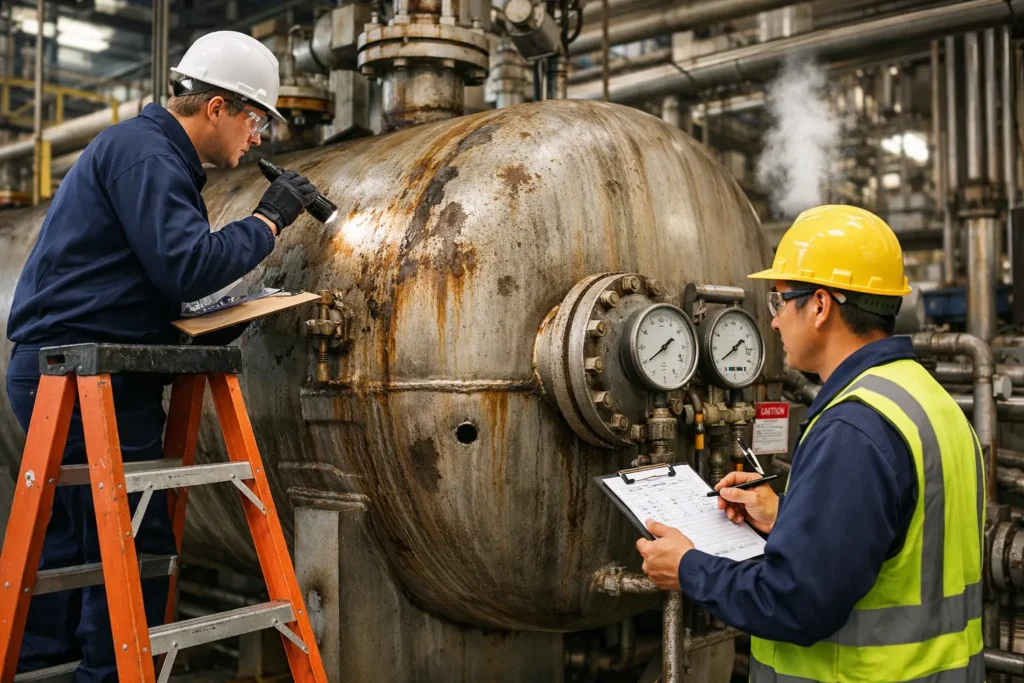
Regular inspection of dehydrator pressure vessels is essential for preventing corrosion, structural failures, and costly downtime. Dehydrator pressure vessel inspection combined with proactive testing and maintenance significantly extend vessel lifespan and ensure safe, efficient industrial operations.
Regular Inspection of Dehydrator Pressure Vessels Is Essential
For dehydrator pressure vessels, routine inspections are critical to maintaining safety, performance, and compliance. Through consistent industrial pressure vessel testing, inspections uncover early indicators of damage such as corrosion, material fatigue, or pressure-related stress before they escalate into serious issues.
At Red River, we emphasize pressure vessel maintenance best practices by supporting our clients with comprehensive inspection plans tailored to their operational demands. This proactive approach minimizes risk, reduces unplanned downtime, and helps industrial facilities protect both their equipment and long-term productivity.
Understanding the Role of Dehydrator Pressure Vessels in Industrial Operations
Dehydrator pressure vessels serve an essential role in removing moisture from gas, enhancing operational efficiency. However, poor maintenance or infrequent testing may lead to issues like corrosion, material fatigue, or inefficient operations. Therefore, regular inspections of dehydrator pressure vessels ensure they continue to meet the high standards required for demanding industrial processes. At Red River, our goal is to provide durable and reliable solutions for all industrial dehydration needs.
Risks of Skipping Routine Inspection and Testing
Skipping routine inspections can lead to numerous problems, ranging from diminished performance to catastrophic failure. For instance, small issues like corrosion, cracks, or structural weaknesses can escalate quickly if left unaddressed. As a result, costly repairs and operational downtime may follow. To avoid these risks, timely inspections are critical to identifying and resolving issues before they become significant.
How Frequent Inspections Can Improve Vessel Lifespan
Regular inspections of dehydrator pressure vessels significantly increase a vessel’s lifespan by catching and addressing potential problems early. For this reason, Red River promotes customized inspection schedules tailored to your specific operational needs. By adopting this proactive approach, businesses can prevent costly breakdowns and maintain vessel performance over the long term.
Key Steps for Inspection and Testing of Dehydrator Pressure Vessels
To maximize safety and efficiency, a comprehensive inspection process is necessary. At Red River, we follow a structured method to ensure no aspect of the vessel is overlooked.
1. Visual Inspection for External Wear and Tear
The first step involves checking for external signs of damage, such as cracks, dents, or corrosion. By identifying these issues early, we prevent further degradation. Learn more about pressure vessel inspection checklists and how to spot potential issues.
2. Pressure Testing: Ensuring Structural Integrity
Pressure testing helps verify the vessel’s ability to withstand operational conditions. In other words, it confirms structural soundness and reveals potential weaknesses. For detailed testing procedures, see our guide on pressure vessel stress analysis.
3. Ultrasonic Testing: Identifying Hidden Defects
For internal defects that visual inspections can’t detect, we use ultrasonic testing. This advanced method pinpoints issues like material thinning or hidden cracks. Learn more about welding in pressure vessel fabrication and how it contributes to structural integrity.
4. Documentation and Reporting of Inspection Results
Maintaining accurate records of inspection findings is crucial. At Red River, we ensure detailed documentation, which helps guide future maintenance and operational planning. Understand the importance of ASME certification in maintaining compliance.
Common Issues Found During Dehydrator Pressure Vessel Testing
Routine testing of dehydrator pressure vessels is critical for figuring out and addressing potential troubles before they increase into the most important troubles. At Red River, we regularly come across numerous unusual issues during our pressure vessel inspections that could affect the protection and performance of those vessels.
Corrosion and Its Impact on Vessel Performance
Corrosion remains one of the most common problems in pressure vessels. If left unchecked, it can compromise structural integrity, leading to leaks or total failure. Regular monitoring and proactive measures can mitigate these risks, ensuring long-term performance and safety.
Cracks, Leaks, and Structural Weaknesses
Cracks, leaks, and different structural weaknesses also are regularly identified throughout testing. These issues frequently result from extended publicity to excessive pressure, temperature fluctuations, or material fatigue. If now not addressed directly, even small cracks can develop, compromising the vessel’s capacity to contain pressure effectively. Leaks are another purple flag, signaling a breach inside the vessel’s containment competencies, that may result in dangerous running situations.
Best Practices for Long-Term Maintenance of Dehydrator Pressure Vessels
Maintaining the longevity and performance of dehydrator pressure vessels requires a proactive approach. At Red River, we emphasize the significance of long-term maintenance strategies to prevent troubles and maximize the efficiency of your vessels.
Scheduling Regular Maintenance Based on Inspection Results
One of the only practices for ensuring the toughness of your pressure vessels is scheduling ordinary renovation. After undertaking thorough inspections, it’s important to address any recognized problems right away. Whether it is fixing minor corrosion or acting pressure checks to ensure structural integrity, timely upkeep based on inspection consequences is prime to preventing highly-priced upkeep or risky malfunctions down the road. At Red River, we collaborate closely with our customers to create customized safety schedules tailored to the particular desires and operating conditions of their vessels.
How to Properly Document and Track Vessel Maintenance
Effective preservation relies on correct documentation and tracking, which is a key part of dehydrator pressure vessel inspection. Recording each inspection, restoration, and test result is crucial for long-term vessel performance. Properly monitoring the records of each vessel allows you to perceive styles, predict capacity problems, and make knowledgeable decisions on future preservation needs.Implementing pressure vessel maintenance best practices includes systematically logging all maintenance actions, inspection results, and any corrective measures taken. At Red River, we help customers install clear documentation systems, ensuring that every step of industrial pressure vessel testing and maintenance process is logged accurately. This enhances responsibility, transparency and operational reliability throughout the lifecycle of your pressure vessels.
Partner with Experts in Pressure Vessel Safety
Ensure the reliability and longevity of your industrial vessels with Red River’s comprehensive design, fabrication, and maintenance solutions. Contact us today to discuss your project and see how our American-made standards deliver safety, performance, and peace of mind.
Frequently Asked Questions
1. How frequently ought a dehydrator pressure vessel be inspected?
The frequency of inspection for a dehydrator pressure vessel relies upon several factors, along with the vessel’s operating situations, cloth type, and industry requirements. As preferred, an intensive inspection ought to be performed yearly. However, vessels that perform underneath extra severe situations, inclusive of high pressure or temperature, may additionally require more frequent inspections occasionally as frequently as every six months. It’s also critical to behavior extra inspections if there are any changes in the vessel’s operating surroundings or after any enormous repairs.
2. What are the most common causes of failure in dehydrator pressure vessels?
The maximum commonplace reasons for failure in dehydrator pressure vessels include corrosion, fabric fatigue, and poor protection. Corrosion is especially risky as it weakens the vessel’s walls and might result in leaks or structural failure over the years. Fatigue happens from extended exposure to high pressures, temperatures, or fluctuating hundreds, that could bring about cracks or different structural weaknesses. Improper or infrequent maintenance can exacerbate those troubles, leading to untimely failure. This is why it is essential to observe habitual inspection and pressure vessel upkeep great practices.
3. What trying-out techniques are normally used to ensure the integrity of dehydrator pressure vessels?
The 3 maximum commonplace checking-out methods for dehydrator pressure vessels are visual inspection, pressure trying out, and ultrasonic testing. Visual inspection facilitates becoming aware of external wear and tear, including cracks or corrosion. Pressure trying out is used to make certain the vessel can face up to the essential working pressures without leaks or deformations. Ultrasonic testing is a complicated method that detects inner defects, inclusive of hidden cracks, that won’t be seen at some point during a popular visual inspection. Together, those techniques offer a complete view of the vessel’s situation.
4. How often should pressure vessels be inspected?
The frequency of pressure vessel inspections depends on several factors including the type of vessel, the materials used, operating conditions, and regulatory requirements. Generally, inspections are done to ensure safety, structural integrity, and compliance with standards.
5. What is the purpose of pressure vessel regulations?
The purpose of pressure vessel regulations is to ensure safety, reliability, and performance in the design, manufacture, operation, and maintenance of pressure vessels. Pressure vessels tanks or containers that hold gases or liquids under high pressure can pose serious risks if they fail, including explosions, fires, and structural damage. Regulations exist to minimize these risks.
Key Takeaways
- Routine inspections catch early signs of corrosion, cracks, and material fatigue before they escalate.
- Proper testing visual, pressure, and ultrasonic ensures structural integrity and long-term performance.
- Skipping inspections increases the risk of failures, safety hazards, and expensive operational interruptions.
- Detailed documentation and tailored maintenance schedules help maximize vessel lifespan and reliability.
Related Blog Post
Pressure Vessel Design & Engineering: Concept to Launch
What is Pressure Vessel Design and Engineering: Code-Ready Guide
What are the Key Factors in Pressure Vessel Engineering
How Do You Design a Pressure Vessel: A Step-By-Step Guide
What is Pressure Vessel Fabrication and Manufacturing
- Understanding Dehydrator Lifecycle Management
- Understanding Dehydrator Lifecycle Management
- Why Upgrading Aging Dehydrator Pressure Vessels is Crucial
- Why Upgrading Aging Dehydrator Pressure Vessels is Crucial
- Why Regular Inspection of Dehydrator Pressure Vessels is essential
- Understanding the Lifecycle Costs of Dehydrator Pressure Vessels
About Author