Pressure vessel material selection directly impacts safety, durability, and compliance. Choosing the right material requires balancing strength, corrosion resistance, temperature limits, cost, and applicable codes.
Understanding Pressure Vessel Material Selection
Pressure vessels are engineered to contain fluids under pressure, making material choice a critical design decision. Effective pressure vessel material selection ensures the vessel can withstand operating pressure, temperature variations, and environmental exposure throughout its service life.
Selecting inappropriate materials can lead to premature corrosion, cracking, or failure. By evaluating mechanical properties, fabrication requirements, and regulatory standards, engineers can make informed decisions that support long-term reliability.
Key Criteria for Pressure Vessel Material Selection
The pressure vessel material testing and selection process involves multiple technical considerations that must align with the vessel’s operating conditions.
Mechanical Properties
Materials must provide adequate tensile strength, yield strength, and toughness to handle internal pressure without deformation or rupture. These mechanical properties directly influence allowable stress values, design pressure limits, and overall safety margins defined by applicable codes. Adequate toughness is especially critical to prevent brittle fracture under low-temperature or high-stress conditions.
Corrosion Resistance
Many pressure vessels operate in environments containing moisture, corrosive chemicals, or aggressive process fluids that can cause material degradation over time. Selecting materials with appropriate corrosion resistance, such as corrosion-resistant alloys or lined materials, helps minimize wall thinning, maintain structural integrity, and extend service life. Effective corrosion resistance also reduces maintenance requirements and lowers the risk of unexpected failures.
Temperature Tolerance
Pressure vessels may be exposed to a wide range of operating temperatures, from cryogenic conditions to elevated or high-temperature service. Materials must retain sufficient strength, ductility, and creep resistance across the expected temperature range. Inadequate temperature tolerance can lead to embrittlement, loss of strength, or time-dependent deformation, all of which can compromise vessel safety.
Weldability and Fabrication
Material weldability and formability play a critical role in fabrication quality, production efficiency, and long-term performance. Materials with predictable welding behavior reduce the likelihood of defects such as cracking, distortion, or residual stresses. Good fabrication characteristics also simplify compliance with code requirements, improve inspection outcomes, and reduce rework and overall manufacturing costs.
Cost Efficiency
Material selection requires balancing initial material cost with performance, durability, and lifecycle considerations. Lower-cost carbon steels may be suitable for benign service conditions, while harsh environments involving high pressure, temperature, or corrosive media often justify the use of higher-grade alloys. Evaluating total cost of ownership, including inspection, maintenance, and replacement, ensures the most cost-effective and reliable solution over the vessel’s service life.
Common Materials Used in Pressure Vessel Fabrication
Different applications call for different materials. Understanding material characteristics supports proper pressure vessel material selection.
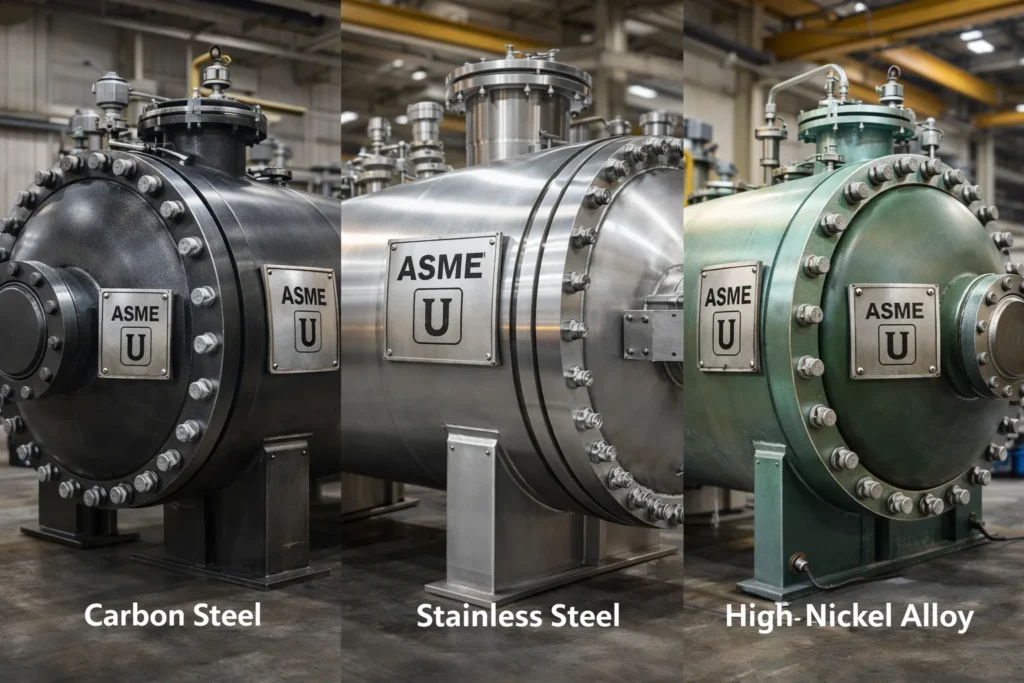
Carbon Steel
Carbon steel pressure vessel materials are widely used due to its affordability and strong mechanical performance. It is suitable for low to moderate pressure and temperature applications where corrosion exposure is limited. Grades such as SA-516 are commonly specified in pressure vessel fabrication materials.
Stainless Steel
Stainless steel offers enhanced corrosion resistance and cleanliness. Grades like 304 and 316 are often selected for applications involving corrosive fluids or hygienic requirements. These materials are common where long-term durability and ease of cleaning are essential.
High-Nickel Alloys
Nickel-based alloys provide exceptional resistance to corrosion, oxidation, and high temperatures. They are used in severe service conditions where standard steels may fail, making them critical in advance in material selection.
Aluminum
Aluminum is valued in pressure vessel applications for its low density, good corrosion resistance, and favorable strength-to-weight ratio. These characteristics make it particularly suitable for applications where weight reduction is critical, such as portable pressure vessels, aerospace systems, and transportation-related equipment.
Titanium
Titanium offers a unique combination of high strength, low weight, and exceptional corrosion resistance, making it ideal for pressure vessels exposed to highly aggressive environments. It performs extremely well in corrosive media such as seawater, chlorides, and certain acids, where conventional steels may experience rapid degradation.
Inspection, Maintenance, and Lifecycle Planning
Even the best material selection requires proper inspection and maintenance. Regular inspections and non-destructive testing help identify early signs of degradation. Lifecycle planning also considers recyclability, availability, and long-term performance.
Pressure vessel material selection must align with the vessel’s intended use. Process fluids, operating cycles, and maintenance accessibility all influence material choice. Some applications require specialized alloys, while others can safely use conventional steels.
Material selection must comply with recognized standards such as ASME material requirements. These standards define acceptable materials, testing methods, and documentation needed for compliant fabrication.
External reference standards can be reviewed through institutional resources, such as:
Pressure Vessel Material Selection for Reliable Performance
Proper pressure vessel material selection supports safe operation, predictable performance, and long-term reliability. By balancing mechanical properties, corrosion resistance, and code compliance, organizations can build vessels that perform consistently under demanding conditions.
Pressure vessel safety and compliance greatly affect safety, maintenance costs, and regulatory acceptance. Thoughtful material selection reduces operational risks and supports consistent performance throughout the vessel’s service life.
Engineers should combine material data, operating conditions, and compliance requirements when finalizing selections. Collaboration with fabrication experts and adherence to standards ensure the chosen material performs as intended.
Partner With Red River for Reliable Material Selection
Choosing the right materials is critical to pressure vessel safety, performance, and compliance. Red River brings deep fabrication expertise and code-driven insight to help you make confident pressure vessel material selection decisions. From carbon steel to advanced alloys, our team evaluates operating conditions, corrosion risks, temperature limits, and ASME requirements to ensure long-term reliability.
Whether you’re designing a new vessel or upgrading an existing system, contact Red River today to discuss your application and ensure your pressure vessel materials are selected for safety, durability, and compliance from day one.
Frequently Asked Question
1. Pressure Vessel basics?
A pressure vessel is a closed container designed to hold gases or liquids at a pressure substantially different from ambient pressure. Because stored energy increases with pressure, pressure vessels require careful engineering, fabrication, and inspection to ensure safe operation.
2. Why is corrosion resistance important in pressure vessel material selection?
Corrosion resistance prevents material degradation and extends vessel lifespan, especially in chemical or moisture-rich environments.
3. How do ASME material requirements affect material choice?
ASME material requirements define approved materials and testing methods, ensuring consistency and safety in pressure vessel fabrication.
4. Can material selection impact maintenance costs?
Yes. Proper material selection reduces corrosion, cracking, and repair frequency, lowering long-term maintenance costs.
5. Are high-nickel alloys always necessary?
High-nickel alloys are used only when operating conditions demand superior corrosion or temperature resistance beyond standard steels.
Key Takeaways
- Pressure vessel material selection directly affects safety and compliance
- Mechanical strength and corrosion resistance are critical factors
- ASME material requirements guide acceptable material choices
- Application conditions determine suitable fabrication materials
- Proper selection reduces lifecycle costs and operational risk
Related Blog Post
Can Condensate Storage Improve Reliability?
Where Do Condensate Tanks Fit in a Steam System?
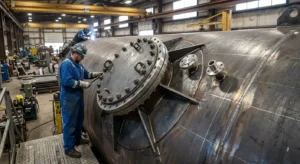
Which Nozzles Simplify Maintenance on Pressure Vessels?
How to Vent Condensate Tanks in Steam Systems