Modes and Mechanisms of Material Failure explain what a failure looks like and why it happens. In pressure vessels, understanding both helps teams prevent leaks, ruptures, and costly downtime. This guide breaks down common failure modes, the mechanisms that drive them, and how safety standards and inspections reduce risk. RedRiver LLC applies this knowledge in design, fabrication, and lifecycle support to help clients run safer, longer-lasting equipment.
Modes and Mechanisms of Material Failure in Pressure Vessels
The phrase Modes and Mechanisms of Material Failure sits at the heart of safe pressure vessel engineering because it links visible damage to its root cause. A mode is the way failure presents itself, while a mechanism is the physical or chemical process that produces that failure. When you connect the two, you get actionable insight: what went wrong, why it went wrong, and how to stop it from happening again.
Pressure vessels operate under demanding combinations of stress, temperature swings, and environmental exposure. Even when a vessel is properly designed, real-world operating conditions can push materials into failure paths that only become obvious after years of service. That’s why modern engineering practice puts strong emphasis on Pressure Vessel Safety Standards and Compliance, plus routine Pressure Vessel Inspection and Maintenance.
At RedRiver LLC, failure knowledge isn’t academic. It informs welding procedures, material selection, stress modeling, and inspection planning long before a vessel leaves the shop. If you want a deeper look at real failure case learning, see Red River’s analysis of common vessel breakdowns in their guide on pressure vessel failures and lessons learned.
Key failure modes you will encounter
Below are the most common observable ways pressure vessel materials fail. Each mode is tied to one or more mechanisms later in this article.
- Tensile rupture
Material separates under pulling stress. Often linked to thin sections, localized overstress, or defect-driven crack growth. - Compressive crushing or collapse
Material shortens or buckles under pushing loads. Relevant to shells, stiffeners, and vessel supports under high compressive stress. - Shear tearing
Sliding failure along a plane, commonly near nozzles, attachments, or weld toes where shear stresses concentrate. - Buckling instability
Sudden sideways deformation that removes load-carrying capacity. Usually triggered by geometry, external pressure, or loss of stiffness. - Torsional cracking
Twisting-driven fracture, more common in rotating or torque-loaded components tied into vessel systems. - Fatigue cracking
Progressive damage from repeated load cycles. Small cracks form and grow until leak or rupture occurs. - Creep deformation
Slow, time-dependent strain under sustained load, typically accelerated at elevated service temperatures. - Brittle fracture
Sudden break with minimal deformation, often associated with low toughness, stress raisers, or rapid loading. - Ductile tearing
Noticeable plastic deformation before final separation. This mode is safer in the sense that it gives warning, but still unacceptable in service. - Corrosion pitting
Local surface attack creating deep pits that become crack starters and stress concentrators. - Spalling or surface loss
Flaking or chipping of protective layers or base material, reducing thickness and exposing fresh metal to attack.
For more context on how these show up in real equipment, Red River’s overview of pressure vessel failure criteria is a helpful companion.
Mechanisms that drive those modes
A failure mode is the symptom. The mechanism is the disease. In pressure vessels, mechanisms often overlap.
- Yielding and plastic flow
When stress exceeds yield strength, the material permanently deforms. Yielding often precedes ductile tearing or buckling. - Necking
Local thinning in ductile metals under tension. It is a path toward tensile rupture. - Crack initiation and propagation
Cracks begin at stress concentrations like weld toes, pits, sharp geometry changes, or embedded defects, then grow under stress. - Fatigue damage accumulation
Even if stresses stay below ultimate strength, repeated cycling can nucleate and extend cracks. - Creep microstructural change
Prolonged stress at high temperature alters grain structure, letting deformation continue until rupture. - General corrosion
Uniform thinning reduces design margin and can shift stresses into unsafe territory. - Stress corrosion cracking
A combined effect of tensile stress and a corrosive environment that produces brittle cracks without large plastic deformation. - Hydrogen embrittlement
Hydrogen atoms diffuse into steel, reducing ductility and toughness, raising brittle fracture risk. - Wear and erosion
Material loss from particle-laden flow or mechanical rubbing that accelerates thinning. - Thermal shock and thermal fatigue
Rapid temperature change sets up steep gradients and high transient stresses.
These mechanisms explain why What are the safety standards for pressure vessels matters so much. Standards are written around these physics, not around guesswork.
Safety standards, compliance, and the ASME code
A core question in the industry is What is ASME code for pressure vessel safety. The ASME Boiler and Pressure Vessel Code establishes conservative design rules, fabrication controls, inspection methods, and certification pathways that collectively lower the chance of failure.
If you’re asking How do pressure vessels comply with safety regulations, the short answer is: by following code rules through every lifecycle stage.
- Design compliance
Stress calculations, joint efficiency assumptions, allowable material limits, and corrosion allowances are set by code. Red River’s breakdown of ASME inspection and code intent shows how these requirements connect to practical safety. - Fabrication compliance
Code requires qualified weld procedures, trained welders, controlled heat treatment, and traceable materials. Red River’s ASME pressure vessel standards overview explains how certification ties to real shop practices. - Inspection compliance
Inspection steps verify that design intent matches as-built reality, and that service damage stays within safe limits. External guidance from ASME’s resource library is available in their Boiler and Pressure Vessel Code materials.
Inspection and maintenance as failure prevention
Pressure Vessel Inspection and Maintenance is where theory meets prevention. Inspection programs aim to detect damage early, before a mode becomes catastrophic. If you’re wondering How often do pressure vessels need to be inspected, the interval depends on code jurisdiction, service conditions, and risk profile, but the principle is constant: inspection frequency must reflect real degradation rates.
To answer How to inspect a pressure vessel, inspections typically include:
- External visual review for dents, corrosion, coating breakdown, leaks, and heat discoloration
- Thickness measurement to track corrosion or erosion loss
- Weld examination using nondestructive methods like ultrasonic or radiographic testing
- Leak and pressure testing when required by code or service changes
- Safety device checks for relief valves and instrumentation accuracy
A practical starting point for What to include in a pressure vessel inspection checklist is captured in tools such as the pressure vessel inspection checklist template.
RedRiver LLC often supports clients by translating inspection findings into repair scopes and long-term mitigation plans. You can see how Red River frames lifecycle reliability in their article on failure theory and analysis.
Conclusion: Modes and Mechanisms of Material Failure
Understanding Modes and Mechanisms of Material Failure turns pressure vessel safety from reactive to proactive. When teams recognize the visible mode, trace it to the mechanism, and then map that to code requirements and inspection actions, they reduce risk dramatically. Pairing compliant design with disciplined inspection is the most reliable way to keep vessels safe through long service lives.
Work With RedRiver on Safer Vessels
RedRiver LLC designs and fabricates ASME-certified pressure vessels with safety-first engineering baked in from day one. If your team needs help with new builds, upgrades, or inspection-informed repairs, connect with RedRiver here: https://www.redriver.team/. Their specialists can help you apply code-aligned design choices and practical inspection planning to reduce failure risk and extend equipment life.
FAQs
1. What are the most common modes of failure seen in pressure vessels?
Common modes include fatigue cracking, corrosion-driven wall loss, overpressure rupture, brittle fracture, and buckling. Each mode is tied to underlying mechanisms such as cyclic stress, chemical attack, or instability under load.
2. What are the safety standards for pressure vessels?
Safety standards typically require code-based design, certified fabrication practices, qualified welding, pressure testing, and scheduled inspections. The ASME Boiler and Pressure Vessel Code is one of the most widely used frameworks.
3. What is ASME code for pressure vessel safety?
The ASME Boiler and Pressure Vessel Code provides rules for design stress limits, material requirements, joint details, fabrication controls, examinations, testing, and certification. Many organizations adopt it because it is built around proven failure prevention.
4. How do pressure vessels comply with safety regulations?
Compliance comes from following code during design, keeping full material and weld traceability, completing required examinations, passing pressure tests, and maintaining inspection records over the vessel’s life.
5. How often do pressure vessels need to be inspected?
Inspection frequency varies with service severity and risk. Higher temperature, corrosive, or cycling services require more frequent inspection. Many operators use risk-based inspection programs to set intervals.
6. How to inspect a pressure vessel effectively?
An effective approach combines visual checks, thickness readings, nondestructive weld testing, safety device verification, and review of operating history. Findings should be compared against code limits and prior inspection trends.
7. What to include in a pressure vessel inspection checklist?
A checklist should cover external condition, corrosion mapping, weld and nozzle regions, supports, safety valves, instrumentation, and documentation review. Digital templates can help standardize this process. SafetyCulture
8. Can fabrication defects cause failures even when design is correct?
Yes. Undercut welds, lack of fusion, porosity, or material mix-ups can become crack starters that grow through fatigue or stress corrosion mechanisms.
9. How does RedRiver reduce failure risk during manufacturing?
RedRiver uses code-qualified weld procedures, certified inspection steps, documented material traceability, and experienced engineering reviews to ensure vessels match design intent and remain safe through service.
Key Takeaways
- Modes and Mechanisms of Material Failure connect visible damage to root causes, enabling real prevention.
- Pressure vessel safety improves most when design, fabrication, and inspection follow recognized standards.
- ASME code requirements are structured around known failure mechanisms and conservative safety margins.
- Routine inspection and maintenance catch degradation early, before cracks or thinning reach critical levels.
- RedRiver LLC applies failure science and code expertise to deliver safer, longer-lasting pressure vessels.
Related Blog Post
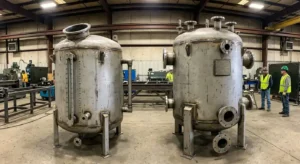
Condensate Tanks: Types, Fabrication, and ASME Code
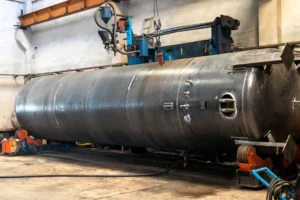
Which Tests Validate Deaeration in Pressure Systems?
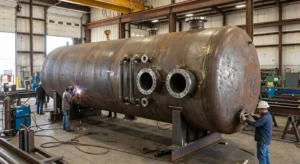
Equalization Tanks: Design, Sizing, and Fabrication
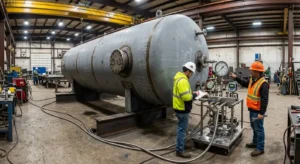
What Are Thermal Storage Testing Standards for TES Vessels?
What Hydro Tests Are Required for Pressure Vessels?
No subpillar set for this blog post.
About Author