

Liquid Nitrogen Storage Vessels
Liquid nitrogen storage requires specialized vessels designed for safety, efficiency, and long-term reliability. These vessels range from portable dewars to large cryogenic tanks, each tailored to specific industrial or laboratory needs. Proper maintenance, compliance with ASME codes, and adherence to safety standards are essential for preventing accidents and ensuring consistent performance. Choosing the right vessel ensures operational continuity and protects both personnel and products.
Understanding and Selecting Liquid Nitrogen Storage Vessels
Liquid nitrogen, a colorless and odorless substance, is more than just a freezing agent. Moreover, it plays a crucial role in various industries, from healthcare to food preservation and scientific research. Therefore, understanding how to store it properly is essential to unlocking its full potential.
The Importance of Proper Storage
Proper storage of liquid nitrogen ensures its safety and maintains its properties. Without appropriate measures, risks like injuries and compromised product integrity increase significantly. Consequently, using the correct storage vessels is critical to avoid these issues.
Overview of Liquid Nitrogen Storage Vessels
Liquid nitrogen storage vessels come in various forms, each designed for specific requirements. For example, some are tailored for laboratory use, while others suit industrial applications. Exploring these vessels helps us understand their unique functionalities.
Types of Liquid Nitrogen Storage Vessels
Cryogenic Dewars
Cryogenic dewars, also known as liquid nitrogen bins, are portable vessels designed for quick-term storage and transportation. They are widely used in laboratories, clinical settings, and industrial environments due to their ease of handling.
Construction and Design
Cryogenic dewars are typically comprised of double-walled chrome steel or aluminum, with a vacuum-insulated space among the walls to limit warmth transfer. As a result, this design minimizes thermal loss and ensures efficient storage.
Applications
These vessels are best for programs requiring small to mild quantities of liquid nitrogen, along with organic sample storage, cryotherapy, and cryosurgery. For instance, laboratories and clinics frequently rely on these vessels for precise and small-scale needs. As a result, they are widely adopted in such settings.
Pros and Cons
While cryogenic dewars offer portability and simplicity of use, they have constrained storage potential and aren’t suitable for long-term storage. However, their ease of transport makes them ideal for short-term applications. On the other hand, users must consider their limitations for larger-scale operations.
Cryogenic Tanks
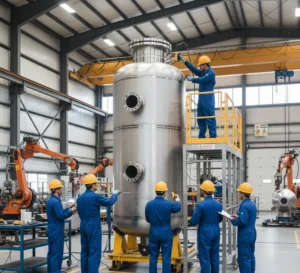
Cryogenic tanks, often referred to as bulk storage tanks, are large-scale vessels designed for the lengthy-term storage of liquid nitrogen. Furthermore, these tanks are normally used in industries requiring huge portions of liquid nitrogen, such as healthcare, food processing, and semiconductor manufacturing. In these cases, they serve as indispensable components.
Structure and Functionality
Cryogenic tanks are generally comprised of high-grade chrome steel and function with double-walled insulation to preserve low temperatures and decrease evaporation. In addition, this design ensures operational efficiency over extended periods. Therefore, they are highly preferred for industries with constant storage needs.
Industrial Applications
Liquid nitrogen storage tanks are critical in industries requiring a constant and reliable supply of liquid nitrogen. They support operations like cryogenic freezing, inert fuel storage, and metallic processing. Their durable construction ensures reliability under demanding conditions. Industries that prioritize durability and capacity benefit greatly from these tanks.
Advantages and Limitations
Cryogenic tanks provide high storage capacity and sustainable liquid nitrogen maintenance, making them ideal for large-scale business applications. However, their size and setup requirements can create logistical challenges.
Safe and Efficient Liquid Nitrogen Storage
Understanding the design, function, and safety of Liquid Nitrogen Storage Vessels is essential for industries managing cryogenic liquids. Correct selection, routine maintenance, and compliance with ASME standards ensure operational efficiency and protect personnel. Partnering with manufacturers like Red River ensures vessels meet all safety and performance standards.
Need a reliable partner?
Red River specializes in the design and manufacturing of pressure vessels. We also fabricate related items such as prefabricated spools and skid packages.
Reach Out to us today and experience the Red River difference. Where American Made and American Values come together, we care more.
Frequently Asked Questions
1. What are the principal safety considerations when storing liquid nitrogen?
Always store in well-ventilated areas to prevent oxygen displacement. Insulated vessels reduce the risk of cold burns and pressure hazards.
2. How long can liquid nitrogen be stored without evaporating?
Duration depends on vessel design, insulation quality, and ambient temperature. Well-insulated vessels can preserve liquid nitrogen for days or weeks.
3. Can liquid nitrogen storage vessels be custom-designed?
Yes, Red River can tailor vessel size, insulation, safety features, and monitoring systems to meet specific operational requirements.
4. What materials are used for liquid nitrogen storage vessels?
Stainless steel, chrome steel, and aluminum are common. Material choice ensures durability, temperature resistance, and compliance with ASME codes.
5. How do vessels comply with safety regulations?
Compliance is achieved through ASME code adherence, regular inspection, pressure relief mechanisms, and proper maintenance.
6. What are the environmental impacts of liquid nitrogen storage?
Liquid nitrogen is inert and environmentally safe. Proper handling prevents nitrogen gas emissions and ensures minimal environmental impact.
7. How often should liquid nitrogen storage vessels be inspected?
Inspection frequency depends on usage and regulatory requirements, often annually or as dictated by operational standards.
Key Takeaways
- Liquid Nitrogen Storage Vessels provide safe, reliable cryogenic storage for laboratory and industrial applications.
- Proper design, materials, and safety mechanisms ensure compliance with pressure vessel standards.
- Routine inspection and maintenance are essential to prevent accidents and maintain performance.
- Dewars are ideal for portable, short-term storage; tanks are suitable for large-scale, long-term applications.
- Partnering with Red River guarantees ASME-compliant, durable, and efficient storage vessel solutions.
Related Blog Post
Pressure Vessel Design & Engineering: Concept to Launch
What is Pressure Vessel Design and Engineering: Code-Ready Guide
What are the Key Factors in Pressure Vessel Engineering
How Do You Design a Pressure Vessel: A Step-By-Step Guide
What is Pressure Vessel Fabrication and Manufacturing
No subpillar set for this blog post.
About Author



