

Materials for Cryogenic Containers
Materials for Cryogenic Containers are essential for maintaining extreme low temperatures while ensuring durability and safety. Selecting the right materials, such as stainless steel, aluminum alloys, and advanced insulation, directly impacts performance, thermal efficiency, and compliance with safety standards. Reinforced construction and careful maintenance prevent leaks, minimize heat transfer, and extend the lifespan of the containers. Partnering with experienced manufacturers like Red River ensures vessels meet industry standards and operational needs.
Choosing the Right Materials for Cryogenic Containers
Understanding the materials for cryogenic containers, such as stainless steel, aluminum alloys, and specialized insulation, is crucial for maintaining durability and performance under extreme conditions. Cryogenic containers rely on advanced materials like stainless steel and aluminum alloys to maintain extreme low temperatures. Understanding these materials is crucial for ensuring durability and performance. The materials used in cryogenic container production play a crucial role in ensuring their performance and reliability. Therefore, selecting the correct materials is essential to maintain structural integrity, thermal performance, and compatibility with the stored substances.
Understanding Materials for Cryogenic Containers
Materials for Cryogenic Containers: Inner Vessel Materials
- Stainless Steel
Stainless steel is highly preferred for its corrosion resistance, durability, and easy maintenance. Moreover, it is ideal for storing a wide variety of cryogenic fluids, offering flexibility for diverse industries. - Aluminum Alloys
Aluminum alloys, in addition to being lightweight, provide excellent thermal conductivity. Consequently, they are suitable for aerospace and scientific applications that require both durability and heat efficiency. - Carbon Steel
Carbon steel, although less resistant to corrosion, is cost-effective and reliable. Furthermore, it is ideal for applications where precise compatibility with cryogenic fluids is not a critical requirement.
Materials for Cryogenic Containers: Outer Shell Materials
- Insulation Layers
Insulation materials, such as polyurethane foam and perlite, are essential for minimizing heat transfer and maintaining low temperatures. Additionally, they form a barrier that reduces energy loss and protects the stored substances. - Reinforcement Materials
Reinforcement materials like fiberglass or carbon fiber composites strengthen the container’s outer shell. As a result, the container withstands the challenges of transportation and handling with ease.
Common Materials for Cryogenic Containers
- Aluminum
Aluminum and its alloys are popular for their lightweight properties and thermal efficiency. Hence, they are a go-to material for applications prioritizing weight reduction and heat transfer. - Stainless Steel Alloys
These alloys provide exceptional corrosion resistance and sturdiness. Consequently, they are widely used in offshore systems and industrial centers. - Carbon Fiber Composites
Carbon fiber composites are appreciated for their high strength-to-weight ratio and corrosion resistance. Thus, they are commonly employed in aerospace and transportation industries. - Nickel Alloys
Nickel alloys, with their remarkable resistance to extreme temperatures and chemical environments, are indispensable in demanding cryogenic applications. Moreover, they enhance the container’s mechanical properties. - Polyurethane Foam Insulation
This material is broadly used for its excellent thermal insulation and lightweight characteristics. In addition, it helps maintain stable cryogenic temperatures effectively. - Perlite Insulation
Perlite insulation is an eco-friendly and cost-effective choice. Similarly, it ensures reliable thermal performance and easy installation for diverse applications.
Materials for Cryogenic Containers
Understanding Materials for Cryogenic Containers ensures safety, performance, and compliance with industry standards. Selecting the right combination of inner vessel materials, outer shell insulation, and reinforcement options is essential for efficient thermal management and long-term durability. Partnering with experts like Red River guarantees vessels are designed, manufactured, and tested to meet the highest standards.
Need a reliable partner?
Red River specializes in the design and manufacturing of pressure vessels. We also fabricate related items such as prefabricated spools and skid packages.
Reach Out to us today and experience the Red River difference. Where American Made and American Values come together, we care more.
Frequently Asked Questions
1. How do cryogenic containers maintain extremely low temperatures?
Cryogenic containers use vacuum-insulated walls, specialized materials, and advanced insulation to prevent heat transfer, preserving liquids in their required state.
2. What are the main considerations when selecting materials for cryogenic containers?
Key considerations include temperature compatibility, fluid compatibility, durability, corrosion resistance, and compliance with safety regulations.
3. What materials are commonly used in cryogenic container construction?
Stainless steel, aluminum alloys, carbon steel, nickel alloys, carbon fiber composites, polyurethane foam, and perlite are commonly used for their strength, thermal efficiency, and corrosion resistance.
4. How do manufacturers ensure containers comply with safety standards?
Compliance is ensured through adherence to Pressure Vessel Safety Standards and Compliance, the ASME code for pressure vessel safety, and rigorous testing protocols.
5. Can cryogenic containers be customized for specific needs?
Yes, manufacturers like Red River can design containers to meet specific capacity, insulation, safety, and monitoring requirements.
6. How often should cryogenic containers be inspected?
Inspection frequency depends on operational use and regulatory requirements, typically conducted periodically to maintain safety and performance.
7. What should be included in a cryogenic container inspection checklist?
Check insulation integrity, wall thickness, pressure relief devices, structural reinforcements, and leak detection systems.
8. What innovations are improving cryogenic container performance?
Advanced composites, nanomaterials, and improved insulation technologies enhance durability, efficiency, and safety in modern cryogenic containers.
Key Takeaways
- Materials for Cryogenic Containers ensure durability, safety, and thermal efficiency.
- Stainless steel, aluminum alloys, and advanced insulation are crucial for reliable performance.
- Reinforced construction and pressure relief devices help maintain compliance with safety standards.
- Regular inspections and maintenance extend service life and prevent failures.
- Partnering with Red River guarantees expert design, fabrication, and testing for high-quality cryogenic solutions.
Related Blog Post
Pressure Vessel Design & Engineering: Concept to Launch
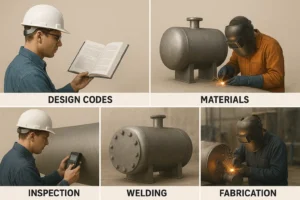
What is Pressure Vessel Design and Engineering: Code-Ready Guide
What are the Key Factors in Pressure Vessel Engineering
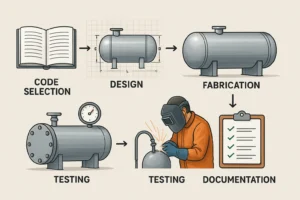
How Do You Design a Pressure Vessel: A Step-By-Step Guide
What is Pressure Vessel Fabrication and Manufacturing
No subpillar set for this blog post.
About Author



