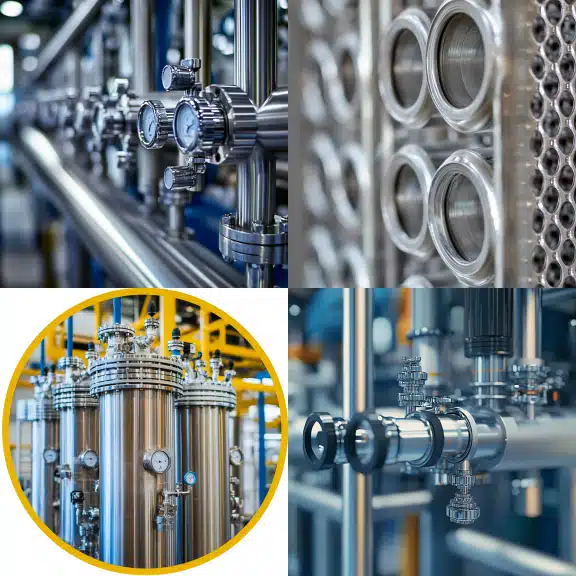
Coalescing in Industrial Applications is the process where small droplets or particles merge into larger ones to enhance filtration and separation efficiency. This principle is essential across multiple industries, including oil and gas, chemical processing, and water treatment, for maintaining clean fluids and optimal system performance. Proper coalescing improves product quality, reduces maintenance costs, and supports adherence to Pressure Vessel Safety Standards and Compliance. Red River specializes in designing pressure vessels and filtration systems that optimize coalescing for reliable and efficient industrial operations.
Coalescing in Industrial Applications
Coalescing in industrial applications plays a critical role in fluid separation processes, ensuring system efficiency and reliability. In industrial applications, coalescing plays a vital role in filtration and separation techniques. It ensures the removal of impurities from fluids. But what exactly is coalescing? Why is it important? Let’s break it down.
Defining Coalescence in Simple Terms
At its core, coalescence is the process where small droplets or debris merge to form a larger mass. Imagine raindrops on a windshield merging into bigger drops. Similarly, in filtration systems, coalescence separates unwanted substances from fluids.
This process is critical for maintaining the efficiency of filtration structures. At Red River, we design coalescence systems tailored to specific needs. By applying advanced coalescing technology, we ensure your filtration systems work efficiently. This supports smooth operations and enhances system performance.
The Role of Coalescing in Industrial Systems
Industries such as oil and gas, electricity, and chemical processing demand clean fluids for optimal performance. Coalescing is key to achieving this. Specialized equipment removes even the smallest impurities. As a result, product quality and system efficiency improve.
At Red River, we focus on how coalescing integrates into your processes. Our systems deliver reliability, longevity, and high-quality performance.
At Red River, we prioritize understanding how coalescing integrates into your processes. Our systems are designed to deliver reliability, longevity, and high-quality performance.
Why Coalescence is Crucial for Filtration and Separation
The importance of coalescing in filtration and separation can’t be overstated. Efficient methods remove impurities from your final product. This directly translates to value savings, better equipment durability, and reduced downtime.
In short, a well-designed coalescing device allows you to meet stringent requirements. It ensures clean operations and supports your long-term success.
The Mechanism Behind Coalescing
How Coalescing Works: A Step-by means of-Step Breakdown
Coalescence is essential for effective filtration. It eliminates impurities from fluids, enhances product durability, and reduces costs. A well-designed coalescing device simplifies operations, reduces waste, and improves overall system output.
Key Factors That Influence the Coalescence Process
Several elements impact the efficiency of coalescing. These include the dimensions and nature of the particles, the type of fluid being filtered, and the layout of the coalescing filter. Understanding these factors optimizes the coalescence method for better results. Therefore, it is crucial to consider these details in machine design.
Applications of Coalescing in Fluid Separation
Coalescing is widely utilized in industries such as oil and gas, chemical processing, and electricity technology. For instance, it removes water from gas or separates contaminants from natural gas. This procedure is vital for maintaining operational performance and meeting industrial requirements.
Benefits of Coalescing in Industrial Applications
Enhanced Filtration Efficiency
One of the key benefits of coalescing is its ability to enhance filtration performance significantly. By merging smaller particles into larger ones, coalescing filters remove contaminants more efficiently from fluids or gases. As a result, cleaner outputs and less frequent filter replacements are achieved. This is critical for ensuring the efficient operation of business structures.
Improved Particle Separation
Coalescing plays a crucial role in enhancing particle separation in industrial processes. It consolidates tiny droplets or debris into larger masses, allowing for more efficient removal of impurities from the desired product. This leads to higher purity levels and improved overall machine performance. Therefore, it is especially valuable in industries like oil and fuel, where precision is critical.
Cost Savings and Environmental Impact
The coalescence process also offers significant cost savings by reducing the need for frequent maintenance and replacements. Additionally, it enhances filtration and separation strategies, generating less waste and contributing positively to the environment. As a result, coalescing is not only an economical choice but also an environmentally responsible one.
Coalescing in Industrial Applications
Coalescing in Industrial Applications is a key process for effective filtration, fluid separation, and equipment efficiency. By merging small particles into larger ones, it enhances system performance, reduces maintenance, and improves product quality. Red River’s expertise in designing pressure vessels ensures that coalescing is applied effectively while maintaining Pressure Vessel Safety Standards and Compliance, including adherence to ASME code for pressure vessel safety.
Need a reliable partner?
Red River specializes in the design and manufacturing of pressure vessels. We also fabricate related items such as prefabricated spools and skid packages.
Reach Out to us today and experience the Red River difference. Where American Made and American Values come together, we care more.
Frequently Asked Questions
1. What industries benefit the most from coalescing technology?
Coalescing technology is crucial in industries where fluid and gas separation is essential. Key industries include oil and gas, chemical processing, power generation, and water treatment. It ensures high-purity outputs and protects downstream systems.
2. How does coalescing differ from traditional filtration methods?
Unlike conventional filters that capture particles based solely on size, coalescing actively merges smaller droplets or particles into larger ones. This allows for more efficient removal, especially for fine mist, emulsions, or small droplets.
3. What types of fluids can coalescing filters handle?
Coalescing filters are versatile and can treat gases, oils, and water-based liquids. They are effective in removing water from fuels, separating oil from wastewater, and eliminating aerosols or fine particles in air and gas streams.
4. How often do coalescing filters need replacement?
Replacement frequency depends on fluid type, contamination levels, and application. Filters in high-contamination environments may require more frequent replacement. Monitoring performance and using sensors ensures timely maintenance.
5. What are the key considerations when selecting a coalescing filter?
Factors include fluid type, particle size, desired flow rate, purity level, operational conditions, and filter material compatibility. Customization may be necessary for extreme environments or highly corrosive fluids.
6. How does coalescing support Pressure Vessel Safety Standards and Compliance?
Coalescing ensures cleaner fluids, reducing contamination and wear. This supports compliance with Pressure Vessel Safety Standards and Compliance and how pressure vessels comply with safety regulations.
7. How do you inspect a pressure vessel that uses coalescing technology?
Inspection involves checking for leaks, corrosion, proper filter function, and separation efficiency. Following Pressure Vessel Inspection and Maintenance guidelines ensures safety and performance.
8. What should be included in a pressure vessel inspection checklist?
- Visual inspection for defects or corrosion
- Checking filter and coalescing device performance
- Evaluating separation efficiency
- Reviewing maintenance and operational records
- Confirming compliance with ASME code for pressure vessel safety
Key Takeaways
- Coalescing in Industrial Applications merges smaller particles or droplets for improved filtration and separation.
- It enhances system efficiency, reduces maintenance, and supports product quality.
- Red River designs pressure vessels that optimize coalescence while adhering to Pressure Vessel Safety Standards and Compliance.
- Regular inspection and maintenance ensure consistent performance and safety.
- Industries such as oil and gas, chemical processing, and water treatment benefit greatly from coalescing systems.
Related Blog Post
Pressure Vessel Design & Engineering: Concept to Launch
What is Pressure Vessel Design and Engineering: Code-Ready Guide
What are the Key Factors in Pressure Vessel Engineering
How Do You Design a Pressure Vessel: A Step-By-Step Guide
What is Pressure Vessel Fabrication and Manufacturing
No related articles found.
About Author