
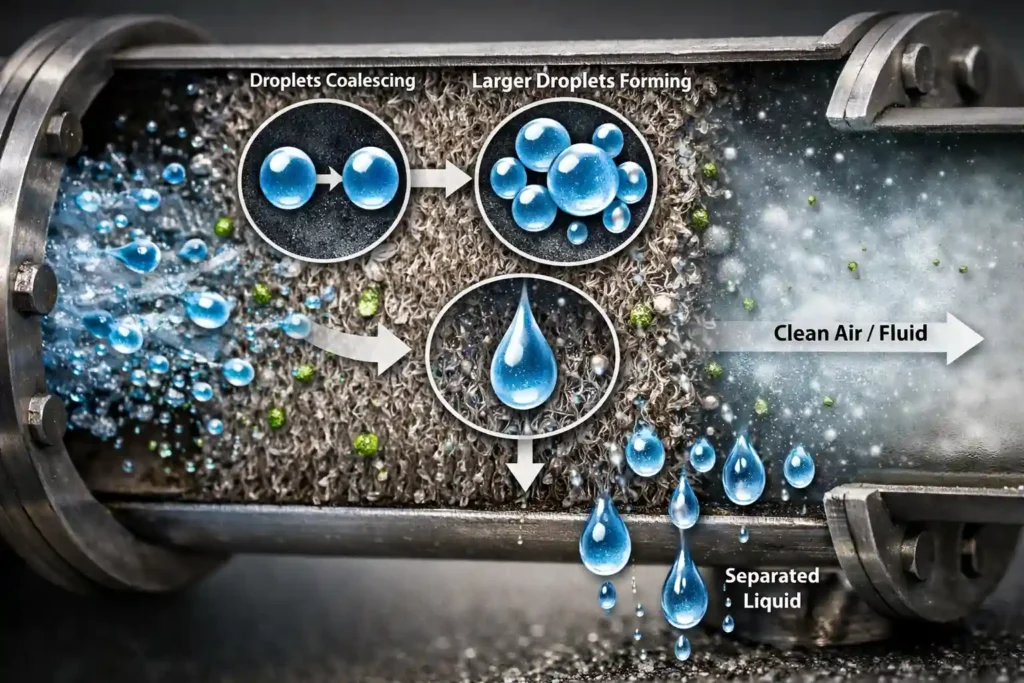
The coalescence process in industrial applications is the merging of small droplets or particles into larger masses, enhancing filtration and separation efficiency. Understanding this process is crucial for industries relying on clean fluids or gases. Optimizing coalescence can improve operational performance, reduce costs, and support sustainability goals. RedRiver LLC integrates these principles into pressure vessel design to ensure reliable and effective industrial processes.
Understanding the Coalescence Process in Industrial Applications
When it involves business approaches, the know-how of the science at the back of how materials interact is important. One such interaction is coalescence—a critical mechanism in numerous industries, together with those we serve at Red River. But what’s the procedure of coalescence, and why does it count number?
Definition and Basic Principles of Coalescence
Coalescence refers to the manner in wherein small particles or droplets merge to form a bigger one. This phenomenon happens because of surface tension, which drives those particles to mix, reducing their typical surface vicinity. In less difficult phrases, it’s like tiny droplets coming together to form a larger drop. The science in the back of coalescence is important for industries that depend upon effective filtration and separation because it at once impacts the performance of these processes.
The Role of Coalescence in Particle Separation
In industries like oil and fuel, strength era, and biogas, the function of coalescence in particle separation can not be overstated. During filtration, coalescence allows for isolating exceptional particles from beverages or gases, ensuring a cleaner output. Whether it is separating water from oil in a refinery or purifying biogas, understanding coalescence mechanisms permits optimized techniques that keep each time and resource. At Red River, our pressure vessels are designed with those principles in mind, ensuring that your operations run easily and efficiently.
Coalescence Process in Industrial Applications: Common Industries and Applications Utilizing Coalescence
The coalescence technique and its business packages span numerous sectors. In oil and fuel, coalescence is used to refine crude oil by eliminating water and different impurities. In strength generation, it facilitates keeping the purity of cooling structures, preventing corrosion, and enhancing performance. Exploring coalescence in business approaches exhibits its importance in the exceptional manipulation of merchandise, protection, and ordinary operational success.
The Science Behind Coalescence: Coalescence Process in Industrial Applications
Key Factors Influencing Coalescence Efficiency
Several key factors influence coalescence performance, along with particle size, temperature, and the viscosity of the medium. Larger particles tend to coalesce more easily because of their more surface location, even as higher temperatures can boost up the system by lowering viscosity. The composition of the encircling medium also performs an essential function, with positive additives either selling or inhibiting coalescence. Understanding these factors is crucial for optimizing business procedures that depend upon coalescence.
Coalescence in Filtration Systems
In infiltration structures, coalescence is a crucial step in isolating first-rate particulates from beverages or gases. By merging small droplets or particles into large ones, the method helps less complicated elimination, improving the efficiency and effectiveness of the filtration device. This is in particular essential in industries like oil and gasoline, wherein smooth separation of water and hydrocarbons is crucial.
Examples of Coalescence in Everyday Industrial Processes
Coalescence isn’t just a medical idea; it’s a day-by-day fact in diverse business packages. From refining crude oil to purifying water, coalescence in ordinary industrial processes guarantees that operations are smooth and price-effective. At Red River, we incorporate this expertise into our pressure vessel designs, handing over solutions that work successfully to your needs.
Benefits of Understanding Coalescence Process in Industrial Applications
Enhancing Filtration Efficiency Through Coalescence
By leveraging the standards of coalescence, filtration systems can attain better ranges of efficiency. When smaller particles merge to shape large ones, they end up simpler to clear out, resulting in purifier outputs and less pressure at the filtration device. This is particularly important in applications where the separation of water, oil, or gasoline is essential for maintaining product excellence and machine integrity. Optimizing coalescence mechanisms ensures that your filtration methods run smoothly, decreasing the want for common protection.
Reducing Operational Costs by Optimizing Coalescence Processes
Optimizing coalescence strategies can result in big operational fee reductions. By enhancing filtration performance, corporations can reduce energy intake, reduce waste, and lower the frequency of device servicing. These financial savings directly impact the lowest line, making coalescence a vital recognition for industries looking to improve their profitability.
Innovations in Coalescence Technology at Red River
At Red River, we’re at the vanguard of improvements in the coalescence era. Our pressure vessels are designed with cutting-edge capabilities that beautify coalescence, ensuring the foremost overall performance for your commercial programs. By integrating advanced substances and design concepts, we deliver solutions that no longer meet but exceed enterprise standards, assisting you to live beforehand in an aggressive market.
Coalescence Process in Industrial Applications
The coalescence process in industrial applications is essential for effective filtration, separation, and operational efficiency. By understanding and optimizing this process, industries can reduce costs, improve product quality, and achieve sustainability goals. RedRiver LLC’s expertise ensures that pressure vessels are designed to leverage coalescence effectively while adhering to pressure vessel safety standards and compliance.
Need a reliable partner?
Red River specializes in the design and manufacturing of pressure vessels. We also fabricate related items such as prefabricated spools and skid packages.
Reach Out to us today and experience the Red River difference. Where American Made and American Values come together, we care more.
Frequently Asked Questions
1. What are the common challenges in achieving effective coalescence?
Challenges include surfactants or emulsifiers that stabilize droplets, temperature fluctuations affecting viscosity, and contaminants that prevent droplet merging. Overcoming these requires controlling fluid composition, maintaining optimal temperature, and keeping systems clean.
2. How does coalescence differ from aggregation?
Coalescence merges particles into a single larger droplet or particle, reducing surface energy. Aggregation clusters particles without merging. Coalescence results in more efficient separation, critical in filtration and industrial operations.
3. How does coalescence improve environmental sustainability?
Efficient coalescence reduces chemical usage, energy consumption, and waste. In water treatment and oil separation, it ensures cleaner outputs and lowers environmental impact.
4. Can coalescence be applied to both liquid-liquid and gas-liquid separation?
Yes. Liquid-liquid coalescence occurs when droplets of one phase merge within another (e.g., oil-water). Gas-liquid coalescence merges liquid droplets suspended in gas. Mechanisms differ slightly but both rely on surface tension reduction and particle merging.
5. How can advancements in coalescence technology improve pressure vessel operations?
Modern coalescers optimize contact area between droplets, speeding up separation, reducing energy use, and improving reliability. Materials and design enhancements increase durability and performance of industrial vessels.
6. How often do coalescing systems need inspection?
Pressure vessel inspection and maintenance schedules should be followed to maintain efficiency. The frequency depends on fluid type, contamination levels, and operating conditions.
7. What to include in a coalescing pressure vessel inspection checklist?
Include droplet separation efficiency, presence of fouling or damage, operational temperature and pressure checks, and compliance with ASME code for pressure vessel safety.
Key Takeaways
- Coalescence merges small particles or droplets into larger masses for better separation.
- Efficiency depends on particle size, temperature, viscosity, and medium composition.
- Industrial benefits include improved filtration, reduced operational costs, and environmental sustainability.
- RedRiver LLC integrates coalescence principles into pressure vessel design for reliable performance.
Proper pressure vessel inspection and maintenance ensures long-term operational efficiency.
Related Blog Post
When Are Deaerators Required in Pressure Systems?
How Do Deaerator Tanks Cut Oxygen in Boiler Systems?
Deaerator Tanks: ASME Fabrication for Steam Systems
Which Connections Fit Receiver Tanks?
How Do Receiver Tanks Affect Cycle Time?
No related articles found.
About Author



