
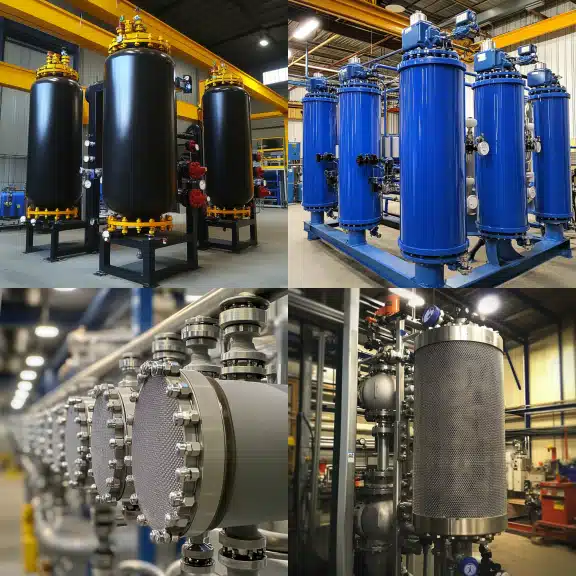
Pressure drop in coalescing filters directly affects system efficiency and energy costs. A clean filter should show a pressure drop between 0.5–1.5 psi, but this can rise due to flow rate, contamination, or poor filter selection. Monitoring ΔP with gauges and following a maintenance schedule can prevent system failures, reduce energy consumption by up to 25%, and extend equipment life. Choose filters designed for low ΔP, and replace them before reaching 3 psi pressure loss.
Pressure Drop in Coalescing Filters
At Red River, we delight ourselves in delivering incredible pressure vessels and solutions tailored to your needs. One critical element of our expertise is understanding the pressure drop in coalescing filters. This knowledge not only ensures the performance of your systems but also underscores our commitment to quality engineering and service.
What is a Coalescing Filter?
Coalescing filters are essential components in industrial processes such as oil and gas, power generation, and biogas treatment. They are engineered to separate fine liquid aerosols and droplets (typically water and oil) from compressed gas or air streams. The filter media causes small droplets to merge (“coalesce”) into larger ones, which then drain away due to gravity.
Most coalescing filters use borosilicate microfiber or PTFE media, offering filtration efficiency of up to 99.99% for particles down to 0.01 microns. This ensures machinery protection, prevents corrosion, and minimizes unplanned downtime. For a deeper dive into separation technologies, check out our guide on water-gas separation technology.
The Concept of Pressure Drop
Pressure drop (ΔP) refers to the difference in pressure between the upstream and downstream sides of a filter, measured in units like psi or bar. It’s caused by resistance to flow as the gas or liquid passes through the filtration media.
Acceptable pressure drop ranges from 0.5 to 3 psi in most coalescing filters. A rising ΔP often signals filter loading or clogging. If unmanaged, high pressure drop increases energy demand, especially in compressors or blowers, and can reduce system reliability. Learn more about air compressor capacity and air supply for context on energy implications.
Formula:
ΔP = P<sub>in</sub> − P<sub>out</sub>
where P<sub>in</sub> and P<sub>out</sub> are inlet and outlet pressures, respectively.
Factors Affecting Pressure Drop in Coalescing Filters
Filter Design and Material
Filter geometry (depth vs surface type), media porosity, and fiber density all influence pressure drop. For instance, a multi-layered borosilicate filter typically exhibits a 25–30% lower ΔP than a single-layer alternative at identical flow rates.
Flow Rate and System Conditions
Pressure drop increases with flow rate in a near-exponential curve. Doubling the flow rate can lead to a 3–4× increase in ΔP. Fluid viscosity, temperature, and humidity also affect resistance; for example, colder gas increases density and resistance through the filter. For related system considerations, check out understanding air addition in water-filled pressure tanks.
Maintenance and Filter Replacement
A clogged filter may show a ΔP increase from 1.2 psi (clean) to over 5 psi, triggering alarms or shutdowns. Regular monitoring with differential pressure gauges is crucial for timely maintenance. Learn more about essential safety devices in air receivers for system reliability guidance.
Measuring and Reducing Pressure Drop
How to Measure It
Install analog or digital pressure gauges upstream and downstream of the filter housing. Record ΔP during normal operation, and track trends over time. Use alerts at preset thresholds (e.g., 3 psi) for predictive maintenance. For advanced monitoring techniques, refer to air receivers in air compression systems.
How to Minimize It
- Use filters rated for low initial ΔP (≤1 psi)
- Maintain manufacturer-recommended flow rates
- Replace filters when ΔP exceeds 2.5–3.0 psi, or per usage hours
- Choose pleated filter designs for higher surface area and lower flow resistance
Methods to Measure Pressure Drop
Accurately measuring the pressure drop throughout a coalescing filter involves the use of specific equipment and strategies. Common techniques include putting in pressure gauges before and after the filter out to display differential pressure. Regularly checking these readings helps perceive any full-size changes that would imply filtering out clogging or different troubles. Digital pressure sensors can also be hired for greater correct and real-time tracking, taking into consideration timely interventions and renovation.
Strategies to Minimize Pressure Drop
Minimizing pressure drop entails selecting the proper filter for your utility, retaining the most advantageous waft rates, and making sure of ordinary protection. Choosing a filter designed for low-pressure drop and high efficiency can appreciably lessen resistance. Additionally, preserving the advocated go-with-the-flow prices and device situations prevents useless pressure loss. Implementing a routine renovation schedule to ease and update filters ensures they continue to be unfastened from clogging, which is crucial for keeping low-pressure drops.
Benefits of Managing Pressure Drop
- 10–25% lower energy consumption in compressed air systems
- Extended equipment life by up to 30% due to reduced wear
- Fewer unplanned shutdowns, improving OEE (Overall Equipment Effectiveness)
- Lower maintenance costs and better adherence to ISO 8573-1 air quality standards
Maximize Efficiency and Protect Your Equipment
Ensure your coalescing filters operate at peak performance with Red River’s expertly engineered solutions. Monitor pressure drop, maintain proper flow rates, and replace filters on schedule to reduce energy costs by up to 25% and extend equipment life.
Contact Red River today to find the right filters and experience unmatched reliability and service.
Frequently Asked Questions
1. What causes an excessive pressure drop in coalescing filters?
An excessive pressure drop in coalescing filters may be due to several elements, together with clogged or grimy filters, excessive drift prices, and improper clear-out selection. When filters turn out to be saturated with contaminants, they devise resistance to the waft of gas or liquid, leading to extended pressure loss. Additionally, exceeding the encouraged drift rate for the clear-out can cause a great pressure drop. Choosing a clear out that isn’t suitable for the unique utility or gadget conditions also can contribute to a better pressure drop.
2. How frequently should coalescing filters be replaced?
The frequency of changing coalescing filters relies upon various factors, together with the extent of contaminants within the gadget, the working conditions, and the precise necessities of the utility. Generally, it’s far recommended to look into and update coalescing filters at everyday durations, normally every 6 to three hundred and sixty-five days. However, in environments with excessive infection ranges, more common replacements may be important. Regular monitoring of the pressure drop across the clear-out can help determine the ultimate replacement timetable.
3. Can pressure drop in coalescing filters affect electricity consumption?
Yes, pressure drops in coalescing filters can considerably affect strength intake. When there may be a high-pressure drop, the device needs to work more difficultly to hold the desired glide price, leading to multiplied power usage. This introduced pressure on the system can result in better operational fees and reduced efficiency. By coping with and minimizing pressure drop, you may ensure that the machine operates extra effectively, decreasing energy consumption and associated fees.
4. What are the exceptional practices for keeping coalescing filters?
Maintaining coalescing filters entails numerous pleasant practices to ensure the most useful performance and sturdiness. Regular inspection and cleaning are critical to prevent clogging and keep low-pressure drops. It is also important to use remarkable filters that are like-minded with the specific system necessities. Implementing a routine renovation schedule, inclusive of periodic filter-out alternatives, helps in maintaining clear-out efficiency. Additionally, monitoring the pressure drop across the filter and addressing any enormous modifications promptly can prevent potential troubles and ensure continuous device overall performance.
5. How do I choose the right coalescing filter for my application?
Choosing the proper coalescing clearout in your software entails considering numerous factors. First, pick out the type of contaminants found in your system and their attention stages. These records will help determine the best clear-out media and layout. Next, recall the operating situations, consisting of float rate, temperature, and pressure, to ensure the filter can deal with these parameters without inflicting excessive pressure drop. It is also critical to select a filter that meets the precise necessities of your utility, consisting of industry requirements and guidelines. Consulting with an expert or filter producer can offer precious steerage in selecting the maximum suitable coalescing filter out of your wishes.
Key Takeaways
- Coalescing filters remove fine liquid aerosols from gas streams, protecting downstream equipment and improving system reliability.
- Pressure drop (ΔP) is a critical performance indicator excessive ΔP means higher energy use and potential filter failure.
- Normal ΔP range: 0.5 to 1.5 psi (clean); replace filters before ΔP exceeds 3 psi.
- Key factors influencing ΔP include filter design, media type, flow rate, fluid viscosity, and maintenance schedule.
- Regular monitoring using pressure gauges or sensors helps prevent system downtime and reduces operational costs.
- Using low ΔP filters, maintaining proper flow rates, and replacing filters on time can save 10–25% in energy costs.
Related Blog Post
Which Materials Suit Make-Up Water Service?
How Big Should Make-Up Water Tanks Be?
Make-Up Water Tanks: Design, Sizing, and Fabrication
When to Spec Equalization Tanks for Industrial Systems
How Do Equalization Tanks Balance Flow?
No related articles found.
About Author



