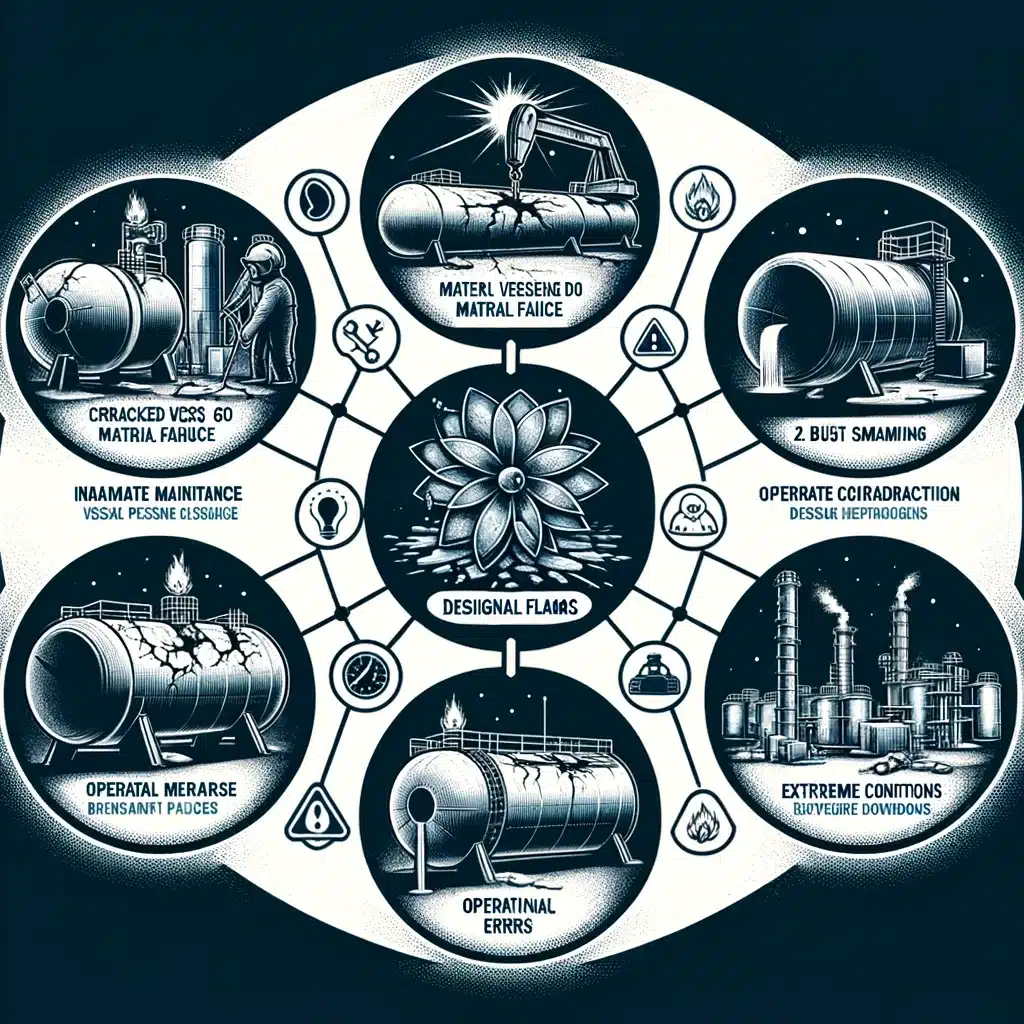
Introduction to Pressure Vessel Failures
Studying the six predominant pressure vessel failure case research is not pretty much expertise on what went incorrect. It’s approximately gaining knowledge from the beyond to innovate for destiny. In industries like oil and gas, strength generation, and biogas, wherein pressure vessels are pivotal, understanding these disasters is essential. It’s about ensuring that the morals, circle of relatives values, and painting ethic we cherish at Red River are pondered in every vessel we produce.
Overview of Pressure Vessel Failure Analysis
Delving into the specific evaluation of six pressure vessel failure occasions, we find various causes – from cloth defects to operational oversights. Each case presents a unique lesson, reinforcing our commitment to non-stop development and innovation in pressure vessel manufacturing.
The First Case History: Catastrophic Failure Analysis
Incident Overview and Background
The first case history we look at Red River LLC includes a catastrophic failure of a pressure vessel, resulting in big operational disruptions. This incident, going on in a high-stakes oil and gas environment, underscores the vital nature of our work.
Technical Analysis of the Failure
Our technical evaluation discovered that the failure was due to an aggregate of things, consisting of design flaws and insufficient fabric choice. This highlights the importance of rigorous engineering and satisfactory management in pressure vessel manufacturing.
Lessons Learned and Preventative Measures
From this incident, we learned the importance of holistic design evaluation and cloth trying out. At Red River, we’ve considering applied more suitable design protocols and rigorous testing processes to save you from such screw-ups.
Second Case Study: Corrosion-Induced Failure
Detailed Incident Report
In our 2nd case examination, a pressure vessel in a biogas facility suffered from increased corrosion, mainly due to untimely failure. This incident became a stark reminder of the cruel environments these vessels perform in.
Corrosion Mechanisms and Effects
Our investigation showed that the corrosion is due to environmental elements and fabric susceptibility. This case study serves as a crucial lesson in the know-how of the interaction among materials and operational environments.
Strategies for Corrosion Prevention
To fight such issues, Red River has evolved advanced corrosion prevention strategies, including using corrosion-resistant substances and shielding coatings, ensuring longevity and reliability in our pressure vessels.
Third Case History: Overpressure Incident
Event Description and Causes
The 0.33 case entails an overpressure incident in a power technology facility. This failure turned on the whole because of insufficient pressure comfort systems, a vital aspect often left out in design.
Overpressure Dynamics in Pressure Vessels
Our evaluation focused on the dynamics of overpressure scenarios, emphasizing the need for sturdy safety mechanisms in pressure vessel design.
Implementing Overpressure Safety Protocols
In reaction, Red River has reinforced our cognizance of incorporating superior safety protocols and relief structures in our designs, ensuring every vessel can safely cope with operational pressures.
Fourth Case: Thermal Fatigue in Pressure Vessels
Case Overview: Thermal Stress Factors
The fourth case history deals with thermal fatigue in a mineral processing plant. Repeated thermal biking led to cloth degradation, a common but essential issue in pressure vessel operations.
Analyzing the Role of Thermal Fatigue
Our evaluation highlighted the function of thermal pressure in pressure vessel longevity, guiding us to refine our material choice and design strategies.
Design Considerations for Thermal Resistance
As a result, Red River now places extra emphasis on thermal resistance in our designs, making sure our vessels can resist hot temperature variations without compromising integrity.
Fifth Case Study: Material Defects and Failures
Incident Analysis: Material Flaws
In the fifth case, cloth defects in a business work pressure vessel brought about structural failure. This incident changed into a vital reminder of the significance of outstanding materials in production.
Quality Control in Material Selection
Our reaction worried about improving our pleasant control measures in material selection, ensuring that every fabric we use meets the best standards of durability and performance.
Enhancing Material Integrity in Manufacturing
We’ve also intensified our consciousness on manufacturing strategies to remove fabric defects, ensuring every vessel we produce at Red River is of unprecedented quality and reliability.
Sixth Case History: Human Error and Operational Mistakes
Case Summary: The Human Factor
The very last case study revolves around human blunders in a biogas facility, leading to operational mishaps. This incident highlights the human detail in pressure vessel safety.
Training and Operational Safety
At Red River, we consider empowering our group of workers with big training and education, ensuring operational protection, and minimizing human mistakes.
Mitigating Human Error in Pressure Vessel Operations
We’ve implemented comprehensive safety protocols and everyday education periods, emphasizing the importance of operational precision and safety in each thing of our work.
Comparative Analysis of the Six Cases
Common Themes and Differences
In reading the six case histories of pressure vessel screw-ups, commonplace themes emerge, which include material defects, layout flaws, and human blunders. However, each case additionally presents specific differences, highlighting the complexity of pressure vessel operations and the need for tailor-made solutions.
Integrated Learnings from Multiple Incidents
The integration of learnings from these incidents at Red River LLC has been pivotal. It has led to enhanced design techniques, advanced cloth choice, and rigorous trying out protocols, making sure of higher well-known protection and reliability in our pressure vessels.
The Role of Regulatory Standards in Preventing Failures
Overview of Relevant Safety Standards
Understanding and adhering to regulatory standards, which include ASME codes, is essential in preventing pressure vessel failures. These requirements offer a framework for design, fabrication, and inspection, ensuring protection and efficiency.
Compliance and Best Practices in Industry
At Red River LLC, compliance is simply the start line. We move past mere adherence to requirements, incorporating industry-satisfactory practices and continuous improvement in our methods, placing a better benchmark in pressure vessel production.
Advanced Technologies in Pressure Vessel Monitoring
Innovations in Failure Prediction
Emerging technologies in pressure vessel monitoring, consisting of advanced sensors and predictive analytics, are revolutionizing failure prediction, allowing for proactive preservation and hazard mitigation.
The Future of Pressure Vessel Safety Technology
The destiny of pressure vessel protection lies within the integration of these technologies. Red River LLC is at the leading edge, embracing these innovations to beautify the safety and durability of our products.
Implementing Safety Measures: A Guide for Industries
Proactive Safety Strategies
Implementing proactive safety techniques, which include regular inspections and worker education, is key to stopping incidents. At Red River, we prioritize these techniques to ensure the highest stage of safety in our operations.
Emergency Response and Contingency Planning
Effective emergency reaction and contingency-making plans are essential. We equip our clients with the knowledge and equipment to deal with capability incidents, ensuring preparedness and resilience.
Need a reliable partner?
Red River specializes in the design and manufacturing of pressure vessels. We also fabricate related items such as prefabricated spools and skid packages.
Reach Out to us today and experience the Red River difference. Where American Made and American Values come together, we care more.
FAQ: Understanding Pressure Vessel Failures and Safety Measures
What are the most common causes of pressure vessel failures?
Pressure vessel failures frequently stem from numerous reasons, but the most common include cloth defects, corrosion, overpressure, thermal pressure, and human blunders. Material defects can arise from bad substances or production flaws. Corrosion is usually due to chemical reactions with the vessel’s contents or surroundings. Overpressure and thermal pressure are regularly the result of operational issues or design flaws, at the same time as human error can embody many errors in operation, maintenance, or inspection.
How can regular inspections help in preventing pressure vessel failures?
Regular inspections play an important position in preventing pressure vessel disasters. These inspections help in the early detection of potential troubles like cracks, corrosion, or wear and tear. They also ensure that the vessels are working within their design limits and that protection devices like pressure remedy valves are functioning well. Regular inspections, ideally conducted by using licensed experts, can become aware of troubles earlier than they lead to failure, thereby enhancing the general protection and durability of the pressure vessels.
What advancements in technology are being used to predict and prevent pressure vessel failures?
Recent improvements in technology for predicting and stopping pressure vessel screw-ups include the use of sensors for actual-time tracking, predictive analytics, and advanced non-adverse trying-out methods. Sensors can monitor parameters like temperature, pressure, and corrosion, supplying non-stop data that can be analyzed to expect disasters. Predictive analytics use this fact to forecast problems earlier than they arise, taking into consideration proactive preservation. Non-adverse testing methods, along with ultrasonic testing and radiography, enable the detection of inner and external flaws without damaging the vessel.
What role do regulatory standards play in ensuring the safety of pressure vessels?
Regulatory standards, inclusive of the ones set by the American Society of Mechanical Engineers (ASME), play a pivotal role in ensuring the protection of pressure vessels. These standards provide guidelines for the layout, substances, fabrication, inspection, and checking out of pressure vessels. Adherence to those standards guarantees that vessels are built to face up to the operational pressures and temperatures they will face and that they have vital protection features. Compliance with these standards isn’t always just a criminal requirement but also a quality practice in keeping excessive protection requirements.
How important is material selection in the design and manufacturing of pressure vessels?
Material choice is critical within the layout and production of pressure vessels. The selected fabric needs to be capable of withstanding the particular operational conditions of the vessel, such as pressure, temperature, and chemical exposure. Factors like energy, corrosion resistance, and sturdiness beneath cyclic loading conditions are vital. The wrong fabric choice can lead to troubles like cracking, corrosion, or maybe catastrophic failure. Therefore, selecting the right material, according to regulatory standards and based totally on the precise utility of the vessel, is fundamental to ensuring protection and capability.
Related Blog Post
Condensate Tanks: Types, Fabrication, and ASME Code
Which Tests Validate Deaeration in Pressure Systems?
Equalization Tanks: Design, Sizing, and Fabrication
What Are Thermal Storage Testing Standards for TES Vessels?
What Hydro Tests Are Required for Pressure Vessels?
About Author