

Activating molecular sieves is a critical step in restoring and maintaining their full adsorption capacity. Without proper activation, molecular sieves cannot effectively remove moisture or impurities from gas and liquid streams.
In industrial systems such as natural gas dehydration, hydrogen purification, and ethanol drying, improper activation can lead to reduced efficiency, higher operating costs, and premature media failure. Controlled heating, proper regeneration methods, and correct vessel design are essential to achieving consistent results.
What Does Activating Molecular Sieves Mean?
Activating molecular sieves refers to the process of removing adsorbed moisture and contaminants from the sieve’s pore structure through controlled heating. Over time, these sieves accumulate water or other molecules in their pores, which reduces their efficiency. Activation restores performance by desorbing trapped moisture, clearing pore channels, and re-establishing full adsorption capacity. Without proper activation, the sieve cannot reach its designed dew point or separation efficiency, affecting processes in industrial pressure vessels.
How the Activation Process Works
The process typically involves gradual heating of the sieve bed, raising the temperature to a target range (commonly 200°C–300°C), maintaining that temperature for sufficient desorption time, and then cooling under controlled, dry conditions. This heating drives off moisture and contaminants occupying the pore structure. In industrial systems, activation often occurs within pressure vessels designed for regeneration using techniques such as:
- Temperature Swing Adsorption (TSA)
- Vacuum regeneration
- Heated purge gas systems
Maintaining consistent temperature and flow distribution inside the vessel is essential for complete activation. Proper pressure vessel fabrication and internal support design ensure uniform flow and heating, preventing channeling.
Recommended Heating & Regeneration Methods
Thermal Regeneration
The most common method. The sieve bed is heated to 200–300°C using:
- Heated dry gas purge
- Electric heaters
- Indirect heating systems
Vacuum Regeneration
Reduces pressure to lower desorption temperature requirements. Often applied in specialized systems like compressed air tank vessels.
Inert Gas Purging
Dry nitrogen or another inert gas can carry away desorbed moisture during heating. The selection depends on sieve type and operational requirements.
Common Issues When Activating Molecular Sieves
Improper activation can significantly reduce performance.
Under-Activation
Occurs when temperature is too low, heating time is insufficient, or flow distribution is uneven. Symptoms include reduced adsorption capacity, higher outlet moisture levels, shorter cycle times, and increased regeneration frequency.
Overheating
Excessive temperature or rapid thermal shock can:
- Damage the zeolite crystal structure
- Cause bead cracking
- Permanently reduce adsorption capacity
Controlled ramp-up and ramp-down temperatures prevent structural degradation.
Best Practices for Complete Activation
To ensure full and safe activation:
- Inspect sieve material before heating
- Remove liquid contamination prior to regeneration
- Apply gradual temperature increases
- Maintain consistent target temperature
- Allow controlled cooling under dry conditions
- Monitor pressure drop and outlet moisture levels
- Ensure uniform gas flow through the bed
Poor vessel internal design can lead to channeling, leaving some zones incompletely activated.
Adjusting Activation for Different Sieve Types
Activation conditions may vary depending on:
- Pore size (3A, 4A, 5A, 13X)
- Bead size
- Material composition
- Contaminant type
For example:
- 3A molecular sieves used in ethanol dehydration may require strict moisture control during cooling.
- 13X sieves handling larger hydrocarbons may require longer heating cycles.
Tailoring activation parameters to the specific sieve type improves efficiency and extends lifespan.
Safety Considerations During Activation
Activating molecular sieves involves high temperatures and pressurized systems. Safety protocols should include:
- Proper PPE
- Pressure monitoring
- Controlled purge gas handling
- Explosion-proof heating equipment (if required)
- Strict temperature controls
Well-engineered pressure vessels are crucial for safe and uniform regeneration.
When to Replace Instead of Regenerate
While molecular sieves can be regenerated hundreds of times, replacement may be necessary if:
- Adsorption capacity does not recover after regeneration
- Physical bead damage is visible
- Pressure drop increases significantly
- Contamination cannot be removed
Routine performance monitoring helps determine when replacement is more cost-effective than continued regeneration.
Why Vessel Design Matters in Activation
Uniform heating and flow distribution directly impact activation success. Poor vessel design can cause:
- Hot spots
- Channeling
- Uneven desorption
- Reduced bed life
Proper internal supports, distributors, and ASME-compliant vessel construction ensure consistent regeneration cycles and safe operation.
Get Expert Assistance with Molecular Sieve Activation
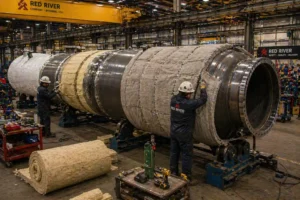
Ensure your molecular sieves reach their maximum performance with proper activation. At Red River, we specialize in designing and manufacturing pressure vessels that optimize activation processes. Our team is here to provide tailored solutions that meet your system’s unique needs.
Contact us today to learn how our American-made products can improve your operational efficiency and extend the lifespan of your molecular sieves.
Frequently Asked Questions
1. What temperature is required for activating molecular sieves?
Most molecular sieves are activated between 200°C and 300°C, depending on type and application.
2. Can molecular sieves be damaged during activation?
Yes. Overheating or rapid temperature changes can permanently damage the pore structure.
3. How often should molecular sieves be regenerated?
Regeneration frequency depends on moisture load and operating conditions. Industrial systems may cycle daily or weekly.
4. Do different molecular sieves require different activation methods?
Yes. Pore size, material composition, and contaminants affect heating time and regeneration technique.
5. How do environmental conditions affect activation?
High humidity during cooling can reintroduce moisture. Controlled, dry conditions are essential for maintaining performance.
Key Takeaways
- Activating molecular sieves restores full adsorption capacity through controlled heating.
- Proper temperature control (typically 200–300°C) is essential.
- Under-activation reduces efficiency; overheating causes permanent damage.
- Uniform vessel design ensures consistent regeneration.
- Monitoring performance determines when regeneration or replacement is required.
Related Blog Post
How Do You Size Thermal Storage for Data Centers?
Thermal Storage Tank Design Engineering
No subpillar set for this blog post.
About Author



