where should industrial tanks be located industrial facility Red River Wyoming

Where Should Industrial Tanks Be Located?

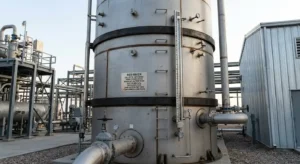
Industrial tanks should be sited based on six factors: safety separation distances, prevailing wind direction, process flow efficiency, secondary containment geometry, maintenance access, and future expansion provisions. Tank location is a foundational design decision, not a siting afterthought, because getting it wrong forces costly compromises on every downstream system. Key Takeaways Safety separation distances from property lines, buildings, and ignition sources are the first and most constraining siting factor. NFPA 30 is the primary reference for above-ground storage tanks; ASME

Read More »
How do tie-ins impact downtime, industrial fabrication, Red River Wyoming

How Do Tie-Ins Impact Downtime

The answer comes down to three variables: how much field work is required at the connection point, how thoroughly that work was planned before the outage window opened, and whether fabricated components match actual field conditions. Each variable compounds the others. A field fit-up problem on an inadequately planned tie-in, using components that do not match field geometry, can double or triple the outage duration against the original schedule. Key Takeaways Tie-ins impact downtime through four primary variables: field fit-up

Read More »
thermal storage tank design parameters ASME fabrication Red River Wyoming

What Are Thermal Storage Tank Design Parameters?

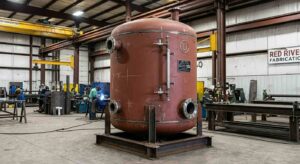
Thermal storage tank design parameters define the full operating envelope of a TES vessel: operating pressure and code basis, temperature range and cyclic loading profile, storage volume, material specification, insulation system requirements, and nozzle configuration. All parameters must be confirmed before fabrication scope is defined, because a vessel that cycles daily accumulates fatigue loads, stratification demands, and thermal expansion forces that standard vessel specifications do not address. Key Takeaways TES design parameters extend beyond standard vessel inputs to include cyclic

Read More »
can modularization speed builds modular skid fabrication Red River Wyoming

Can Modularization Speed Builds on Industrial Projects?

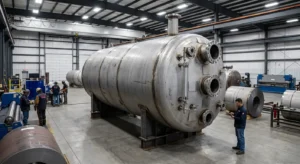
Yes. Modular fabrication schedule compression works by running shop fabrication and site preparation in parallel, removing field fabrication from the critical path so pre-tested modules arrive at the site ready for connection rather than construction. Key Takeaways Modular fabrication schedule compression is achieved by running shop fabrication parallel to site preparation, removing field fabrication from the critical path, and delivering pre-tested systems that reduce commissioning to connection verification. Remote sites, fixed commissioning windows, and projects with scarce or expensive field

Read More »
which weld procedures are common pressure vessel fabrication Red River Wyoming ASME

Which Weld Procedures Are Common in Vessel Fabrication

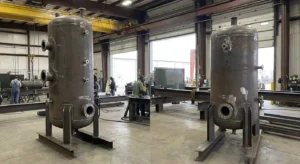
The five common weld procedures industrial fabrication relies on for coded vessels are Shielded Metal Arc Welding (SMAW), Gas Tungsten Arc Welding (GTAW), Gas Metal Arc Welding (GMAW), Flux Cored Arc Welding (FCAW), and Submerged Arc Welding (SAW). Process selection depends on base material, joint position, production volume, and whether work is shop or field, and every process must be executed to a qualified Weld Procedure Specification supported by a Procedure Qualification Record under ASME Section IX. Key Takeaways The

Read More »

How Are QC Steps Documented in Vessel Fabrication?

QC steps in ASME pressure vessel fabrication are documented through a defined chain of records: a Quality Control Manual, certified mill test reports, weld procedure specifications, welder qualification records, a weld map and traveler, NDE reports, hold-point sign-offs by an Authorized Inspector, and a final ASME Form U-1. Together these create an auditable record proving every required inspection was performed and approved before the vessel was released for service. This guide is for project engineers, procurement managers, and quality leads

Read More »