
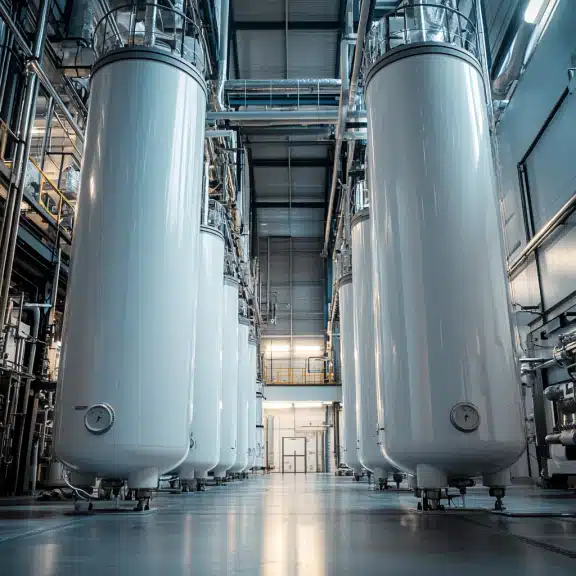
Cryogenic vessels are essential for storing and transporting cryogenic liquids like nitrogen, oxygen, and LNG. They are built with materials such as stainless steel and aluminum and incorporate advanced insulation technologies to maintain extremely low temperatures. These vessels are vital in industries like healthcare, space exploration, and energy, providing safe, efficient storage and transportation solutions.
Cryogenic Vessels Guide: An Overview
Cryogenic vessels guide us through understanding the technology, uses, and safety aspects of these critical storage solutions. Our journey in cryogenic vessel manufacturing demonstrates our commitment to progress and excellence. For instance, with each liquid nitrogen box and cryogenic liquid cylinder leaving our facility, we deliver more than just a product; we offer a promise of reliability and performance.
Benefits of Following a Cryogenic Vessels Guide
Understanding cryogenic vessel technology is crucial. At Red River, we simplify this complex field to ensure accessibility. Furthermore, our vessels incorporate cutting-edge advancements in low-temperature storage. As a result, your investment remains secure and efficient.
The Significance of Cryogenic Vessels in Modern Industry
Applications in Healthcare: From Research to Medical Preservation
In healthcare, cryogenic vessels play a vital role. For example, they preserve biological samples and enable groundbreaking research. Consequently, we contribute to scientific breakthroughs and life-saving innovations, one cryogenic vessel at a time.
The Role in Space Exploration: Fueling the Final Frontier
Our involvement in space exploration showcases our dedication to pushing boundaries. Indeed, cryogenic pressure vessels support missions and empower the brave souls who venture into the unknown.
Breakthroughs Inside the Energy and Gas Industry: LNG and Beyond
In the energy sector, our cryogenic gasoline storage solutions are transforming how we utilize natural resources. By embracing innovation, we pave the way for cleaner and more efficient energy use. Moreover, we remain committed to supporting sustainable power projects, ensuring a greener and healthier environment for future generations. Learn more about pressure vessel standards to ensure compliance and safety in industrial operations.
Need Reliable Cryogenic Vessels?
Red River designs and manufactures high-quality pressure vessels and custom solutions you can trust.
Contact us today to experience American craftsmanship and dependable service.
Frequently Asked Questions
1. What substances are used within the production of cryogenic vessels and why?
Cryogenic vessels are made from materials capable of withstanding extreme cold without becoming brittle or losing strength. Stainless steel and aluminum are the most commonly used due to their excellent cryogenic durability and corrosion resistance. Stainless steel offers exceptional structural integrity at very low temperatures, while aluminum is valued for its lightweight properties and superior thermal conductivity, which reduces heat transfer into the cryogenic fluid.
2. How are cryogenic vessels insulated to keep extremely low temperatures?
Cryogenic vessels utilize advanced insulation techniques to minimize heat transfer and maintain low temperatures. One common approach is vacuum insulation, which involves removing air from the space between the inner and outer shells to prevent heat transfer through conduction and convection. Another method includes multi-layer insulation (MLI), consisting of reflective material layers interspersed with low-conductivity spacers, effectively reducing radiative heat transfer.
3. Can cryogenic vessels keep any type of cryogenic liquid, or are they precise to positive materials?
Although cryogenic vessels are designed for versatility, they are often tailored to store specific liquids like nitrogen, oxygen, argon, and helium. Liquefied natural gas (LNG) vessels, for instance, are customized due to its unique properties. Design considerations, such as material compatibility, insulation needs, and pressure ratings, depend on factors like the liquid’s boiling point, vapor pressure, and thermal characteristics.
4. What protection capabilities are necessary for the design of a cryogenic vessel?
Safety is a top priority in cryogenic vessel design because of the inherent risks of storing extremely cold liquids. Key safety features include pressure relief valves to prevent over-pressurization, burst disks as fail-safes, and vacuum protection valves for vessels with vacuum insulation. Additionally, materials are selected for their performance at low temperatures to prevent brittleness and cracking. Routine inspections and maintenance are crucial to ensure long-term integrity.
5. How does the manufacturing method of cryogenic vessels ensure high quality and compliance with enterprise standards?
Manufacturing cryogenic vessels involves strict quality control measures at every stage, from material selection to final inspection. Manufacturers adhere to global standards, such as those set by the American Society of Mechanical Engineers (ASME), which govern the design, fabrication, and testing of pressure vessels. This process includes using certified materials, performing non-destructive testing (NDT) for welds and joints, and conducting hydrostatic and pneumatic tests to verify structural integrity. Compliance with these standards ensures reliability, traceability, and safety.
Key Takeaways:
- Cryogenic vessels are designed to store gases like nitrogen, oxygen, and helium at extremely low temperatures, supporting industries like healthcare, aerospace, and energy.
- Materials such as stainless steel and aluminum are used in cryogenic vessels for their durability and thermal properties.
- Advanced insulation techniques like vacuum insulation and multi-layer insulation (MLI) are used to maintain low temperatures and prevent heat transfer.
- Safety features such as pressure relief valves, burst disks, and vacuum protection valves are essential for safe cryogenic vessel operation.
- Adherence to global standards, including ASME and quality control measures, ensures the reliability and safety of cryogenic vessels.
Related Blog Post
Can Condensate Storage Improve Reliability?
Where Do Condensate Tanks Fit in a Steam System?
Which Nozzles Simplify Maintenance on Pressure Vessels?
How to Vent Condensate Tanks in Steam Systems
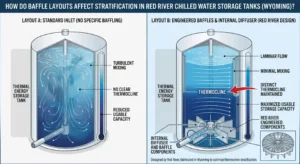
How Do Baffle Layouts Affect Stratification in TES Tanks?
No subpillar set for this blog post.
About Author



