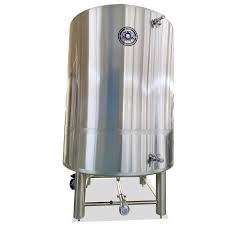
Glycol Holds Heat Longer Than Water

Understanding Glycol Heat Retention and Its Industrial Benefits
What is Glycol?
Glycol heat retention plays a crucial role in enhancing energy efficiency in industrial applications. This blog explores why glycol outperforms water in retaining heat and how it benefits advanced systems. Glycol is a type of alcohol that is often used as an antifreeze in cooling and heating systems. It’s known for its ability to decrease the freezing point of water and raise its boiling point, making it particularly powerful in intense temperatures. Commonly used kinds encompass ethylene glycol and propylene glycol.
Types of Glycol Heat Retention
There are numerous kinds of glycol, every with its specific properties. Ethylene glycol is widely used in automobile antifreeze and commercial programs, at the same time as propylene glycol is frequently discovered in food processing and pharmaceutical industries due to its lower toxicity.
Chemical Composition of Glycol Heat Retention
Thermal Properties of Glycol
The thermal houses of glycol encompass its capacity to take in and retain warmness. Glycol has a better heat potential than water, because of this it can absorb more heat before its temperature rises. This makes glycol a powerful substance for heat transfer and retention in various industrial tactics.
Comparing Heat Retention: Glycol vs. Water
Heat Retention Definition
Heat retention refers to a substance’s capacity to keep warm through the years. In industrial programs, effective warmness retention can lead to powerful financial savings and progressed gadget performance. Both glycol and water are used in heating and cooling structures, however their warmth retention capabilities differ.
Why Heat Retention Matters
Understanding heat retention is vital for designing efficient thermal systems. Systems with higher heat retention require less strength to hold desired temperatures, leading to price financial savings and progressed overall performance. Choosing the right medium for heat retention can significantly impact operational efficiency.
Heat Retention in Industrial Applications
In industries like oil and gasoline, power generation, and HVAC, effective warmness retention is important. Glycol is frequently favored for its superior warmth retention houses, which may enhance the efficiency and reliability of thermal systems.
Need a reliable partner?
FAQ: Does Glycol Hold Heat Longer Than Water?
How does glycol’s warmness retention affect strength efficiency in industrial structures?
Glycol’s capability to hold warmness longer than water can drastically beautify strength efficiency in industrial structures. Because glycol maintains a more stable temperature over time, structures using glycol require less common heating or cooling modifications, leading to reduced power consumption.
Can glycol be utilized in all sorts of heating and cooling structures?
Glycol is flexible and can be utilized in several heating and cooling structures, such as HVAC structures, industrial chillers, and solar thermal structures. However, it’s crucial to pick out the right kind of glycol for your particular utility. For instance, ethylene glycol is usually utilized in commercial settings, whilst propylene glycol is preferred in food processing and pharmaceutical applications due to its decreased toxicity.
What are the environmental impacts of the usage of glycol in comparison to water?
While glycol has great thermal properties, it can have extra enormous environmental effects than water if not handled properly. Glycol may be poisonous to flora and fauna and dangerous to the environment if it leaks or is disposed of improperly. Proper containment, spill prevention measures, and disposal processes are crucial whilst using glycol. On the opposite hand, water is normally more environmentally pleasant, however, its lower warmness retention and higher freezing point might make it less efficient in certain packages.
How does the viscosity of glycol affect its performance in warmth switch structures?
Glycol has a higher viscosity than water, which could affect its overall performance in warmness switch structures. The accelerated viscosity can lead to higher pumping costs and reduced flow charges, which may require modifications to the gadget’s layout to deal with these differences. However, the exchange-off is regularly profitable due to glycol’s superior warmth retention and lower freezing factor, which could decorate the overall performance and reliability of the machine.
Are there any unique protection requirements for systems using glycol?
Yes, structures using glycol require particular renovation practices to make certain most desirable overall performance. Regular monitoring of glycol attention is important to preserve its antifreeze houses and thermal efficiency. Over time, glycol can degrade and form acidic byproducts, so it’s important to test the pH tiers and upload inhibitors as essential to save you from corrosion.
Related Blog Post
- Is glycol flammable?
- Does Glycol Go Bad?
- How is glycol transported?
- Can glycol go down the drain?
- Does glycol degrade over time?
- Does glycol break down plastic?
- How do you store propylene glycol?
- How long does glycol last in a boiler?
- Is glycol considered a hazardous material?
- How often does glycol need to be replaced?
- At what temperature does glycol breakdown?
Solutions
In the realm of industrial solutions, Red River emerges as a pioneer, offering a diverse range of custom-engineered products and facilities. Among our specialties is the design and production of Custom/OEM Pressure Vessels, meticulously crafted to meet individual client requirements, ensuring performance under various pressure conditions. Our expertise extends to the domain of prefabrication, where Red River leads with distinction.
The company excels in creating prefabricated facilities, modules, and packages, reinforcing its stance as a forerunner in innovation and quality. This proficiency is further mirrored in their Modular Skids offering, where they provide an array of Modular Fabricated Skid Packages and Packaged equipment. Each piece is tailored to client specifications, underlining their commitment to delivering precision and excellence in every project they undertake.


Related Blog Post
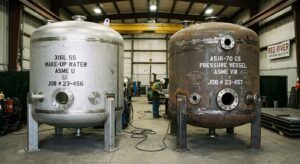
Which Materials Suit Make-Up Water Service?
How Big Should Make-Up Water Tanks Be?
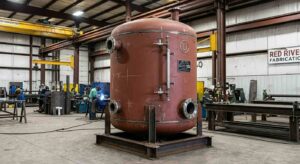
Make-Up Water Tanks: Design, Sizing, and Fabrication
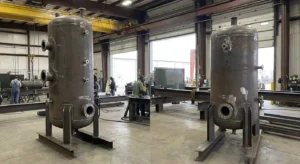
When to Spec Equalization Tanks for Industrial Systems
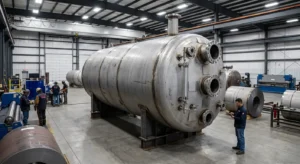
How Do Equalization Tanks Balance Flow?
About Author