Welding certification training builds essential skills, improves safety, and opens career opportunities, especially in specialized areas like GTAW/TIG welding. Choosing the right program, practicing diligently, and staying current with industry standards ensures long-term success.
Why Learning How to Get Welding Certification Training Matters
If you’re aiming to build a solid future in metal fabrication or industrial work, you might be wondering how to get welding certification training that sets you up for success. Good news this journey can be clearer than you think. With the right coaching, welding safety training, and hands-on practice, you can develop crucial skills, boost career security, and even explore specialized areas like Gas Tungsten Arc Welding (GTAW), often referred to as TIG welding. Below, we’ll walk you through the essentials of finding a solid training path, point out key considerations, and share practical tips for growing your welding expertise.
Explore how to get welding certification training
Many people associate welding certification with improved earning potential and job security. A strong credential signals that you can safely work with multiple welding techniques, complete welding safety training, handle equipment properly, and maintain quality standards on the job. Certification also allows you to explore specialized areas such as GTAW welding certification, which is in demand for industries like aerospace and pharmaceutical, where precision counts.
Here are a few reasons why exploring how to get welding certification training matters:
- Employers value proven skills. Certification helps you stand out in a crowded job market.
- Safety and compliance are paramount. Proper training lowers workplace hazards and builds your value as a reliable professional.
- Having up-to-date credentials often leads to work on diverse (and higher-paying) projects.
Learning how to get these credentials effectively begins with understanding the training landscape, from local programs to specialized industry offerings.
Compare different GTAW training paths
GTAW, more commonly known as TIG welding, uses a tungsten electrode to produce a precise weld. This method is highly regarded for its clean and high-quality results, making it popular in sectors like automotive, marine, and contract manufacturing. When evaluating “where” and “how” to get your training, consider these paths:
Trade schools and community colleges
Local institutions often host welding certification classes that include GTAW as part of their curriculum. These programs usually run for a few months to two years.
Specialized industry programs
Certain manufacturers or fabrication companies offer in-house certification. For instance, Red River, an ASME-certified pressure vessel manufacturer, provides training and certifications in welding for pressure vessel work.
Apprenticeships
An apprenticeship pairs classroom instruction with on-the-job training, often in specialized industries like prefabrication or modular skid fabrication.
Online resources and hybrid programs
Some schools provide partial or full welding certification classes online. While hands-on learning must still be in person, these flexible formats help students balance busy schedules.
Before you commit to a path, think about your career goals. If you want to specialize in precision metalwork, look for programs that emphasize GTAW. If you aim to broaden your skill set, choose a course that addresses several welding processes, including MIG and stick welding.
Follow steps to master GTAW
Mastering GTAW technique is crucial if you aim to stand out. Welding recruiters often look for technicians who can create high-quality, aesthetically pleasing welds with minimal cleanup. Expanding your skills also opens doors to more welding career opportunities across industries. Here’s what it typically takes to become skilled in GTAW:
Grasp the fundamentals
Understand welding safety, equipment setup, and metal behavior; beginner courses like TIG welding certification teach basics.
Build hand-eye coordination
GTAW demands precise electrode control; practice beads on plates and varied joints to sharpen technique.
Select the right materials
GTAW uses stainless steel, aluminum, and exotic alloys; diverse training materials refine welding skills
Take a certification test
Strong test performance boosts confidence, ensures certification success, and unlocks broader welding career opportunities across industries.
Complete official paperwork and documentation
Passing certifies your qualification; agencies file results, but periodic renewal ensures credentials remain valid.
Choose a supportive environment
Not all training programs are created equal. To get the most from your certification journey, prioritize places that offer safe facilities, thorough instruction, and an encouraging learning atmosphere.
Many prospective welders train at general tech schools, but specialized companies like Red River ensure a high standard of safety by adhering to ASME codes, employing Lean Six Sigma practices, and maintaining advanced fabrication shops.
Look for training environments that offer:
- ● Modern equipment comparable with real-world job sites
- ● Experienced instructors who provide constructive feedback
- ● Quality assurance protocols
- ● Safety-first approaches to reduce workplace accidents
When you study in a well-structured facility, you can practice more efficiently, fine-tune your skills, and quickly adapt to professional environments after graduation.
Embrace prefabrication knowledge benefits
Prefabrication is a crucial element of modern welding careers. It involves creating industrial modules or modular skids in controlled environments before shipping them to job sites.
Benefits include:
- Improved quality: Detect issues early in fabrication stages.
- Cost efficiency: Better planning reduces expenses.
- Safety: Reduced job-site exposure lowers accident risks.
Adding prefabrication skills can boost employability, especially in industries requiring advanced welding solutions.
Grow your welding career
Earning your credential is just the start. Once you have the fundamentals, there are multiple ways to keep sharpening your expertise and staying relevant in the field:
Keep practicing on complex materials
Experience with carbon steel and aluminum alloys improves welding skills, making job-site challenges easier to manage.
Stay current with codes
American Welding Society (AWS) updates standards regularly; staying informed helps welders maintain a strong competitive edge.
Network within welding communities
Conferences and welding forums reveal industry trends, connect you with mentors, and open specialized career opportunities.
Pursue advanced certifications
Advanced courses beyond GTAW expand employability; learning multiple processes prepares welders for diverse industrial setups.
Learn from real projects
Manufacturers like Red River build vessels and skids, offering hands-on experience with complete fabrication project lifecycles.
In short, welding is a lifelong learning path. The more proactive you are in refining your skills and knowledge, the more likely you’ll land roles that pay well and challenge you in rewarding ways.
Finalize How to Get Welding Certification Training
By now, you know that learning how to get welding certification training means choosing the right program, mastering GTAW, and exploring prefabrication benefits. A supportive environment like Red River or a trade school ensures you gain confidence and industry-level skills.
If you’re ready, you can request a quote or contact Red River to explore specialized training and fabrication opportunities.
Start Your Welding Certification Training Today
Ready to take the next step? Don’t wait—begin your welding journey now. Whether through a trade school, apprenticeship, or an industry-recognized program, the sooner you start, the sooner you’ll thrive.
Frequently Asked Questions
1. Where to get welding certification training?
You can get welding certification training at trade schools, community colleges, or accredited training centers.
2. How long is welding certification training?
Welding certification training can take anywhere from a few weeks to several months depending on the program.
3. What is GTAW, and how is it different from other welding methods?
GTAW, or TIG welding, employs a tungsten electrode, delivering precise, clean welds for industries requiring tight tolerances.
4. Can you take welding certification online?
Hybrid welding programs allow online theory, but hands-on practice requires in-person sessions before certification.
5. What is the difference between a certificate program and an associate degree in welding?
Certificate programs teach welding skills and safety; associate degrees expand into math, blueprints, and technical knowledge.
6. Is welding certification training expensive?
Welding training costs vary; factors include location and specialization, with employers or unions sometimes offering sponsorship.
7. Will training programs help me learn about prefabrication?
Many welding programs cover industrial applications; Red River emphasizes prefabrication, offering early exposure to advanced shop techniques.
Highlight key takeaways
- Pick quality instruction: Seek a program or workplace that prioritizes safety, thorough practice, and well-maintained equipment.
- Master crucial processes: GTAW, also known as TIG welding, is in high demand for precision work.
- Look beyond the basics: Explore prefabrication, advanced codes, and other specialized skills to stay competitive.
- Practice diligently: Perfect your technique by welding different materials and thicknesses.
- Stay open to growth: Join professional networks, pursue advanced certifications, and keep learning from new challenges.
Related Blog Post
Pressure Vessel Design & Engineering: Concept to Launch
What is Pressure Vessel Design and Engineering: Code-Ready Guide
What are the Key Factors in Pressure Vessel Engineering
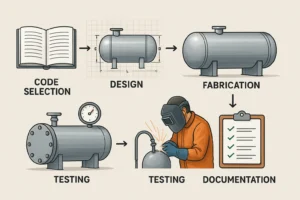
How Do You Design a Pressure Vessel: A Step-By-Step Guide
What is Pressure Vessel Fabrication and Manufacturing
About Author