
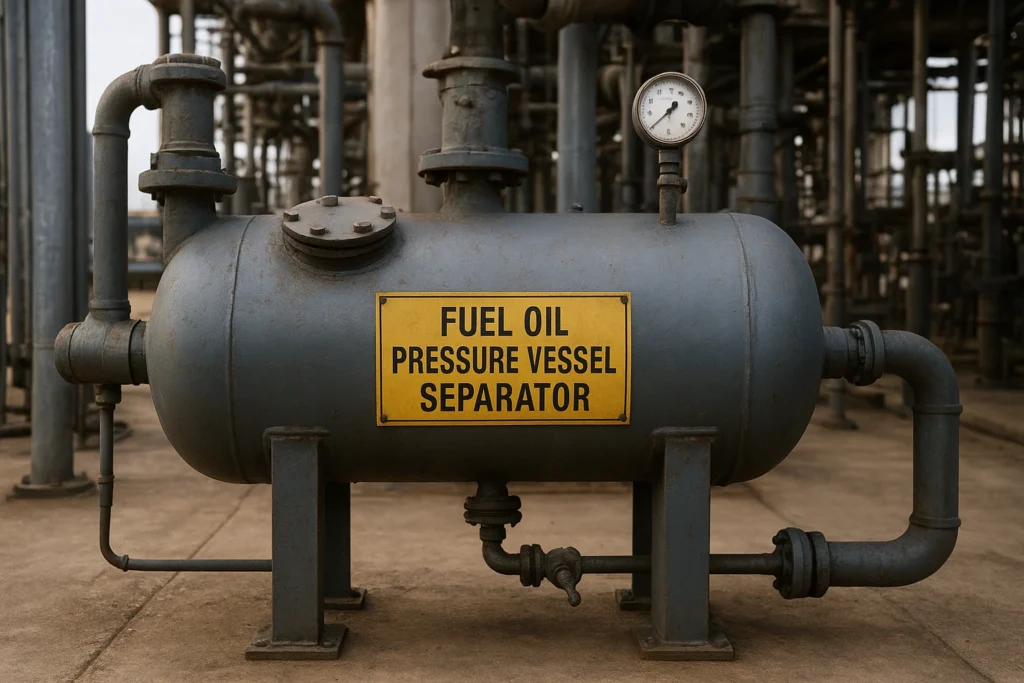
A fuel oil pressure vessel separator removes water and impurities from fuel to keep equipment efficient and safe. It prevents corrosion, lowers downtime, and ensures reliable performance across industries.
Why What Is a Fuel Oil Pressure Vessel Separator Matters
What is a fuel oil pressure vessel separator? Fuel and water do not mix well, especially in industrial settings where cleanliness and efficiency matter daily. If you have ever wondered what happens when unwanted water sneaks into your oil supply, you are in the right place. From safeguarding engines against corrosion to boosting overall performance, a reliable separator plays a huge role. In this post, we will explore what a fuel oil pressure vessel separator is, why separation is so crucial, and how prefabrication can make these vessels more consistent and safer to install. Let us begin by defining this piece of equipment and discussing why you may want one.
What Is a Fuel Oil Pressure Vessel Separator
A fuel oil pressure vessel separator is a specialized container designed to remove water and impurities from fuel. It creates a controlled environment inside a pressure-rated chamber to filter fuel before it reaches machinery like diesel engines, turbines, or industrial furnaces.
Also called fuel water separators, these vessels separate water from fuel to prevent corrosion and improve combustion efficiency, reducing costly downtime. They come in various designs such as horizontal, vertical, or spherical depending on flow needs and space. Typically, the vessel has an inlet, separation media, and outlets for fuel and water, all built to withstand industrial pressures and meet safety standards.
- Built for tough conditions: With ASME or similar certifications, these vessels are tested to handle operating pressures for oil and gas applications.
- Self-contained system: Everything from incoming fuel to separated water drains out through dedicated nozzles. This means minimal risk of cross-contamination.
- Flexible usage: Whether you are dealing with heavy oil, diesel, or specialized fuels, the vessel can be adapted with different internal elements.
If you are curious about variations used for diesel fuel, you might also explore the diesel pressure vessel filter separator or learn more about what is a diesel pressure vessel filter separator. Each design focuses on the same principle, though with slightly different components tailored to specific fuel types.
Why Separation Matters
It is easy to overlook how vital clean fuel is to your day-to-day results. When water becomes mixed with oil, a host of challenges can follow:
- Corrosion risk: Water can damage metallic surfaces, spurring rust inside pipelines or tanks.
- Reduced efficiency: Engines or turbines lose some zip if moisture dilutes the combustion process.
- Pump and injector wear: Water-based contaminants in oil can grind or pit essential components.
- Unexpected downtime: Clogged filters or corroded parts trigger equipment shutdowns and expensive maintenance.
A 2024 industry analysis suggests that unplanned outages from contaminated fuel can cost hundreds of dollars per hour in smaller sites and many thousands per hour in large-scale operations. By installing a high-quality fuel oil pressure vessel separator, you help avoid these avoidable disruptions. You also keep your system more reliable over the long haul.
Beyond the immediate cost-savings, separation preserves your assets. Over time, engine components, turbines, and piping loops do not have to contend with rust flakes or sludge. Well-separated fuel is simply more predictable and less likely to shorten equipment life spans. This is why so many industrial facilities now rely on specialized vessels like the fuel water separator for day-to-day reliability.
Core Components and Process
A fuel oil pressure vessel separator does not work by magic. Instead, it uses physics and engineering to accomplish a straightforward goal: separate water from fuel. Here is how it typically unfolds:
- Inlet zone: The raw mixture flows into the top or side of the vessel.
- Baffles or coalescing media: These internals slow down the mixture and encourage droplets of water to gather and drop to the bottom.
- Gravity or cyclonic separation: In many designs, the separation relies on gravity, but some advanced systems use cyclonic force to further spin out water.
- Water collection chamber: Heavier water collects at the base of the vessel, creating a distinct water layer.
- Clean fuel outlet: Once the water is removed, the purified fuel is directed out for storage or consumption.
Sometimes, you will see extra layers of filtration built in, like screens or mesh elements. If you want to understand how similar systems operate in other contexts, check out how does a diesel pressure vessel separator work. Each approach uses the same principles, slowing the flow, causing heavier water to settle, then draining it off.
Materials and Certifications
Most fuel oil pressure vessel separators are constructed from steel or a steel alloy that is resistant to corrosion under the interior conditions. They often meet or exceed ASME standards, ensuring they can handle specified pressures without cracking or failing. This is especially vital in oil and gas settings, where any rupture can lead to serious hazards. If you run a facility that deals with quick oil flow shifts or high operating temperatures, an ASME-rated container delivers that extra confidence.
Maintenance Overview
General upkeep involves periodically draining the collected water, inspecting the separation elements, and ensuring no damage to the vessel. You might also require occasional cleaning of internal surfaces. By verifying that water and suspended particles are effectively discharged, you keep the separation capacity strong. Good news, this is easier than it sounds, since modern vessel designs often include easy-access ports and automatic drain systems.
One Approach: Prefabrication
Prefabrication is increasingly popular in many industries for good reason. Building vessels, piping, and attachments offsite in a controlled environment allows faster, safer installation at your facility. According to Red River, benefits include:
- Consistent quality with better weld integrity and material tracking
- Reduced on-site labor, cutting costs and safety risks
- Faster project timelines by assembling sections in parallel
- Thorough pressure and leak testing before delivery
What Is a Fuel Oil Pressure Vessel Separator for Your Operations
Installing a fuel oil pressure vessel separator means cleaner fuel, longer engine life, and fewer disruptions. It safeguards pipelines, turbines, and equipment from hidden contaminants while supporting regulatory and safety standards.
Ready to Improve Your Fuel Reliability?
Contact RedRiver LLC today to learn more about what is a fuel oil pressure vessel separator and explore prefabricated solutions designed for your industry.
Frequently Asked Questions
1. How does a fuel oil pressure vessel separator work?
It works by directing fuel through a pressurized vessel where water and debris are separated from the fuel. Using filters, coalescing elements, and gravity, the separator collects water and particles, allowing only clean fuel to pass through.
2. Why are fuel oil pressure vessel separators used in industry?
They are used to protect critical machinery from water-induced corrosion and wear. By providing clean fuel, these separators improve engine performance, reduce maintenance costs, and help prevent unexpected downtime in industrial operations.
3. Can I use one separator for multiple types of fuel?
Many separators are designed to accommodate different types of fuel, like diesel or heavy fuel oil. As long as your separator’s operating specifications match the fuel properties, you are good to go.
4. What is the main difference between gravity and cyclonic separation?
Gravity separation relies on letting heavier droplets of water settle over time, while cyclonic separation uses a spinning motion to force droplets out more quickly. Both methods work well, but cyclonic systems may handle higher flow rates more efficiently.
5. Do I need an ASME-certified separator?
In many industrial settings, yes. An ASME stamp ensures your vessel meets safety and manufacturing standards suitable for the pressures involved. If you check out asme pressure vessel separator, you can learn more about why certification matters.
Key Takeaway
- Proper separation preserves engine and turbine health.
- Water, rust, and debris can harm equipment if unaddressed.
- Fuel oil pressure vessel separators use proven physics for water removal.
- Prefabrication lowers installation costs and time, enhancing overall quality.
- Regular maintenance ensures maximum performance and longevity.
Related Blog Post
Pressure Vessel Design & Engineering: Concept to Launch
What is Pressure Vessel Design and Engineering: Code-Ready Guide
What are the Key Factors in Pressure Vessel Engineering
How Do You Design a Pressure Vessel: A Step-By-Step Guide
What is Pressure Vessel Fabrication and Manufacturing
About Author



