An industrial fuel water separator vessel protects your equipment by removing water from fuel, ensuring efficiency, compliance, and long-term reliability. Choosing the right design, materials, and maintenance plan makes a major difference.
Understand the Industrial Fuel Water Separator Vessel
If you are considering an industrial fuel water separator vessel, you want a solution that reliably removes water from fuel streams, preventing corrosion and maintaining performance. These vessels stand at the intersection of good engineering and safety, helping to ensure that your systems run smoothly and your equipment remains durable in the long term. According to Red River, customized vessels are often key to keeping your fuel lines clean, mitigating downtime, and reducing the risk of contaminants in the process. Good news, choosing the right separator starts with a clear look at design standards, materials, and maintenance needs.
Industrial fuel water separator vessels come in different shapes and capabilities. Depending on your specific application, you might see horizontal, vertical, or spherical screens, each best suited to certain operational flows. Whether you work in oil and gas, power generation, or any heavy industrial setting, these vessels give you peace of mind by limiting the potential damage caused by moisture or sediment in your fuel supply. You are in control of how well your mission-critical machinery operates, and a high-quality separator vessel can safeguard that investment.
You will likely hear about prefabrication when sourcing your industrial fuel water separator vessel because many vendors, including Red River, aim to cut project timelines and reduce onsite labor costs through advanced modular manufacturing. Let’s walk through the major areas you will want to explore before committing to a final design.
Check Design and Manufacturing Requirements
When you are shopping for a separator, design is the first box to check. Beyond flow rates and separation efficiency, reputable manufacturers adhere to strict standards. For instance, many industrial facilities require an ASME (American Society of Mechanical Engineers) stamp. If you see “ASME pressure vessels” or are wondering why must separators be ASME pressure vessels, it’s usually due to compliance with industry-regulated pressure tolerances. Vessels used in harsh environments often demand robust construction to avoid catastrophic failures.
ASME Certification
- ASME certification mandates that every vessel meets strict guidelines for wall thickness, weld integrity, and stress tolerance, ensuring the container can safely withstand high pressures and extreme operating conditions without risk of rupture or leaks.
- Achieving ASME certification assures a baseline of quality that is widely recognized by industry leaders worldwide, giving operators confidence that their separator meets the highest standards for safety, reliability, and long-term performance.
Internal Design Considerations
- Internal components like weir plates, coalescers, or filter media play a critical role in removing water and other contaminants efficiently, and proper placement within the vessel ensures maximum contact time and separation effectiveness.
- Additional compartments, such as two-phase or three-phase sections, may be necessary depending on the composition of the fluid, allowing the separator to handle multiple types of contaminants and separate them into distinct layers for easier collection and removal.
External Features
- Many industrial fuel water separator vessels come equipped with gauge instruments, pressure indicators, and access hatches, providing operators with real-time monitoring and easy entry for inspections, cleaning, and maintenance tasks.
- Automated drain systems or remote-controlled valves can further simplify the water-removal process, reducing the need for manual intervention and ensuring continuous, uninterrupted operation even in large-scale industrial setups.
According to Red River, accredited manufacturers commonly maintain quality control processes with full traceability of materials. This process ensures that you know where your steel, fasteners, and weld consumables originate. That level of transparency not only builds trust, it also means any future repairs or replacements can be done quickly and accurately with compatible materials.
It is wise to check that a potential supplier’s design library aligns with the specific conditions you face, whether your environment is extremely cold, dusty, or damp. Good news, you can usually request a custom design if an off-the-shelf vessel does not match your project’s demands.
Compare Materials and Features
Picking the right material for your industrial fuel water separator vessel can make all the difference in uptime and safety. You want metals that can handle tough chemical or environmental conditions without succumbing to corrosion. Here are a few considerations:
Carbon Steel
- Usually one of the most cost-effective options, carbon steel vessels offer strong durability at a lower price point, making them attractive for many standard industrial applications.
- Well-suited for moderate environments where corrosive exposure is limited, such as indoor facilities or operations with less aggressive fluids.
- Often requires protective coatings, linings, or paint systems to reduce rusting over time, especially if the vessel is exposed to moisture or outdoor elements.
Stainless Steel
- Widely recognized for its excellent corrosion resistance, stainless steel helps extend the vessel’s service life even when exposed to water, humidity, or aggressive chemicals.
- Comes with a higher upfront cost compared to carbon steel, but the long-term savings in reduced maintenance and replacement often justify the investment.
- A strong choice in environments that involve acidic, salty, or otherwise corrosive conditions, such as marine, chemical, or food-grade applications.
Specialty Alloys
- Typically reserved for highly corrosive, abrasive, or high-temperature environments, specialty alloys provide superior performance where carbon or stainless steel would fail.
- More expensive than standard metals, but they deliver unmatched longevity and reduced risk of premature failure in the harshest operating conditions.
- Engineered to withstand extreme stresses, these alloys help vessels perform reliably in critical industries like petrochemicals, offshore oil and gas, or power generation.
You also might want to compare horizontal vs. vertical units if your available footprint is limited:
| Type | Potential Advantages | Typical Use Cases |
| Horizontal | – Stable for high flow rates | Oil and gas sector, large industrial lines |
| – Often easier to transport and retrofit | ||
| Vertical | – Smaller footprint, ideal when floor space is tight | Power generation, refining, or petrochem. |
| – Gravity separation can be more efficient in some designs |
Because water separation can be intricate, you might also explore diesel pressure vessel filter separator systems if you are working specifically with diesel streams. Each solution has its own operating parameters, so be sure to confirm with your project engineers that the vessel can maintain performance at your flow rate and pressure range.
Explore the Advantages of Prefabrication
Prefabrication is not just a buzzword. According to Red River, building an industrial fuel water separator vessel in a controlled facility, then shipping it fully or partially assembled, offers multiple benefits:
Improved Quality Control
- Manufacturing in a consistent, controlled environment helps reduce errors caused by unpredictable weather, site constraints, or variable labor conditions, ensuring each component meets exacting standards before it even reaches the field.
- Skilled teams can focus full-time on welding, assembly, and inspection, maintaining a high level of craftsmanship and consistency across all units, which minimizes defects and guarantees reliable long-term performance.
Faster Install and Less Downtime
- Many components arrive onsite pre-assembled, reducing the amount of fieldwork required and speeding up the overall installation process, which helps projects stay on schedule.
- Operators can often schedule fewer shutdown hours because connecting pre-tested modules is simpler and faster, meaning production or operations experience minimal interruption during installation.
Lower Onsite Exposure Hours
- Fewer tasks need to be performed in confined, high-risk, or hard-to-reach locations, reducing the exposure of personnel to potential hazards and physically demanding conditions.
- This reduction in high-risk activities can lower accident rates, decrease liability, and even positively impact insurance premiums due to the safer work environment.
Easy Troubleshooting and Modification
- With Building Information Modeling (BIM) software, design changes or potential issues can be identified, tested, and updated before the vessel ever reaches your facility, allowing for more precise planning and error prevention.
- By catching potential conflicts or necessary modifications early, you save time and resources, ensuring that installation proceeds smoothly and any adjustments can be made without costly onsite delays.
When a project is prefabricated, vendors often test for leaks, cracks, or design conflicts in their own shop. If something needs adjusting, it’s far more convenient to do that in a factory setting. Once the vessel arrives on site, your job is to hook it up, run final checks, and start operations. This is good news if you are juggling multiple industrial upgrades, as it keeps your schedule from ballooning.
If you are dealing with complicated industrial processes like large refineries or power plants, reliable separation technology is essential. Even the best boilers or turbines can fail if contaminated fuel triggers corrosion or clogs. For example, in gas turbine systems, a gas turbine fuel water separator vessel can remove droplets that would otherwise cause serious damage at the turbine’s intake.
Plan for Maintenance and Safety
No matter how well-designed your industrial fuel water separator vessel is, providing routine maintenance ensures it stays in peak condition. Two common tasks to keep on your radar:
- Inspect and replace filters or coalescer elements: Every filter has a recommended service interval. If you skip it, your separator’s efficiency suffers. This can lead to water-laden fuel slipping through, increasing wear on downstream equipment.
- Monitor drainage system: Whether you have an automatic drain or a manual drain valve, keep an eye out for any clogs or slow-flow issues that force water to accumulate in the vessel.
Safety does not stop once the vessel is bolted in place. You want to confirm that each connection point is sealed and that the entire system is rated for the site’s maximum operating pressure. Because industrial fuel water separator vessels may handle combustible fluids, an extra layer of caution goes a long way. Keep personal protective equipment (PPE) at the ready, and train employees on the vessel’s safe operation protocols. A thorough plan reduces the chance of accidents, especially when dealing with high pressures or flammable liquids.
If you ever wondered why use a diesel fuel water separator vessel, the answer often comes down to safety and consistent engine performance. Whether your engine powers a generator or heavy machinery, removing water limits the risk of corrosion inside fuel lines and injectors. The same concept applies to other fuel types, water is the enemy of efficient combustion.
Why the Industrial Fuel Water Separator Vessel Matters
When you buy an industrial fuel water separator vessel, you are essentially investing in the longevity and reliability of your entire operation. Moisture or contaminants in the fuel line can wreak havoc on pumps, turbines, and burners. By focusing on design requirements, materials, prefabrication methods, and ongoing maintenance, you set yourself up for safer, more consistent performance.
You also protect your employees. Less time spent fabricating onsite can reduce workplace accidents. Equipment that runs effectively, with minimal water in the pipeline, is less likely to break down or create hazards. From simple filter changes to advanced modeling, the idea is to be proactive. A good vessel is not just about removing water it is about giving you the confidence to focus on what you do best.
Take the Next Step with Your Industrial Fuel water separator vessel
Secure your operations today by choosing a reliable industrial fuel water separator vessel. Contact Red River to explore custom-built solutions that match your project’s unique needs.
Frequently Asked Questions
1. What is an industrial fuel water separator vessel?
An industrial fuel water separator vessel is a specialized container designed to remove water and other contaminants from fuels or industrial liquids. It ensures cleaner fuel for engines, turbines, or other equipment while meeting safety and operational standards.
2. How does an industrial fuel water separator vessel work?
It separates water and impurities from fuel using gravity, density differences, and internal components like baffles, coalescers, or demister pads. Water collects in a lower chamber while clean fuel flows to the outlet for safe use.
3. Why are industrial fuel water separator vessels important?
These vessels protect machinery from corrosion, prevent engine or system malfunctions, improve efficiency, and help facilities comply with safety and environmental regulations.
4. How often should an industrial fuel water separator vessel be maintained?
Maintenance frequency depends on usage and fuel quality, but regular inspections, cleaning, and draining of collected water are recommended to ensure reliable operation and prevent damage.
5. Can industrial fuel water separator vessels be retrofitted into existing fuel systems?
Yes, in many cases, a qualified professional can integrate a separator into an existing system, though proper evaluation of flow rates, space, and connections is essential for effective operation.
Key Takeaways
- A well-chosen industrial fuel water separator vessel can prolong the life of your equipment by preventing water damage.
- ASME certification often assures higher quality, safer performance, and compliance with industry regulations.
- Prefabrication reduces onsite labor, lowers accident risk, and cuts total project time.
- Regular maintenance and inspections keep separator performance high and prevent clogs or corrosion.
- Matching vessel materials to your unique industrial environment delivers more efficiency, fewer repairs, and stronger outcomes.
Related Blog Post
Pressure Vessel Design & Engineering: Concept to Launch
What is Pressure Vessel Design and Engineering: Code-Ready Guide
What are the Key Factors in Pressure Vessel Engineering
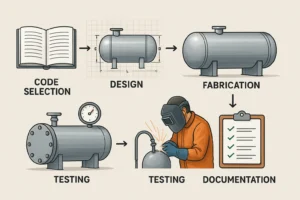
How Do You Design a Pressure Vessel: A Step-By-Step Guide
What is Pressure Vessel Fabrication and Manufacturing
- Gas Turbine Fuel Water Separator Vessel Guide
- Top Reasons to Use a Fuel Oil Pressure Vessel Separator, Red River
- Fuel Filter Vessel Water Separator: RedRiver LLC
- What Is an ASME Pressure Vessel Separator and Why You Need It
- Maximize Performance with ASME Pressure Vessel Separator
- Diesel Pressure Vessel Filter Separator – Red River LLC
About Author