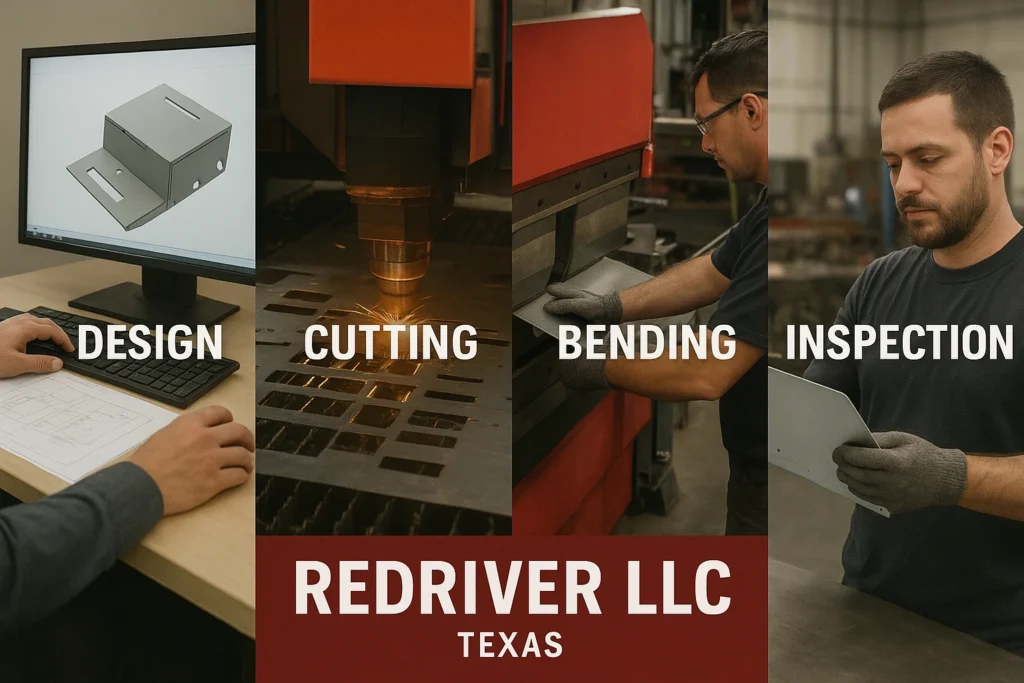
What Are the Steps in the Sheet Metal Fabrication Process
Understanding what are the steps in the sheet metal fabrication process helps you see how flat metal sheets become reliable products. Red River LLC in Texas ensures precision, efficiency, and quality every step of the way.
A Closer Look at What are the Steps in the Sheet Metal Fabrication Process
You might be surprised at how much goes into transforming a flat piece of metal into a sturdy, usable component. Even if you’ve heard of sheet metal fabrication before, you might still be asking yourself what are the steps in the sheet metal fabrication process and how each stage works. By understanding the journey from raw metal to finished product, you’ll be better prepared to choose the right service provider, spot potential issues early, and ensure you’re getting the best possible quality.
Below, you’ll find an easy-to-follow breakdown of every major phase, from the initial design all the way through final inspections. Whether you’re curious about metal sheet fabrication in general or planning your next manufacturing project, these insights will help you see exactly how metal parts come to life.
What are the Steps in the Sheet Metal Fabrication Process
Sheet metal fabrication involves far more than just cutting and bending metal. This process typically includes design, cutting, forming, joining, finishing, and quality checks, all performed by skilled teams utilizing special equipment to shape and assemble reliable metal parts. As you walk through each of these stages, you’ll see how precision and expertise play a huge role in the final product, whether the goal is to produce industrial machinery, structural frameworks, or everyday household items.
Step 1: Defining Your Requirements
Everything starts with clear requirements for sheet metal cutting and forming, considering purpose, performance, and environmental conditions.
- Size and dimensions you require
- Materials best suited for the job (stainless steel, aluminum, or other metals)
- Any regulatory or certification standards, such as ASME codes
Collaborating with the fabricator on requirements helps nail down the specifications and avoids confusion later. For instance, if you need a custom enclosure designed for corrosive environments, you’ll discuss the specific metal thickness and any protective coatings.
Step 2: Designing and Drafting
Specialists use Computer-Aided Design (CAD) to plan metal fabrication techniques, ensuring precise shop drawings guide production..
During design and drafting, the following come into play:
- 2D or 3D CAD files that precisely represent your part
- Tolerances (small margins of permissible error) specified for critical areas
- Potential use of simulation tools to identify structural weak points
In some cases, manufacturers, such as sheet metal fabrication services providers, will leverage software to detect design clashes early. This step matters because it preempts expensive or time-consuming fixes once metal cutting is underway.
Step 3: Cutting the Metal
With the approved design in hand, the next major phase is cutting. Fabricators can cut metal sheets using techniques such as:
- Laser cutting: focuses a high-energy beam for ultra-precise shapes
- Waterjet cutting: utilizes a high-pressure water and abrasive mix
- Plasma cutting: employs ionized gas to slice through thicker metals
- Shearing: relies on sharp blades to slice metal along straight lines
Choosing the right sheet metal cutting and forming technique depends on material, thickness, speed, budget, and design.
Step 4: Forming and Bending
After cutting, most parts need to be formed or bent. Machines like press brakes or rolling systems shape the metal edges exactly as needed. Many fabricators also perform stamping (pushing a tool into the metal to imprint a design) or punching (rapidly cutting holes or slots) to create specified openings.
Forming processes often include:
- Bending sheets at calculated angles
- Rolling cylinders or curved sections of metal
- Stamping or punching holes for internal components or fasteners
Skilled operators must ensure each bend aligns with the design’s angle specifications. Even a tiny miscalculation can result in parts that don’t fit together later.
Step 5: Welding and Joining
Welding is a key metal fabrication technique, using MIG, TIG, and stick methods for joining metals.
In addition to welding, you might see:
- Riveting, which fastens parts without fusing metal
- Bolting or screwing, especially for components that need periodic disassembly
- Brazing or soldering, commonly used for light-gauge metals
No matter the joining technique, proper alignment and heat control are key to achieving a strong joint. Training programs help welders master techniques needed for consistently high-quality results.
Step 6: Surface Treatment and Finishing
When the part is fully formed and assembled, finishing steps help enhance strength, appearance, and durability. This includes:
- Polishing or grinding to smooth seams or correct surface irregularities
- Powder coating or painting to protect metal from corrosion
- Galvanizing or plating for extra defense in harsh conditions
The finishing stage completes the industrial metalworking process, providing glossy, brushed, or polished metal surfaces for aesthetics.
Step 7: Quality Control and Inspection
Before the product leaves the facility and heads your way, rigorous quality checks ensure it meets the specified standards. Inspection points usually include:
- Dimensional checks against the original design
- Visual inspection for cracks, dents, or warping
- Weld strength testing, especially if pressurized use is expected (Red River guidelines)
According to (Red River), thorough quality control in the industrial metalworking process ensures consistent, reliable, and precise results.
Step 8: Final Adjustments and Assembly
Some parts require final touches or assembly steps before they’re fully ready. This could involve:
- Installing fittings, gaskets, or other optional accessories
- Attaching hardware like handles, hinges, or electronics
- Testing any custom-fit or automated features
Once everything checks out, the product is carefully packaged for delivery. Timing the delivery with your install schedule can help reduce clutter at your facility and streamline the entire deployment process.
What Are the Steps in the Sheet Metal Fabrication Process in Review
By now, you have a clear roadmap of what are the steps in the sheet metal fabrication process, from defining requirements to final inspections. At every phase, skilled professionals use specialized tools to transform metal sheets into precisely crafted products. You’ll find that attention to detail not only helps with performance and reliability, but also with controlling costs and meeting tight deadlines.
Even if you’re not hands-on in the workshop, understanding these steps can boost your ability to communicate needs, spot potential snags, and collaborate on a top-notch final product. If you’re getting more curious about how each stage applies to a specific project, you can explore how to choose a sheet metal fabrication service provider and ask them about their cutting methods, forming strategies, or weld quality checks. By doing so, you’ll feel confident that your parts and components are built exactly the way you envisioned.
Partner with Red River LLC Today
Looking for a reliable fabrication partner? Red River LLC in Texas specializes in full-service metal fabrication, from design and cutting to welding and assembly. Contact Red River LLC today to start your next project with trusted industry professionals.
Frequently Asked Questions
1. What Is the Sheet Metal Fabrication Process?
The sheet metal fabrication process is the method of turning raw metal sheets into functional parts and components used in industries like automotive, construction, aerospace, and energy. It involves shaping, cutting, and assembling metals to precise specifications.
2. How Does the Sheet Metal Fabrication Process Work?
This process works by transforming flat metal sheets into finished components using a combination of design, cutting, forming, joining, and finishing techniques. Each step ensures accuracy, durability, and functionality in the final product.
3. Can I Use Multiple Metals in One Project?
Yes, combining metals like stainless steel and aluminum provides corrosion resistance and lightweight benefits.
4. Are Custom Designs Expensive Compared to Standard Options?
Custom designs cost more initially but save money long-term by meeting exact specifications.
5. What’s the Difference Between Welding and Riveting?
Welding melts metal at joints, while riveting clamps materials using fasteners without melting them.
6. Is Prefabrication the Same as Sheet Metal Fabrication?
According to Red River, off-site prefabrication lowers costs and reduces on-site exposure hours.
7. How Can I Maintain My Sheet Metal Products?
Regular cleaning and timely coating maintenance prevent corrosion, damage, and extend your product’s lifespan.
8. Are There Special Certifications I Should Look for?
Yes, ASME or National Board certifications show a company meets essential safety and quality standards.
Key Takeaways
- Choose the right cutting technique (laser, plasma, waterjet) to balance precision and budget.
- Proper forming and welding practices prevent alignment issues and weak joints.
- Surface finishing (powder coating, painting) protects against corrosion and gives a polished look.
- Rigorous inspections before delivery lower the chance of costly errors in the field.
Related Blog Post
Pressure Vessel Design & Engineering: Concept to Launch
What is Pressure Vessel Design and Engineering: Code-Ready Guide
What are the Key Factors in Pressure Vessel Engineering
How Do You Design a Pressure Vessel: A Step-By-Step Guide
What is Pressure Vessel Fabrication and Manufacturing
No related articles found.
About Author