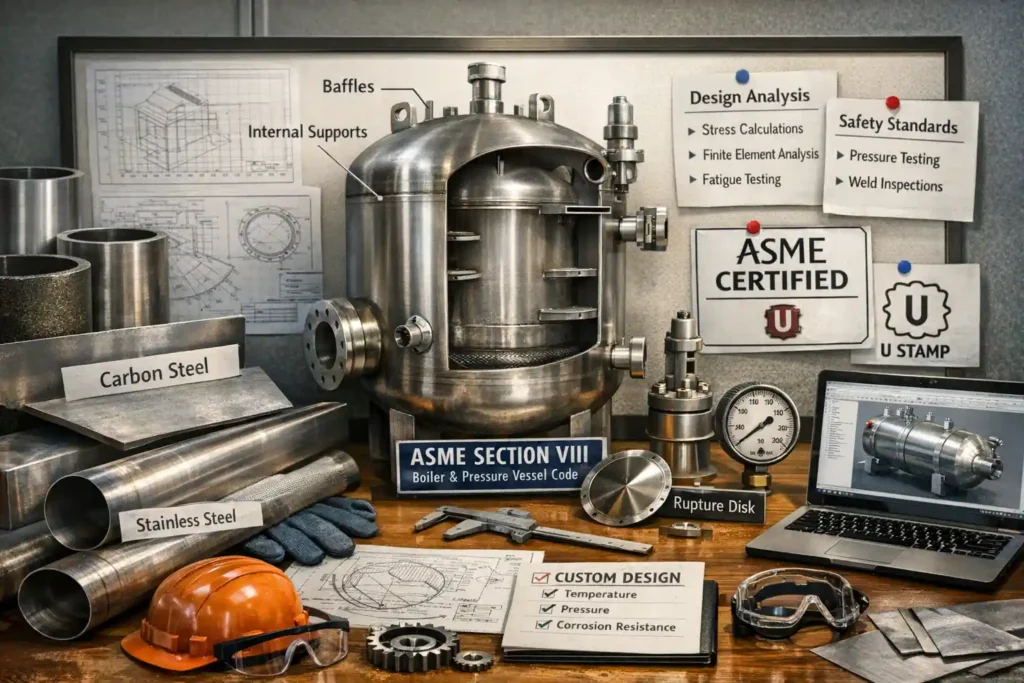
Pressure vessel design involves engineering sealed containers to safely hold pressurized gases or liquids. It requires precise calculations, material selection, and compliance with codes like ASME Section VIII. This guide from Red River LLC covers core design principles, safety features, material options, and how we tailor vessels for industry-specific needs. Learn the fundamentals in our Essential Guide to Pressure Vessel Design
What Is Pressure Vessel Design?
Pressure vessel design is the engineering discipline of creating containers that safely store gases or liquids under high pressure. It involves selecting the right materials, calculating structural loads, and ensuring compliance with standards like ASME Section VIII. At Red River LLC, we combine precision engineering with real-world expertise to deliver pressure vessels that meet the highest expectations for safety, durability, and performance.
Why Pressure Vessel Design Matters
A well-designed pressure vessel can prevent catastrophic failures, protect operators, and extend equipment life. In fact, over 40% of industrial pressure vessel incidents are linked to design flaws or material incompatibility (Source: API 579). At Red River, we don’t just fabricate vessels we engineer reliable custom pressure vessels tailored to demanding industries.
Red River LLC’s Approach to Pressure Vessel Engineering
At Red River LLC, we mix traditional American values with cutting-edge engineering. Our technique for pressure vessel design is rooted in a deep appreciation for the craft, a dedication to innovation, and an unwavering cognizance of protection. We’re not just engineers and craftsmen; we are partners to your success. Our crew, led by enterprise veteran Reilly Sasse, takes the time to understand your needs, making sure that every vessel we layout is tailored to your precise necessities. We believe in a palm-on approach, in which every challenge is a collaboration and each purchaser is a valued member of the Red River circle of relatives.
Key Factors in Pressure Vessel Design
Key Engineering Considerations in Pressure Vessel Design
Design Pressure vs. Operating Pressure
Vessels must be rated for a higher “design pressure” than their typical operating range to include safety margins. We calculate these based on ASME Section VIII Div. 1 guidelines.
Material Selection Matrix
- Carbon steel for low cost and moderate conditions
- Stainless steel where corrosion resistance is critical
- Nickel alloys for high-temperature or chemical resistance
Wall Thickness Formula
We apply the formula:
t = (P × R) / (SE − 0.6P)
Where t is wall thickness, P is internal pressure, R is radius, S is stress, and E is weld efficiency.
Corrosion Allowance
All our designs include a standard corrosion allowance (typically 1/8”) based on the intended media and service life.
Essential Considerations for Designing Pressure Vessels
Compliance with Industry Standards and Regulations
Red River LLC designs all pressure vessels to conform to enterprise standards and rules, ensuring protection, reliability, and criminal conformity.
Safety Features in Pressure Vessel Design
Safety is paramount in our designs. We comprise superior safety capabilities to defend against capability risks, prioritizing the well-being of customers and the surroundings.
Innovations in Pressure Vessel Safety and Compliance
We continuously innovate to enhance protection and compliance, integrating today’s technology and methodologies in our pressure vessel designs.
Critical Aspects of Pressure Vessel Engineering
Stress Analysis Techniques for Vessel Durability
Our engineers rent sophisticated pressure evaluation techniques to ensure the sturdiness and integrity of each vessel, even in intense situations.
Advanced Simulation Tools for Design Verification
We utilize superior simulation tools for layout verification, ensuring every vessel meets our rigorous standards earlier than production.
Red River’s Unique Engineering Methodologies
Our particular engineering methodologies set us aside, combining conventional craftsmanship with the modern era for unparalleled great and overall performance.
Guidelines for Effective Pressure Vessel Design
Best Practices in Pressure Vessel Fabrication
We adhere to pleasant practices in pressure vessel fabrication, ensuring each vessel is built to the best requirements of niceness and efficiency.
Quality Assurance in Manufacturing Process
Our manufacturing process consists of rigorous nice warranty tests to guarantee the distinction of every vessel we produce.
Ensuring Longevity and Reliability in Design
Longevity and reliability are key focuses in our design manner, ensuring every Red River vessel provides regular performance over its lifespan.
Best Practices in Pressure Vessel Construction and Design
Innovative Design Solutions by Red River LLC
Red River LLC leads with progressive layout solutions, mixing superior engineering with realistic know-how to create pressure vessels that aren’t the best green but also groundbreaking in their skills.
Custom Design Strategies for Specific Industry Needs
We specialize in custom layout strategies, tailoring our pressure vessels to meet the unique demands of different industries, making sure the most fulfilling performance and reliability.
Case Studies: Successful Pressure Vessel Projects
Our portfolio of hit projects showcases our understanding of turning in top-tier pressure vessels across various sectors, highlighting our dedication to excellence and innovation.
Important Design Criteria for Pressure Vessels
Balancing Cost-Effectiveness and Performance
At Red River, we strike a balance between value-effectiveness and excessive performance, making sure our customers receive fees without compromising on exceptional.
Environmental Considerations in Design
Environmental sustainability is fundamental to our design manner, as we aim to limit ecological effects even while retaining excessive requirements of functionality and safety.
User-Centric Design Features
Our designs are user-centric and specialize in ease of use, upkeep, and universal person revel, ensuring that our pressure vessels are not simplest powerful but additionally user-friendly.
Pressure Vessel Design: Safety and Compliance Considerations
Navigating Regulatory Compliance Challenges
We expertly navigate the complicated panorama of regulatory compliance, making sure all our pressure vessels meet the necessary standards and policies.
Safety Protocols and Risk Management Strategies
Safety is paramount in our designs. We put into effect rigorous protection protocols and risk control techniques to ensure the maximum protection of our products.
Red River’s Commitment to Safety and Quality
Our unwavering commitment to safety and best is in the middle of the whole thing we do, from the initial layout to the very last production.
Principles of Engineering High-Quality Pressure Vessels
Advanced Materials and Cutting-Edge Technologies
We make use of advanced materials and modern technology to engineer pressure vessels that lead the industry in the best and overall performance.
The Future of Pressure Vessel Design
Red River is at the forefront of shaping the future of pressure vessel layout, continuously innovating and adapting to emerging traits and technology.
Collaborative Engineering Approaches
Our collaborative engineering strategies involve running closely with clients and stakeholders, making sure that each pressure vessel we design meets and exceeds expectations.
Need a reliable partner?
Red River specializes in the design and manufacturing of pressure vessels. We also fabricate related items such as prefabricated spools and skid packages.
Reach Out to us today and experience the Red River difference. Where American Made and American Values come together, we care more.
Frequently Asked Questions
What factors determine material selection for pressure vessels?
Material choices depend on pressure, temperature, media type, corrosion risk, and design life. For example, chloride-rich environments require stainless steel or duplex alloys for corrosion resistance.
What codes govern pressure vessel design?
Common standards include ASME Section VIII, API 510 for inspection, and EN 13445 in Europe. Our engineers ensure full code compliance and documentation.
Can pressure vessels be customized for unique media?
Yes, we tailor materials, nozzle locations, and design features for gases like hydrogen, CO₂, or ammonia each with unique behavior under pressure.
Key Takeaways:
- Pressure vessel design is critical to safety, efficiency, and regulatory compliance in industries like energy, chemicals, and biogas.
- Design must account for operating vs. design pressure, temperature, material properties, and corrosion resistance.
- Standards such as ASME Section VIII, API 510, and EN 13445 guide safe and compliant vessel engineering.
- Material selection (e.g., carbon steel, stainless steel, nickel alloys) depends on operating conditions and media type.
- Advanced tools like FEA stress analysis and simulation software ensure design integrity before fabrication.
- Safety features including relief valves, rupture disks, and NDT inspections are essential to risk mitigation.
- Red River LLC combines traditional craftsmanship with modern engineering to deliver custom, code-compliant pressure vessels.
Related Blog Post
Can Condensate Storage Improve Reliability?
Where Do Condensate Tanks Fit in a Steam System?
Which Nozzles Simplify Maintenance on Pressure Vessels?
How to Vent Condensate Tanks in Steam Systems
How Do Baffle Layouts Affect Stratification in TES Tanks?
About Author