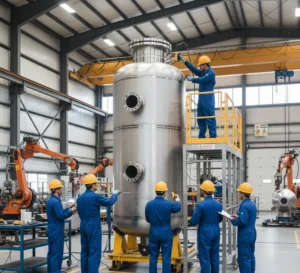
Pressure vessel modular trends are changing how industrial systems are designed, built, and deployed. Modular pressure vessels improve scalability, shorten installation timelines, and support flexible operations across multiple industries.
Why Pressure Vessel Modular Trends Matter
Pressure vessel modular trends are redefining how industrial facilities approach system design and expansion. Instead of relying on large, permanently installed vessels that require extensive onsite construction, manufacturers increasingly adopt modular pressure vessel systems that are engineered, fabricated, and tested offsite. This shift allows facilities to reduce project risk, accelerate deployment, and improve overall operational efficiency.
Pressure vessel modular trends respond directly to industry demands for faster project delivery and adaptable infrastructure. Facilities can scale capacity incrementally, reconfigure layouts, or relocate systems with minimal disruption. As production requirements evolve, modular pressure vessels provide a practical solution that aligns with modern manufacturing strategies focused on efficiency, safety, and long-term flexibility.
What Defines Modular Pressure Vessel Design
Modular pressure vessel design centers on building systems as standardized, self-contained units rather than single fixed installations. These units are engineered to integrate seamlessly with existing processes while maintaining full pressure vessel compliance.
Core Characteristics of Modular Pressure Vessels
Modular systems typically feature skid-mounted vessels, prefabricated piping, and integrated controls. Each module performs a defined process function and can operate independently or as part of a larger system.
Operational Flexibility
Pressure vessel modular trends emphasize adaptability. Modules can be added, removed, or upgraded without shutting down the entire operation, supporting phased growth and continuous improvement.
Reduced Onsite Labor
Because modules are assembled and tested offsite, installation requires fewer labor hours and reduces safety risks associated with extended field work.
These design principles make modular pressure vessels especially valuable for facilities facing space constraints or frequent process changes.
Key Advantages Driving Pressure Vessel Modular Trends
The adoption of pressure vessel modular trends continues to grow due to several measurable benefits.
Scalability
Facilities can expand capacity by adding additional vessel modules instead of redesigning entire systems.
Accelerated Installation
Prefabricated modules arrive ready for connection, significantly reducing construction schedules.
Cost Control
Reduced field labor, predictable fabrication costs, and faster commissioning improve overall project economics.
Simplified Maintenance
Individual modules can be isolated for service without disrupting adjacent operations.
Mobility
Modular pressure vessels support temporary or mobile applications where relocation is required.
These advantages make modular systems a strategic investment for industries focused on uptime and efficiency.
Current Pressure Vessel Modular Trends in Manufacturing
Several distinct pressure vessel modular trends are shaping modern fabrication and system deployment.
Component Standardization
Standardized nozzles, flanges, and instrumentation improve compatibility and reduce engineering time.
Skid-Based Integration
Pressure vessels, pumps, valves, and controls are mounted on unified skids for compact system layouts.
Digital Integration
Digital modeling and monitoring tools allow operators to manage modular systems more efficiently throughout their lifecycle.
Hybrid Modular Systems
Mechanical, electrical, and automation components are combined into single modular packages for streamlined installation.
Quick-Connect Interfaces
Utilities and process connections are designed for rapid connection and disconnection, supporting reconfiguration.
Together, these pressure vessel modular trends support faster deployment and smarter system management.
Industries Accelerating Modular Pressure Vessel Adoption
Pressure vessel modular trends are most visible in industries where flexibility and speed are critical.
Energy and Process Industries
Modular separators, scrubbers, and storage vessels support changing production demands.
Pharmaceutical and Biotech
Cleanable, modular vessels support batch processing and regulatory compliance.
Food and Beverage
Modular mixing and thermal processing vessels enable rapid product changes.
Water and Environmental Systems
Containerized treatment modules simplify deployment and expansion.
Across these sectors, modular pressure vessels help facilities adapt to evolving operational requirements.
Fabrication Considerations for Modular Pressure Vessels
Successfully implementing pressure vessel modular trends requires careful fabrication planning.
Precision Engineering
Modules must align precisely to ensure safe connections and consistent performance.
Code Compliance
Each vessel module must independently meet applicable pressure vessel codes and inspection requirements.
Transport Design
Modules are engineered for transport constraints without compromising structural integrity.
Quality Control
Factory-based fabrication improves inspection consistency and documentation.
These considerations ensure modular systems deliver both flexibility and long-term reliability.
Pressure Vessel Modular Trends as a Competitive Advantage
Pressure vessel modular trends represent a strategic shift toward smarter infrastructure. Modular systems allow manufacturers to respond quickly to market changes while maintaining safety and compliance. By reducing installation time and simplifying future upgrades, modular pressure vessels support continuous improvement and operational resilience.
As industrial processes become more dynamic, pressure vessel modular trends provide a foundation for scalable, future-ready manufacturing systems.
Need a Reliable Partner?
Red River specializes in the design and manufacturing of pressure vessels. We also fabricate related items such as prefabricated spools and skid packages.
Reach Out to us today and experience the Red River difference. Where American Made and American Values come together, we care more.
Contact us: https://www.redriver.team/contact
Request a quote: https://www.redriver.team/request-a-quote
Frequently Asked Questions
1. What do pressure vessel modular trends focus on
Pressure vessel modular trends emphasize prefabricated, scalable vessel systems that reduce installation time and improve flexibility.
2. Are modular pressure vessels compliant with industry codes
Yes. Each module can be fabricated to meet applicable pressure vessel codes and inspection standards.
3. Do modular systems reduce project timelines
Modular pressure vessels are assembled offsite, allowing faster installation and commissioning.
4. Can modular pressure vessels be customized
Yes. Modular systems are commonly tailored to specific process requirements, materials, and control needs.
5. Which industries benefit most from pressure vessel modular trends
Energy, pharmaceutical, food processing, and water treatment industries frequently adopt modular vessel systems.
Key Takeaways
- Pressure vessel modular trends improve scalability and operational flexibility
- Modular systems reduce installation time and onsite labor
- Standardization and skid integration support faster deployment
- Modular pressure vessels simplify maintenance and future expansion
- These trends support efficient, future-ready manufacturing systems
Related Blog Post
Pressure Vessel Design & Engineering: Concept to Launch
What is Pressure Vessel Design and Engineering: Code-Ready Guide
What are the Key Factors in Pressure Vessel Engineering

How Do You Design a Pressure Vessel: A Step-By-Step Guide