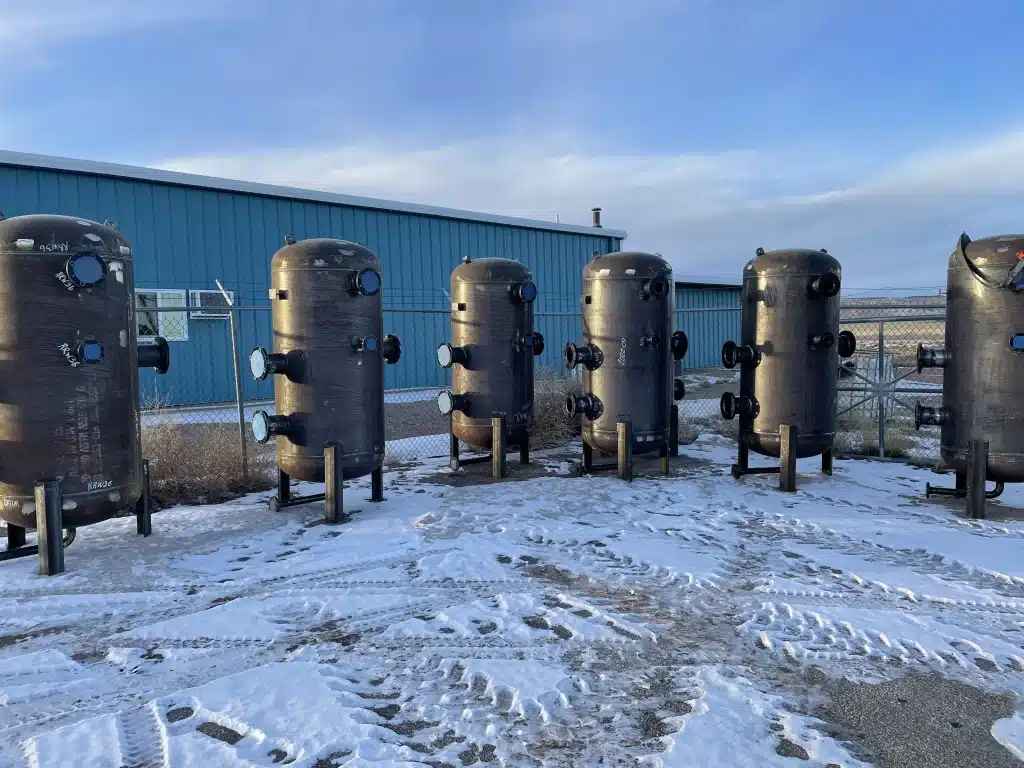
Why R Stamp Welding Matters
R stamp welding is a vital standard for safety, repair, and quality in pressure vessel work. This certification shows that welds follow strict codes under the National Board and ASME Inspection standards. Whether you are making new vessels or repairing existing ones, R stamp welding helps you reduce risk, avoid costly mistakes, and deliver reliability. For more on its role in oil and gas, see What Is the R Stamp in Oil and Gas.
What Is R Stamp Welding and Its Purpose
Certifications, like the R stamp, are more than just industry requirements. In fact, they represent a manufacturer’s commitment to upholding the highest standards of safety and quality. At Red River, we understand that our clients, ranging from startups to international entities, trust us with their most valuable projects. Ultimately, this trust is built on the foundation of our certifications and our unwavering dedication to American values like work ethic, reputation, and a firm handshake.
Overview of common pressure vessel stamps
R stamp welding includes the welding procedures, certifications, and inspections required for organizations to repair or alter pressure vessels safely. The R Stamp credential, issued by the National Board of Boiler and Pressure Vessel Inspectors, confirms that your welders and processes comply with the National Board Inspection Code (NBIC) and ASME Section IX.
For a quick summary of common pressure vessel stamps, visit What Are the Ratings for Pressure Vessels.
This certification allows qualified welders to perform work on pressure-retaining equipment and assures clients that all repairs or alterations meet rigorous industry codes. It prevents substandard welds, strengthens credibility, and keeps your operations legal.
Standards, Codes, and Regulatory Requirements
The National Board Certificate of Authorization (NB‑415) requires every repair organization to have a written quality system, an inspection agreement with an Authorized Inspection Agency, and valid welding procedure specifications.
All welding for the R stamp must follow ASME Section IX, including welder qualification records, procedure qualification records (PQR), and welding procedure specifications (WPS). This ensures only approved materials, welding processes, and inspections are used.
To understand more about pressure vessel materials, see What Are the Grades of Pressure Vessel Material.
For details about ASME U stamp, visit What Is the Pressure Stamp for ASME U.
Every repair must be documented, inspected, and tagged with the R stamp. Auditors regularly review your records and practices for compliance.
For in-depth guidance on requirements and benefits, see R Stamp Certified Requirements Benefits Explained.
Steps to Achieve R Stamp Welding Certification
- Develop and maintain a quality system that complies with NBIC and ASME standards.
- Write clear WPS and PQR documentation for every weld type you perform.
- Qualify your welders through ASME Section IX testing.
- Engage an Authorized Inspection Agency to oversee your repairs and records.
- Pass official audits and inspections (both in-shop and field).
- Document and tag every repair with the R stamp.
Best Practices for R Stamp Welding
- Qualify all welders using up-to-date ASME Section IX requirements.
- Use only materials that match the original vessel construction or are approved for use.
- Apply non-destructive testing (NDE) such as radiography or ultrasonic testing to verify weld quality.
- Manage residual stresses and use post weld heat treatment (PWHT) when required.
Recent ScienceDirect research shows PWHT can dramatically reduce residual stress and improve weld longevity. - Maintain detailed records: WPS, PQR, welder certifications, inspection results, and final reports.
ScienceDirect also highlights the importance of managing welding residual stress, as it greatly affects pressure vessel safety and fatigue life.
Case Studies and Advanced InsightsSafety
- In recent ScienceDirect studies, post weld heat treatment is proven to lower stress and extend the life of welded pressure vessels. See the study here.
- Another case shows how improper management of welding residual stress can accelerate fatigue crack growth, making compliance with R stamp standards even more critical. Read more.
Raising the Bar with R Stamp Welding
R stamp welding ensures every repair or alteration to a pressure vessel is done right. This code-driven approach improves safety, extends equipment life, and builds lasting trust. Adopting R stamp welding is more than meeting standards—it’s about protecting your assets and reputation.
For more insights into different ASME stamp types, visit Which ASME Stamp Is Stamped on Air Tanks.
Take the Next Step in Welding Compliance
Ready to make your operation R stamp welding certified? Review your welding procedures, qualification records, and inspection systems. Contact Red River LLC to get expert help with certification, compliance, and training. With us, your pressure vessel welding is always in safe hands.
Frequently Asked Questions
What is R stamp welding?
R stamp welding is code-compliant welding performed under the National Board’s R stamp certification, for pressure vessel repair and alteration.
How does R stamp welding differ from U stamp fabrication?
U stamp is for manufacturing new vessels; R stamp welding is for repairs and alterations on existing vessels under strict NBIC and ASME standards.
What are the main welding processes approved for R stamp welding?
Approved processes include SMAW, GTAW, GMAW, and others, as defined by your welding procedure specification and the original vessel’s material requirements.
How often is R stamp welding certification renewed?
Most organizations are audited and must renew every three years, but you must maintain ongoing welder qualifications and code compliance.
What happens if a repair is performed without R stamp welding certification?
Repairs without certification may be illegal, void warranties, and cause major safety risks. Always use a certified organization.
Can R stamp welding be done on site, or is it limited to the shop?
R stamp welding can be performed both in-shop and on site, as long as all NBIC requirements and inspections are met.
Where can I learn more about the R stamp and its role in oil and gas?
See our dedicated resource on What Is the R Stamp in Oil and Gas.
Key Takeaways
- R stamp welding is essential for safe and legal pressure vessel repair
- ASME and NBIC standards define strict welder and process requirements
- Residual stress management and non-destructive testing are critical for weld safety
- Only certified organizations can perform R stamp repairs
- Red River LLC offers expertise in all aspects of R stamp welding and compliance
Related Blog Post
Pressure Vessel Design & Engineering: Concept to Launch
What is Pressure Vessel Design and Engineering: Code-Ready Guide
What are the Key Factors in Pressure Vessel Engineering
How Do You Design a Pressure Vessel: A Step-By-Step Guide
What is Pressure Vessel Fabrication and Manufacturing
No pillar keyword set for this post.
About Author