
If you’ve come across the terms boiler and pressure vessel, it’s easy to assume they’re the same because both operate under pressure. For engineers, plant managers, procurement teams, and industrial decision-makers in manufacturing, energy, and chemical processing, these terms often appear during equipment selection and design discussions. This guide explains the difference between a boiler and a pressure vessel, how each works, and why understanding them matters when selecting industrial equipment.
Understanding the Basics
Industrial systems often include equipment designed to contain pressurized fluids, but not every pressure-containing vessel performs the same job. Knowing the difference between a boiler and a pressure vessel helps engineers, plant managers, and equipment buyers choose the right solution for safety, efficiency, and regulatory compliance.
What Is a Boiler?
A boiler is a specialized closed vessel that heats water or another fluid using a fuel source or another heat input. The heated fluid is then distributed as hot water or converted into steam for industrial processes, power generation, or building heating.
Unlike standard storage equipment, boilers actively generate thermal energy. They contain components such as burners, combustion chambers, heat exchangers, and either fire tubes or water tubes that safely transfer heat while maintaining pressure.
Because boilers operate under both high temperatures and pressure, they must meet strict engineering standards. In the United States, most industrial boilers are designed and manufactured according to the ASME Boiler and Pressure Vessel Code Section I.
What Is a Pressure Vessel?
A pressure vessel is any enclosed container designed to safely hold gases or liquids at pressures significantly above or below atmospheric conditions. Unlike boilers, pressure vessels do not generate heat. Their primary function is safe containment.
Pressure vessels are used throughout industries including:
- Oil and gas
- Chemical processing
- Food and beverage manufacturing
- Pharmaceutical production
- Water treatment
- Energy generation
Common examples include air receivers, compressed gas tanks, separator vessels, reactors, and storage tanks.
Most pressure vessels are designed in accordance with ASME Section VIII, which establishes requirements for design, fabrication, inspection, and testing to help ensure operational safety.
If you’re evaluating custom fabrication options, see our Pressure Vessel Manufacturing services.
Key Differences Between Boilers and Pressure Vessels
Although both systems contain pressurized fluids, their purpose and construction differ significantly.
Functionality and Purpose
The primary distinction lies in what each piece of equipment is designed to accomplish.
A boiler generates heat. It transfers thermal energy into water or another fluid to produce steam or hot water used throughout industrial facilities.
A pressure vessel stores or processes fluids under pressure. It maintains pressure safely but generally does not create heat.
This functional difference influences every aspect of design, operation, maintenance, and regulatory compliance.
Design and Construction
Boilers require considerably more internal components than pressure vessels because they perform combustion and heat transfer.
Typical boiler components include:
- Burners
- Combustion chambers
- Water tubes or fire tubes
- Superheaters
- Economizers
- Safety valves
- Feedwater systems
Pressure vessels generally feature simpler construction. Most consist of cylindrical or spherical shells fitted with nozzles, manways, pressure relief devices, and instrumentation designed to safely contain internal pressure.
Despite their simpler appearance, pressure vessels still require precise engineering calculations, material selection, and certified welding procedures to meet code requirements.
Materials and Safety Standards
If you’ve come across boiler and pressure vessel terms, they both operate under pressure. Engineers, plant managers, procurement teams, and industrial decision-makers in manufacturing, energy, and chemical processing often see them in design and selection discussions. This guide explains their differences, how each works, and why understanding them matters when choosing equipment.
- Carbon steel
- Stainless steel
- Nickel alloys
- Duplex stainless steel
Both equipment types undergo extensive quality assurance procedures before entering service. These may include:
- Hydrostatic testing
- Radiographic examination
- Ultrasonic testing
- Visual inspections
- Material traceability verification
Inspection requirements are also governed by organizations such as the National Board of Boiler and Pressure Vessel Inspectors, helping facilities maintain safe operation throughout the equipment’s service life.
Temperature and Pressure Ratings
Boilers operate under high temperature and pressure, such as power generation systems producing steam for turbines. Pressure vessels typically store gases or liquids at high pressure near ambient temperature, such as compressed nitrogen tanks. Because conditions differ, engineers design boilers and pressure vessels using different stress calculations, wall thickness, welds, and inspection methods.
- Common Applications in Industry
- Boilers vs. Pressure Vessels: Know the Difference
- Service CTA
- FAQ (6 questions)
- Key Takeaways
- Closing CTA
- Content Brief Summary
Common Applications in Industry
Different industries rely on boilers and pressure vessels to support essential operations. Choosing the correct equipment depends on whether the application requires heat generation or pressure containment.
Boiler Applications
Boilers are commonly used wherever steam or hot water is needed to support industrial processes or building operations.
Some of the most common applications include:
- Power Generation: Boilers produce high-pressure steam that drives turbines to generate electricity.
- Manufacturing: Steam supports product processing, sterilization, cleaning, and heating across many manufacturing sectors.
- HVAC Systems: Commercial and institutional buildings use boilers to provide central heating and hot water.
- Food Processing: Steam is frequently used for cooking, pasteurization, and sanitation.
Industries depend on properly designed boilers because efficient heat generation improves productivity while supporting safe operations.
Pressure Vessel Applications
Pressure vessels serve a different purpose. Rather than producing heat, they safely store or process materials under pressure.
Common applications include:
- Chemical Processing: Containing reactive chemicals during production.
- Oil and Gas: Storing crude oil, natural gas, and refined petroleum products.
- Pharmaceutical Manufacturing: Maintaining controlled environments for sensitive processes.
- Food and Beverage Production: Holding carbonated beverages, compressed gases, and processing ingredients.
- Water Treatment Facilities: Supporting filtration and pressure control systems.
At Red River, custom-engineered pressure vessels are designed to meet industry-specific operating requirements while complying with ASME standards.
Boilers vs. Pressure Vessels: Know the Difference
Although they may look similar from the outside, boilers and pressure vessels perform very different jobs.
A boiler converts energy into heat to produce steam or hot water. This process requires combustion systems, heat transfer surfaces, and additional safety controls designed to manage both pressure and temperature.
A pressure vessel focuses on safely containing liquids or gases under pressure. While it may be part of a larger processing system, it does not generate heat like a boiler.
Understanding the difference between a boiler and a pressure vessel helps engineers, project managers, and facility owners make informed equipment decisions that improve safety, efficiency, and long-term reliability.
You can also explore our prefabricated skid packages for complete engineered process solutions.
Build the Right Solution for Your Operation
Whether your project requires a custom pressure vessel, modular skid package, or prefabricated piping system, working with an experienced fabrication partner helps ensure quality, compliance, and dependable performance.
If you’re evaluating equipment for an upcoming project, visit our Request a quote page to discuss your specifications with the Red River team.
Frequently Asked Questions
Are all boilers considered pressure vessels?
Yes. Because boilers operate under pressure, they are classified as pressure vessels. However, they are a specialized category designed specifically to generate heat and produce steam or hot water.
Can a pressure vessel replace a boiler?
No. A standard pressure vessel cannot function as a boiler because it lacks the combustion and heat transfer components needed to generate steam or heated water.
Why do boilers require more inspections than pressure vessels?
Boilers operate under both high pressure and high temperatures, creating additional stresses that require more frequent inspections. Routine maintenance helps identify corrosion, overheating, or component wear before failures occur.
Which industries use pressure vessels the most?
Pressure vessels are widely used in the oil and gas, chemical processing, pharmaceutical, food and beverage, energy, and water treatment industries because these sectors frequently handle compressed gases or pressurized liquids.
What safety standards apply to boilers and pressure vessels?
Most industrial boilers follow ASME Boiler and Pressure Vessel Code Section I, while pressure vessels are typically designed under ASME Section VIII. Local regulations may also require additional inspections and certifications.
Can Red River manufacture boilers?
Red River specializes in custom pressure vessel fabrication and related engineered products, including prefabricated piping systems and skid packages. While the company does not manufacture boilers, its products are often integrated into boiler and process systems.
Key Takeaways
- Boilers generate heat to produce steam or hot water, while pressure vessels primarily store gases or liquids under pressure.
- Boilers require more complex components because they combine combustion, heat transfer, and pressure management.
- Pressure vessels are designed for safe containment and are commonly used across multiple industrial sectors.
- Boilers and pressure vessels follow different ASME code sections to address their unique operating conditions.
- Understanding the differences helps ensure the right equipment is selected for safe, efficient, and compliant operations.
Related Blog Post
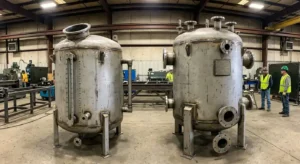
Condensate Tanks: Types, Fabrication, and ASME Code
Which Tests Validate Deaeration in Pressure Systems?
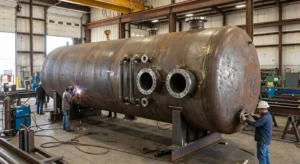
Equalization Tanks: Design, Sizing, and Fabrication
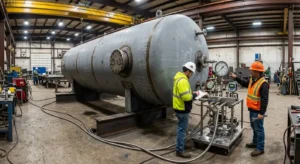
What Are Thermal Storage Testing Standards for TES Vessels?
What Hydro Tests Are Required for Pressure Vessels?
No subpillar set for this blog post.
About Author



