
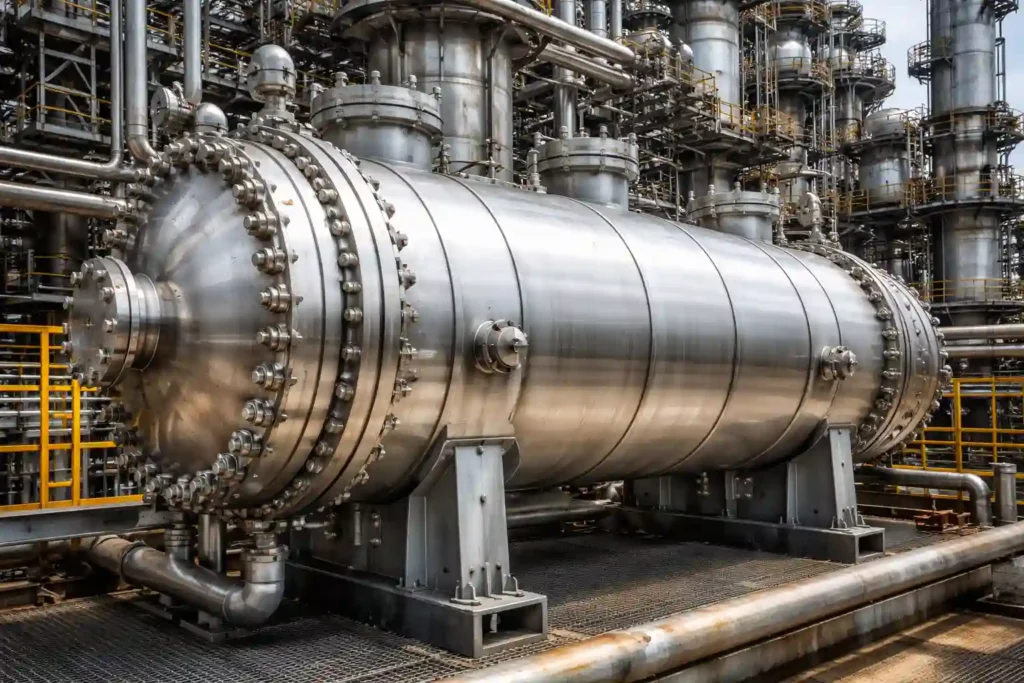
Thick Pressure Vessels Applications are crucial in industries where high-pressure containment is essential. These specialized vessels are designed to withstand extreme pressure, temperature, and chemical exposure, ensuring safe and reliable operations. Thick Pressure Vessels Applications support petrochemical plants, nuclear reactors, aerospace projects, and food processing facilities. They improve safety and operational efficiency across these industries. Learn more about the uses of thick pressure vessel in modern industry.
Key Benefits of Thick Pressure Vessels Applications
Thick Pressure Vessels Applications offer numerous advantages that make them essential for high-pressure containment. These vessels safely contain high-pressure fluids. They are ideal for industries that handle gases or liquids under extreme conditions. Their thicker wall vessels provide exceptional strength. This design helps prevent leaks, ruptures, and other failures while improving safety. Materials such as stainless steel and high-strength alloys resist corrosion and chemical damage. They also extend the vessel’s service life.
. This durability ensures that Thick Pressure Vessels Applications maintain long-term system reliability and comply with strict safety regulations. For detailed insight on design considerations, see designing a pressure vessel.
Industries and Applications for Thick Pressure Vessels
Thick Pressure Vessels Applications are used in various industries where high-pressure containment is vital for operational success. In the petrochemical sector, Thick Pressure Vessels Applications are essential for storing and transporting volatile chemicals and liquefied gases. These vessels safely store and transport hydrogen, LNG, and other reactive substances. They reduce the risk of leaks and explosions. Explore understanding hydrogen storage: type 3 vs type 4 tanks for applications in clean energy.
In the oil and gas industry, Thick Pressure Vessels Applications are indispensable for refining, gas compression, and offshore drilling operations. They support high-temperature and high-pressure processes, ensuring the safety of hydrocarbons, personnel, and equipment during these demanding operations. Similarly, nuclear reactors rely on Thick Pressure Vessels Applications to house reactor cores and fuel rods. These vessels provide a secure environment, preventing radiation leaks and maintaining containment even under extreme pressures and temperatures. The aerospace industry also depends on Thick Pressure Vessels Applications for storing propulsion gases, oxidizers, and hydraulic fluids. Their durability ensures safe operation during high-speed flight and space exploration. For more on aerospace containment, see galactic containers: the essential role of pressure vessels in space exploration.
Pharmaceutical and chemical manufacturers use Thick Pressure Vessels Applications for synthesis, polymerization, and catalytic reactions. These vessels provide stable conditions for precision manufacturing. As hydrogen technology advances, these vessels safely store hydrogen at high pressure. They support fuel cells and renewable energy storage systems. In the food processing industry, Thick Pressure Vessels Applications are used for high-pressure pasteurization, sterilization, and preservation.
Maintenance and Safety for Thick Pressure Vessels Applications
While Thick Pressure Vessels Applications are designed for durability, regular maintenance is essential to ensure their safe and efficient operation. Routine inspections help identify corrosion and material stress early. Ultrasonic and radiographic testing are commonly used. Material selection affects long-term performance. Carbon steel, stainless steel, and high-strength alloys perform well in demanding environments. For guidance on material selection, see exploring the materials used in vessel construction for durability and functionality.
Adhering to safety standards like ASME ensures that Thick Pressure Vessels Applications meet safety and performance requirements. Installing pressure relief devices, such as safety valves or rupture discs, can prevent over-pressurization and maintain the integrity of the vessels during extreme conditions. Regular maintenance procedures, including cleaning, repairs, and corrosion prevention, are necessary to prolong the lifespan of these pressure vessels and ensure continued safe performance. Operator training is another essential aspect, as personnel must be well-versed in proper operation, maintenance procedures, and emergency protocols. Explore safety in pressure vessels: ensuring secure operations in a high-pressure world for additional safety strategies.
Innovations in Thick Pressure Vessel Technology
Modern industries are continuously driving innovations to improve the safety, efficiency, and sustainability of Thick Pressure Vessels Applications. Advanced materials, such as composite materials and high-strength alloys, allow for weight reduction without compromising durability. Sensors monitor pressure and temperature in real time. This helps operators maintain safe conditions and predict failures earlier. Learn more about how automation and AI are revolutionizing pressure vessel manufacturing.
CAD and FEA software improve vessel design. They optimize safety while reducing material waste. Additive manufacturing allows for the creation of complex vessel geometries and custom designs, offering flexibility in design and fabrication. Smart coatings can detect corrosion or material defects early, extending lifespan and reducing inspections. For a deeper dive into vessel theory, visit understanding thick pressure vessel theory.
Future Outlook for Thick Pressure Vessels Applications
Thick Pressure Vessels Applications will continue to evolve as industries face new challenges and opportunities. Future energy storage systems will depend on Thick Pressure Vessels Applications. They safely contain high-pressure fluids in hydrogen, thermal, and compressed air systems. In space exploration, the need for safe storage of propellants, life support systems, and mission-critical equipment will drive innovation in these vessels.
Optimized version (improved readability + Yoast compliance)
The biotechnology industry will increasingly rely on Thick Pressure Vessels Applications for fermentation, sterilization, and cell culture processes. Precise pressure control is essential in these applications.
AI-powered predictive maintenance and real-time monitoring use sensors and automation to optimize vessel performance and safety. This improves long-term reliability and operational efficiency.
Sustainability will remain a key focus. Industries are developing more energy-efficient and eco-friendly pressure vessels to support renewable energy solutions.
The Essential Role of Thick Pressure Vessels in Industrial Safety
Thick Pressure Vessels Applications are an integral part of many industries where high-pressure containment is crucial for safety and efficiency. From petrochemical plants to aerospace and hydrogen storage, these vessels provide the strength and durability needed to handle extreme pressures, temperatures, and chemical exposure. As industries continue to innovate, the design and functionality of Thick Pressure Vessels Applications will evolve, with advancements in materials, technology, and sustainability leading the way.
Investing in high-quality pressure vessels and ensuring proper maintenance and safety measures are in place will not only ensure long-term reliability but also safeguard personnel, equipment, and the environment. At Red River, we specialize in designing and manufacturing robust, American-made Thick Pressure Vessels Applications tailored to meet the needs of various industries. If you’re looking for a reliable partner for your pressure vessel requirements, reach out to us today and experience the Red River difference.
Partner with Red River for Reliable Pressure Vessel Solutions
Ensure safety, durability, and compliance in your high-pressure operations with Red River’s American-made Thick Pressure Vessels Applications. From custom designs to full fabrication, we deliver solutions tailored to your industry’s demands.
Contact us today to discuss your project and experience the Red River difference where quality, expertise, and American values come together.
Frequently Asked Questions
1. What is the difference between thick and thin pressure vessels?
Thick pressure vessels use a high wall thickness relative to their radius, which allows them to handle extreme internal pressure. Thin pressure vessels use less material and support lower pressure levels, making them unsuitable for high-stress industrial applications.
2. Which industries use Thick Pressure Vessels Applications?
Industries such as petrochemical, nuclear, aerospace, pharmaceutical, chemical processing, food production, and hydrogen storage rely on thick pressure vessels for safe high-pressure operations and critical process control.
3. How do engineers test Thick Pressure Vessels Applications for safety?
Engineers test these vessels using hydrostatic testing, ultrasonic inspection, and radiographic examination to confirm structural strength. They also validate performance against ASME code requirements to ensure compliance and operational safety.
4. What materials do manufacturers use for Thick Pressure Vessels Applications?
Manufacturers use carbon steel, stainless steel, high-strength alloys, and composite materials. For high-temperature or corrosive environments, they select specialized alloys such as Inconel to improve durability and performance.
5. Can engineers customize Thick Pressure Vessels Applications?
Yes. Engineers design thick pressure vessels to meet specific requirements for pressure, size, shape, and operating environment. Custom fabrication ensures each vessel aligns with industry standards and application-specific safety demands.
Key Takeaways
- Thick Pressure Vessels Applications are vital for high-pressure containment across industries such as petrochemical, nuclear, aerospace, and hydrogen storage.
- These vessels provide enhanced safety, durability, and compliance with stringent safety standards, ensuring the protection of personnel, equipment, and the environment.
- Investing in high-quality vessels and ensuring regular maintenance are essential for long-term operational safety and efficiency.
- Advances in materials, technology, and smart coatings are continuously improving the performance and lifespan of Thick Pressure Vessels Applications.
- Red River offers American-made solutions designed to meet the highest standards for safety and efficiency in high-pressure applications.
Related Blog Post
Can Condensate Storage Improve Reliability?
Where Do Condensate Tanks Fit in a Steam System?
Which Nozzles Simplify Maintenance on Pressure Vessels?
How to Vent Condensate Tanks in Steam Systems
How Do Baffle Layouts Affect Stratification in TES Tanks?
No subpillar set for this blog post.
About Author



