
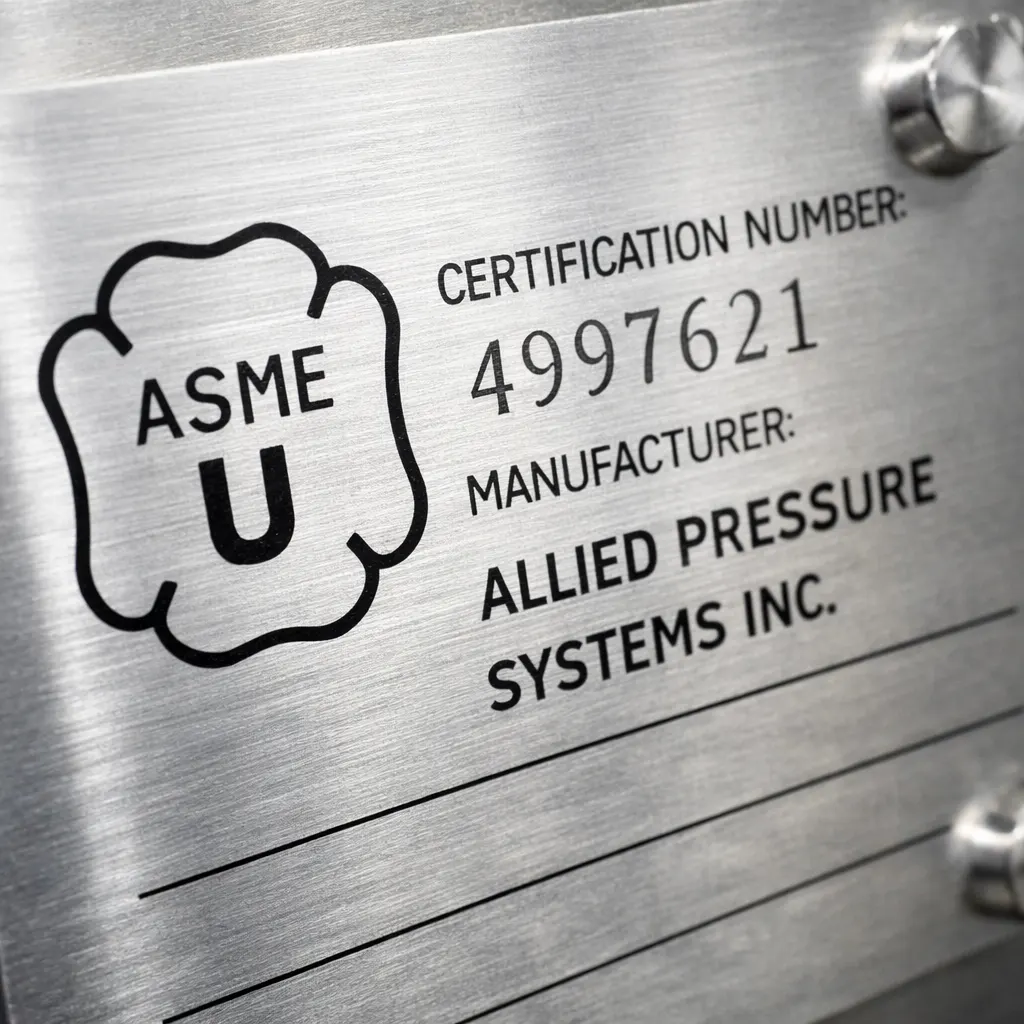
Pressure vessel codes set minimum safety rules so vessels don’t fail. ASME BPVC (Section VIII) is the main U.S. build code; API 510 and NBIC cover in-service inspection and repairs. Other regions use equivalents (e.g., EU PED/EN, CSA B51). Stay compliant by matching the right code and buying a stamped vessel (U/U2).
What Are the Different Types of Pressure Vessel Codes? A Complete Guide for Buyers and Engineers
Many industries rely on pressure vessels to store and process gases or liquids under carefully controlled conditions. If you’re researching fabrication or purchase options in the U.S., you’ll come across various ASME pressure vessel code types, pressure vessel inspection codes, and other international standards. Understanding what are the different types of pressure vessel codes is essential for making informed decisions, ensuring safety, and maintaining compliance. This guide breaks down the ASME Boiler and Pressure Vessel Code, key inspection frameworks like API 510 and NBIC, and helps you determine which standards apply to your operations and industry.
Understand pressure vessel code basics
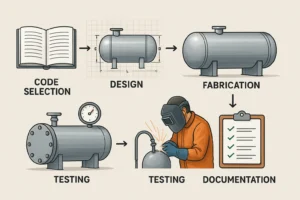
Before diving into individual code types, it helps to know what a pressure vessel code generally does. These codes set minimum design, fabrication, inspection, and testing standards so that your vessel can withstand internal or external pressure without the risk of catastrophic failure. Here’s why codes matter:
They protect personnel, the environment, and property from vessel failures.
They unify design and fabrication practices so everyone follows the same rulebook.
They aid inspectors, regulators, and insurance companies in verifying your vessel’s integrity.
Most reputable manufacturers already design and build pressure vessels following these standards. When you hire a company, look for certifications or code stamps that prove compliance, such as ASME-certified pressure vessels. If you’re unsure whether a particular vessel meets code, you can always check with an Authorized Inspector or request the relevant code documentation.
For beginners, you may also find it useful to review what is a pressure vessel to understand basic definitions, typical uses, and differences from standard tanks.
What are the different types of pressure vessel codes?
Pressure vessels serve a wide range of applications, from chemical processing plants to power generation. Accordingly, multiple codes have emerged globally to reflect differences in local laws, industry norms, and engineering philosophies. Here are the major codes you should know:
ASME Boiler and Pressure Vessel Code (BPVC): The most recognized standard for vessel design and fabrication in the United States.
API 510 Pressure Vessel Inspection Code: Focused on in-service inspection, repair, and rating.
Additional regional or industry-specific standards: Such as EN codes in Europe.
If you plan to manufacture or sell vessels in the US market, the ASME BPVC is the de facto standard. Globally, it is respected in many other countries. Meanwhile, API 510 complements ASME by focusing on in-service inspections.
For an overview of vessel types and design considerations, you can check out types of industrial pressure vessels or what is the most common type of pressure vessel used in industry.
Evaluate major ASME sections
Since ASME dominates pressure vessel regulations in North America, it’s worth understanding its framework. The ASME BPVC is split into multiple sections addressing materials, design rules, nondestructive testing, nuclear components, and more. Each section receives updates every two years, reflecting new materials, manufacturing methods, and technical advances.
ASME BPVC Section II: Materials
Section II includes four parts:
Part A: Ferrous material specifications (SA).
Part B: Nonferrous material specifications (SB).
Part C: Specifications for welding rods, electrodes, and filler metals (SFA).
Part D: Properties (Customary/Metric) for stress values and material properties.
When selecting pressure vessel materials, these specifications ensure metals can handle intended pressures and temperature cycles. Learn more about choosing the right material for pressure vessel fabrication.
ASME BPVC Section V: Nondestructive Examination
Section V covers nondestructive testing (NDT) methods such as radiography, ultrasonic, magnetic particle, and liquid penetrant. It outlines:
Qualification of NDT personnel.
Responsibilities of suppliers and authorized inspectors.
Procedures to ensure welds are free from hidden flaws.
ASME BPVC Section VIII: Rules for Construction of Pressure Vessels
Section VIII governs pressure vessels in three divisions:
Division 1 (U stamp): Most common for pressures above 15 psi.
Division 2 (U2 stamp): Uses detailed analysis for up to 10,000 psi.
Division 3: Ultra-high pressures.
Select a division based on your system’s complexity and pressure requirements. More about manufacturing process of pressure vessels.
ASME BPVC Section IX: Welding, Brazing, and Fusing Qualifications
Section IX describes procedures and qualifications welders must follow to maintain vessel integrity under pressure. For practical guidance, see:
Examine other recognized codes
Although ASME dominates pressure vessel regulations in the USA, you may encounter other codes or standards depending on your use case:
API 510 Pressure Vessel Inspection Code
API 510, published by the American Petroleum Institute, focuses on the in-service inspection, rating, repair, and alteration of pressure vessels. It serves as a companion to ASME code by ensuring vessels maintain integrity during operation. If you run a facility that processes oil, gas, or chemicals, you might need to comply with both ASME and API 510 to cover the entire lifecycle of your vessels.
The National Board Inspection Code (NBIC)
NBIC provides installation, inspection, and repair guidelines for boilers and pressure vessels. Authorized Inspectors often reference NBIC when repairing or modifying existing vessels.
European (EN) and Other International Standards
For international operations, the European Pressure Equipment Directive (PED) may apply. In some cases, an ASME-approved vessel also satisfies foreign market requirements, possibly with additional markings.
Industry-Specific Codes
Certain industries impose internal guidelines, e.g., pharmaceutical companies may require sterilization or surface-finish standards. If your industry has specialized needs, discuss blending multiple codes with your manufacturer.
What are the different types of pressure vessel codes
When asking “what are the different types of pressure vessel codes,” it’s clear that safety drives them all. In the U.S., ASME leads the way, with API 510 covering inspections and NBIC overseeing repairs. Globally, some regions follow local codes but often accept ASME standards. To ensure compliance, identify the code suited to your pressure range and environment, then work with a certified manufacturer holding U or U2 stamps. This guarantees your vessel can handle stress, inspections, and future upgrades. Whether it’s Division 1 or a high-pressure build, code certification is your first step toward safety and reliability.
Need a reliable partner?
Red River specializes in the design and manufacturing of pressure vessels. We also fabricate related items such as prefabricated spools and skid packages.
Reach out to us today and experience the Red River difference. Where American-made products and American Values come together, we care more.
Frequently asked questions
1. What are pressure vessel codes?
Pressure vessel codes are official safety standards that govern the design, construction, inspection, and maintenance of pressure vessels containers that hold gases or liquids under pressure. These codes ensure that vessels can safely handle high-pressure environments without risk of rupture, leaks, or explosions.
2. What is the ASME pressure vessel code?
The ASME pressure vessel code refers to ASME Boiler and Pressure Vessel Code (BPVC) Section VIII, developed by the American Society of Mechanical Engineers. It’s the most widely used standard globally for building pressure vessels. It outlines rules for design, materials, fabrication, testing, and certification, ensuring that vessels meet strict safety and reliability requirements.
3. What are the different types of pressure vessel codes?
Several organizations issue pressure vessel codes, each tailored to specific industries or regions. Common types include:
- ASME BPVC (USA & international) – Covers most industrial applications.
- PED (Pressure Equipment Directive, EU) – Required for vessels used in the European Union.
- CSA B51 (Canada) – Canadian code governing pressure equipment.
- AD 2000 (Germany) – German-based safety code for pressure vessels.
- ISO 11120 – For gas cylinders and transportable pressure vessels globally.
Each code has unique requirements, but all share one goal: prevent pressure-related failures through strict design and testing standards.
4. Can I reuse an older vessel that was built to a prior code edition?
Yes, if it was code compliant at the time of fabrication, maintained properly, and passes current inspection standards. You should also confirm whether your jurisdiction requires an upgrade to match newer code supplements.
5. What is the difference between a pressure vessel and a tank?
Generally, a tank is designed for atmospheric or low-pressure storage, while a pressure vessel must handle higher internal or external pressures. You can explore more nuances at what is the difference between a pressure vessel and a tank.
Key takeaways
- A pressure vessel code establishes design, fabrication, inspection, and testing requirements so vessels remain safe over time.
- ASME BPVC is the gold standard in the US, offering divisions for various pressure levels.
- API 510, NBIC, and other codes focus on different stages of a vessel’s life, like inspection or repair.
- Code stamps (e.g., U, U2) validate that a vessel meets specific sections of the ASME code.
Related Blog Post
Pressure Vessel Design & Engineering: Concept to Launch
What is Pressure Vessel Design and Engineering: Code-Ready Guide
What are the Key Factors in Pressure Vessel Engineering
How Do You Design a Pressure Vessel: A Step-By-Step Guide
What is Pressure Vessel Fabrication and Manufacturing
About Author



