
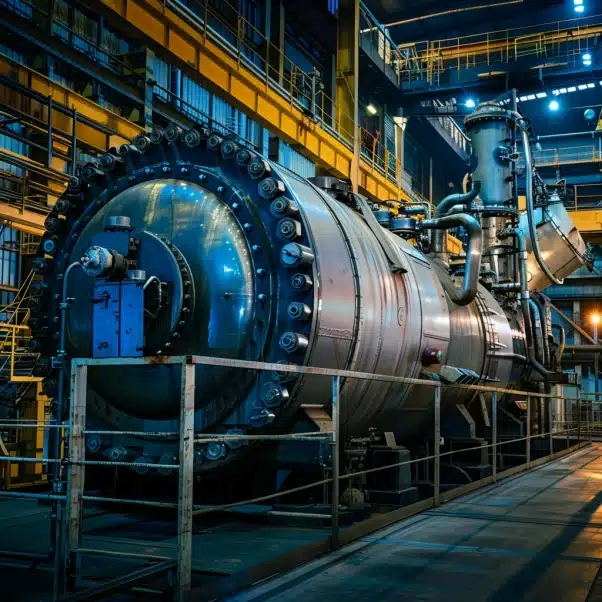
ASME Section 8 Pressure Vessel Code Explained

Introduction: Demystifying ASME Section 8 for Pressure Vessel Safety
If you work in industries like oil & gas, power generation, or manufacturing, understanding ASME Section 8 is essential for safe and compliant pressure vessel design. ASME Section 8, also called ASME Boiler and Pressure Vessel Code Section VIII, is the global benchmark for engineering excellence and regulatory compliance. At Red River, we’re dedicated to helping clients achieve top-tier safety and performance, guiding you through every step of the certification and design process. For foundational knowledge about ASME and its role in engineering, check out our deep dive on what ASME means in engineering.
What Is ASME Section 8 and Why Does It Matter?
ASME Section 8 sets rigorous standards for the design, fabrication, inspection, testing, and certification of pressure vessels. This code is vital for ensuring the reliability and safety of vessels used in sectors like petrochemicals, pharmaceuticals, food processing, and energy.
Divisions of ASME Section 8: How They Differ
Division 1: Most common; covers general industrial applications.
Division 2: Higher-pressure use; stricter design rules, more detailed calculations.
Division 3: Ultra-high-pressure vessels, including those for nuclear or aerospace industries.
For a detailed comparison, read our post on the differences between Division 1 and Division 2 vessels.
Key Design Requirements and Formulas
ASME Section 8 covers everything from material selection to inspection methods. Here are some essentials:
Design Formulas: For cylindrical vessels, wall thickness is calculated using:
t=PRSE−0.6Pt = \frac{PR}{SE-0.6P}t=SE−0.6PPRwhere P is internal pressure, R is inside radius, S is material allowable stress, E is joint efficiency.
See more in our guide to standard pressure vessel sizes.Material Specifications: Only approved materials with verified mechanical properties can be used.
Testing Methods: Includes hydrostatic testing, radiography, and ultrasonic inspections, all designed to minimize risk.
U-Stamp Certification: The ASME “U” stamp certifies that a vessel has passed all code requirements for design, fabrication, and inspection. Learn about the full process in this ASME guide from Wikipedia.
The ASME Section 8 Certification Process
Design & Engineering: Defining vessel parameters, material selection, and calculations.
Fabrication: Manufacturing per code, with tight quality controls.
Inspection: Third-party Authorized Inspectors verify all code requirements.
Testing: Hydrostatic, non-destructive, and functional tests.
Certification: The vessel receives the ASME U-stamp for compliance.
For further info, see how pressure vessels qualify for ASME compliance and minimum pressure requirements.
Materials & Testing Standards
Material selection is not just about strength—corrosion resistance and temperature ratings are also key. ASME Section 8 prescribes allowable stresses, minimum thicknesses, and mandatory tests.
Dive deeper into maximum allowable working pressure.
Ensuring Safety and Excellence with ASME Section 8
ASME Section 8 isn’t just a rulebook; it’s a critical shield for industries and communities. By following its requirements, you secure operational safety, protect property, and meet global compliance standards. Whether you need a new design, recertification, or a deeper understanding of code changes, our team is here to guide you.
Ready to Partner with ASME Experts?
Unlock the full potential of your projects with Red River—where American-made quality meets unmatched compliance.
Contact us today and experience the Red River difference!
Frequently Asked Questions
What is ASME Section 8?
ASME Section 8 is the authoritative code for the design, construction, and certification of pressure vessels, ensuring safety and regulatory compliance across industries.
What are the divisions in ASME Section 8?
Division 1 is for standard applications, Division 2 for high-pressure situations, and Division 3 for ultra-high-pressure designs. Each has unique rules for design and safety.
How do I get an ASME U-stamp?
A vessel must meet all design, fabrication, inspection, and testing requirements, and pass review by an Authorized Inspector, to earn the U-stamp.
What materials are allowed in ASME Section 8 vessels?
Only ASME-approved materials with traceable properties are permitted—ensuring the vessel’s durability and compliance.
How does ASME Section 8 differ from other codes?
Section 8 is specific to pressure vessels, while other codes (like Section IX) address welding, and Section I covers boilers. Learn more in our ASME overview.
What industries use ASME Section 8 vessels?
Oil & gas, power generation, chemical processing, pharmaceuticals, and food production all rely on ASME Section 8.
How often must pressure vessels be inspected?
ASME requires regular inspections—frequency depends on service conditions and jurisdiction.
Can small vessels be exempt from ASME Section 8?
Yes, some vessels below a certain pressure or volume threshold may be exempt. Details vary by jurisdiction.
Key Takeaways
ASME Section 8 is the global gold standard for pressure vessel safety.
There are three main divisions—each tailored for different pressures and complexities.
Compliance requires rigorous design, fabrication, and inspection processes.
Only certified, traceable materials are allowed.
Earning the ASME U-stamp means your vessel meets world-class safety and quality standards.
Red River offers full-spectrum support—from design to certification and beyond.
Solutions
In the realm of industrial solutions, Red River emerges as a pioneer, offering a diverse range of custom-engineered products and facilities. Among our specialties is the design and production of Custom/OEM Pressure Vessels, meticulously crafted to meet individual client requirements, ensuring performance under various pressure conditions. Our expertise extends to the domain of prefabrication, where Red River leads with distinction.
The company excels in creating prefabricated facilities, modules, and packages, reinforcing its stance as a forerunner in innovation and quality. This proficiency is further mirrored in their Modular Skids offering, where they provide an array of Modular Fabricated Skid Packages and Packaged equipment. Each piece is tailored to client specifications, underlining their commitment to delivering precision and excellence in every project they undertake.


Related Blog Post
Condensate Tanks: Types, Fabrication, and ASME Code
Which Tests Validate Deaeration in Pressure Systems?
Equalization Tanks: Design, Sizing, and Fabrication
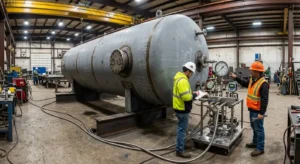
What Are Thermal Storage Testing Standards for TES Vessels?
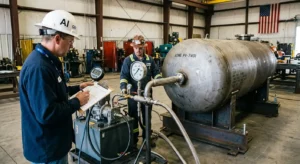
What Hydro Tests Are Required for Pressure Vessels?
No subpillar set for this blog post.
About Author
