

Non-Destructive Testing (NDT) ensures pressure vessel integrity without causing damage, using methods like visual, ultrasonic, radiographic, and magnetic particle testing. Regular NDT inspections by qualified technicians enhance safety, prevent failures, and maintain regulatory compliance.
Non-Destructive Testing (NDT) Methods for Pressure Vessel Safety
Pressure vessels are vital in industries like oil and gas, chemical processing, and power generation. These vessels store gases or liquids under pressure, making their structural integrity critical for safe operations. Ensuring that pressure vessels remain reliable requires advanced inspection methods without causing damage, making non-destructive testing (NDT) an essential part of industrial safety.
Understanding Non-Destructive Testing for Pressure Vessels
Non-destructive testing encompasses a variety of inspection techniques that evaluate material properties and detect defects without causing damage to the tested item. For pressure vessels, these methods are crucial because they allow for thorough examination while keeping the equipment intact and operational.
The importance of Non-Destructive Testing NDT for pressure vessels cannot be overstated. These containers operate under significant stress, and failure can result in catastrophic consequences, including explosions, toxic releases, and personnel injuries. Regular Non-Destructive Testing NDT inspections help prevent such incidents by identifying potential problems before they escalate.
Non-Destructive Testing NDT is also mandated by various regulatory bodies, including ASME (American Society of Mechanical Engineers) and API (American Petroleum Institute), which have established codes and standards governing pressure vessel inspection requirements.
Common NDT Methods for Pressure Vessel Inspection
Visual Testing (VT)
Visual testing is the simplest and most common NDT method. Inspectors examine surfaces for visible defects, such as corrosion, dents, or weld issues. Tools like borescopes can help access hard-to-see areas. VT serves as the first step in inspection, guiding further tests like ultrasonic testing or radiographic testing.
Ultrasonic Testing (UT)
Ultrasonic testing uses high-frequency sound waves to detect internal flaws. Reflected waves indicate discontinuities like cracks or laminations. UT is especially effective for:
- Inspecting welds
- Measuring wall thickness to detect corrosion
- Avoiding radiation exposure, unlike radiographic testing
Learn more about vessel thickness assessment in understanding pressure vessels definitions and thresholds.
Radiographic Testing (RT)
Radiographic testing involves using X-rays or gamma rays to create images of a pressure vessel’s internal structure. These rays pass through the material and expose film or digital detectors on the opposite side, revealing internal defects as variations in the image density.
RT provides excellent detection of volumetric flaws like porosity and inclusions in welds. However, it requires strict safety protocols due to radiation hazards and often necessitates clearing the area during testing, which can impact operational schedules.
Magnetic Particle Testing (MT)
Magnetic particle testing is effective for detecting surface and near-surface flaws in ferromagnetic materials. The process involves magnetizing the component and applying magnetic particles (either dry or suspended in liquid) that accumulate at discontinuities, making them visible to inspectors.
MT is particularly useful for detecting fine cracks that might be missed by visual inspection. However, its application is limited to ferromagnetic materials like carbon steel, making it unsuitable for stainless steel or aluminum pressure vessels.
Liquid Penetrant Testing (PT)
Liquid penetrant testing detects surface-breaking defects by applying a penetrant liquid that seeps into surface discontinuities. After excess penetrant is removed, a developer is applied to draw the penetrant from the flaws, making them visible.
PT is versatile and can be used on virtually any non-porous material, regardless of its magnetic properties. It excels at revealing surface cracks, porosity, and leaks but cannot detect subsurface defects.
Specialized Non-Destructive Testing NDT Techniques for Pressure Vessels
Some inspections require more advanced or operational testing techniques:
- Hydrostatic testing: Pressurizing vessels with water to confirm integrity. See mastering the art of pressure vessel pressurization.
- Pneumatic testing: Using air or gas instead of water.
- Acoustic emission testing: Detects real-time structural changes under stress.
- Leak testing: Bubble tests, pressure decay, and helium testing ensure containment reliability.
For a deeper understanding, explore understanding water tanks as pressure vessels and understanding compressed air tanks as pressure vessels.
Selecting the Appropriate Non-Destructive TestingNDT Method
Choosing the right NDT method depends on:
- Material type: Ferromagnetic vs. non-ferromagnetic
- Defect type: Surface vs. volumetric
- Accessibility: Some vessel areas are hard to reach
- Budget and time constraints
- Regulatory requirements
A comprehensive inspection program often combines multiple NDT techniques. For example, visual testing might identify areas for ultrasonic or radiographic follow-up, maximizing detection coverage.
See comprehensive guide to pressure vessel inspection for more strategies on combining NDT methods effectively.
The Importance of Non-Destructive Testing
Non-Destructive Testing (NDT) is a critical component in maintaining the safety, reliability, and longevity of pressure vessels. By allowing thorough inspection without compromising structural integrity, NDT methods help detect surface and internal defects before they pose serious risks. From visual and ultrasonic testing to specialized techniques like acoustic emission and leak testing, each method has unique strengths that, when combined, provide a comprehensive assessment of vessel health. Regular inspections performed by certified technicians not only ensure regulatory compliance but also prevent costly failures and enhance operational safety. As technology advances, Non-Destructive Testing continues to evolve, offering more accurate, efficient, and reliable solutions for protecting both equipment and personnel.
Need a reliable partner?
Red River specializes in the design and manufacturing of pressure vessels. We also fabricate related items such as prefabricated spools and skid packages.
Reach out to us today and experience the Red River difference. Where American-made products and American Values come together, we care more.
Frequently Asked Questions
1. What is the most common Non-Destructive Testing NDT method used for pressure vessels?
Visual inspection is the most common and foundationalNon-Destructive Testing NDT method for pressure vessels. It’s typically performed during manufacturing, installation, and regular maintenance intervals. While simple, it requires trained inspectors who know what to look for and how to document findings effectively.
2. How often should pressure vessels undergo non-destructive testing?
Inspection frequencies depend on regulatory requirements, vessel application, and operating conditions. Generally, external visual inspections occur annually, with internal inspections and more advanced Non-Destructive Testing NDT methods performed every 3-5 years. High-risk or critical vessels may require more frequent testing.
3. Can Non-Destructive TestingNDT methods detect all potential defects in pressure vessels?
No single NDT method can detect all possible defects. Each technique has specific capabilities and limitations regarding the types and sizes of flaws it can identify. This is why comprehensive inspection programs typically employ multiple complementary NDT methods.
4. What qualifications are required for Non-Destructive Testing NDT technicians working on pressure vessels?
Non-Destructive Testing NDT technicians typically need certification according to standards like SNT-TC-1A or ISO 9712. Certification involves formal training, supervised practical experience, and examinations. Different certification levels (I, II, and III) reflect increasing expertise and responsibility.
5. How do Non-Destructive Testing NDT methods differ for different pressure vessel materials?
Material properties significantly influence Non-Destructive Testing NDT method selection. For example, magnetic particle testing only works on ferromagnetic materials, while ultrasonic testing requires adjustments based on material sound velocity. Composite pressure vessels often require specialized approaches compared to metallic vessels.
6. What are the advantages of ultrasonic testing over radiographic testing?
Ultrasonic testing offers several advantages: no radiation hazards, immediate results, portability, thickness measurement capability, and the ability to operate without evacuating adjacent areas. It’s also generally more cost-effective and can detect planar defects that radiography might miss.
7. How has technology improved NDT methods for pressure vessel inspection?
Recent technological advances include phased array ultrasonics, digital radiography, automated inspection systems, and drone-based visual inspections. These innovations improve detection capabilities, increase efficiency, enhance data recording, and allow for better trending analysis over a vessel’s lifetime.
Key Takeaways
- Regular NDT inspections are essential for pressure vessel safety and regulatory compliance
- Visual testing provides a foundation for inspection programs, while advanced methods offer deeper insights
- Each NDT method has specific strengths and limitations; using multiple techniques ensures comprehensive assessment
- Properly qualified personnel must perform NDT to ensure accurate results
- A proactive inspection program extends pressure vessel lifespan and prevents catastrophic failures
- Technology advancements continue to improve NDT capabilities, enhancing safety outcomes
Related Blog Post
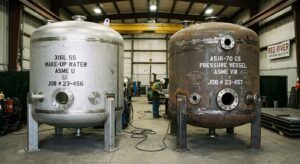
Which Materials Suit Make-Up Water Service?
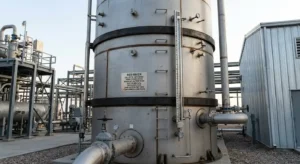
How Big Should Make-Up Water Tanks Be?
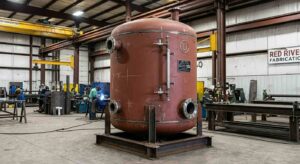
Make-Up Water Tanks: Design, Sizing, and Fabrication
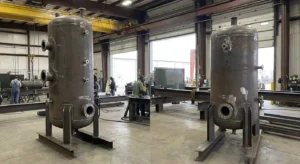
When to Spec Equalization Tanks for Industrial Systems
How Do Equalization Tanks Balance Flow?
- How to Conduct a Pressure Vessel Inspection in Water Treatment Facilities
- Safety Guidelines for Operating Water Pressure Vessels
- Standard Pressure Vessel Inspection Procedures in U.S. Plants
- OSHA pressure vessel: Safety Requirements for compliance
- Comprehensive Guide to Controlling Pressure Hazards
- Understanding Pressure Vessel Inspection Requirements



