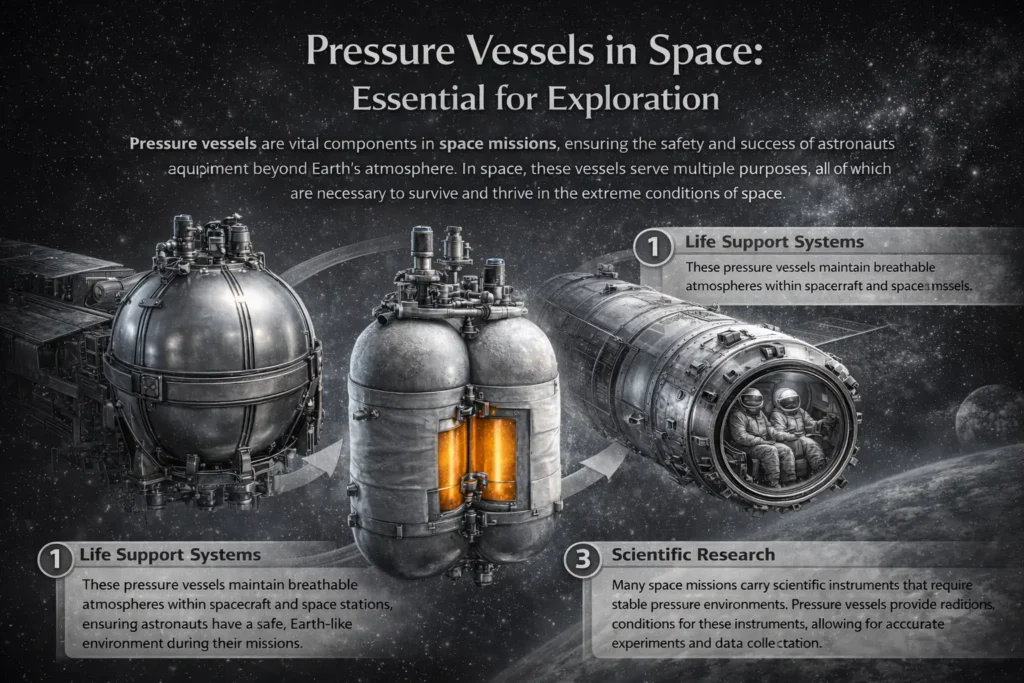
Pressure vessels in space are essential for ensuring the safety and success of space exploration. They provide the necessary pressure for life support, propellant storage, and scientific experiments, and protect astronauts and equipment from the harsh environment of space.
Why Pressure Vessels are Vital for Space Exploration
Space exploration is a monumental challenge, pushing the boundaries of human ingenuity to overcome the harsh conditions of the cosmos. Among the many technological innovations that make space missions possible, pressure vessels in space stand out as one of the most crucial components. These specialized vessels are essential for maintaining life-sustaining environments in the vacuum of space, where the absence of atmospheric pressure poses a grave risk to both human life and equipment. From supporting life systems to enabling propulsion and scientific research, pressure vessels in space are integral to the success of missions beyond our planet. Let’s dive into their key functions and explore why they are indispensable to space exploration.
The Vacuum of Space
Space is often referred to as the ultimate frontier, and for good reason. It is a vast, cold, and airless void where the lack of atmosphere creates a vacuum with nearly zero pressure. Humans and most equipment require adaptation to Earth’s atmospheric pressure to function correctly. Pressure vessels in space act as the necessary barrier to this hostile environment, ensuring that astronauts and sensitive instruments remain protected and functional. These vessels are designed to replicate Earth-like conditions by maintaining internal pressure, thus safeguarding both humans and technology in a high-stakes environment.
Life Support and Habitability
In space, breathable air is a necessity. Spacecraft and space stations rely on pressure vessels in space to contain oxygen and other gases that astronauts need for survival. These vessels are essential for creating a life-supporting atmosphere that mimics Earth’s conditions, ensuring that astronauts can breathe easily. Additionally, pressure vessels contribute to radiation protection. While primarily responsible for pressure containment, their structural design also enhances radiation shielding, further protecting astronauts from harmful cosmic radiation.
Propellant Storage
In order to launch and maneuver spacecraft, rockets need propellants that are often stored in pressure vessels in space. These vessels store the fuel and oxidizers necessary for rocket propulsion at high pressures, enabling the spacecraft to reach its desired speed and trajectory. Without pressure vessels designed for propellant storage, rockets would not be able to achieve the thrust needed for space exploration. These vessels are central to the propulsion systems of spacecraft and spacecraft engines.
Thermal Regulation
Space presents one of the most extreme environments for temperature fluctuations, where spacecraft can face temperatures ranging from scorching heat to bitter cold. Pressure vessels in space help mitigate these challenges by maintaining a stable internal environment. The insulation and structural design of these vessels regulate temperature, keeping vital equipment and crew habitats within safe operational limits. The importance of thermal regulation cannot be overstated, as rapid temperature changes could compromise both astronaut safety and the performance of sensitive equipment.
Scientific Instruments and Experiments
Space missions often involve complex scientific experiments, which require stable atmospheric conditions. Many scientific instruments need controlled environments, including specific pressure conditions, to function properly. Pressure vessels in space provide these environments, ensuring that instruments designed for experimentation can operate accurately. From biological studies to advanced chemistry, pressure vessels create the necessary conditions to carry out groundbreaking research in space.
Safety in Emergencies
In the unforgiving environment of space, emergency preparedness is crucial. If a spacecraft’s hull is breached, pressure vessels in space can serve as temporary safe havens. These vessels provide a sealed, pressurized environment to protect astronauts while repairs are carried out or other safety protocols are enacted. In a worst-case scenario, these vessels offer a critical layer of safety, ensuring astronauts can survive until a more permanent solution is implemented.
Expansion into Space
As humanity looks to explore deeper into space, including long-duration missions to the Moon, Mars, and beyond, the role of pressure vessels in space will only grow more critical. Future space habitats and colonies will depend heavily on these vessels to maintain livable environments. Whether it’s for storing resources or sustaining life support systems, pressure vessels will form the backbone of infrastructure for off-Earth colonies. These vessels will ensure the survival and well-being of astronauts as they live and work on distant planets, paving the way for sustainable exploration.
Space Farming and Bioregenerative Systems
As humanity ventures further into space, the development of self-sustaining ecosystems will become paramount. Pressure vessels are pivotal to bioregenerative systems, such as space farming, where plants are grown to produce oxygen and remove carbon dioxide. These pressure vessels in space maintain controlled environments, enabling plant growth that is crucial for supporting human life on long-duration missions or even permanent colonies on planets like Mars.
Material and Design Evolution
To meet the demanding conditions of space, pressure vessels in space are made from advanced materials that are both lightweight and incredibly strong. These materials, such as titanium and specialized composites, must withstand the intense conditions of space while minimizing the vessel’s weight, a critical consideration for space missions. Over the years, innovations in material science have led to the creation of lighter, more durable pressure vessels that support the rigorous demands of space exploration.
Space Tourism and Commercial Ventures
With the rise of space tourism and the commercialization of space travel, pressure vessels in space will play a crucial role in ensuring the safety of everyday passengers. From suborbital flights to orbital hotels, pressure vessels will help maintain safe, breathable environments for civilians venturing into space. These vessels will also ensure that commercial ventures meet the same rigorous standards for safety that are required for governmental space missions.
Cosmic Research and Deep Space Exploration
As space exploration pushes the boundaries of what is possible, pressure vessels in space will continue to be a core part of humanity’s journey into the unknown. These vessels will support deep space exploration, from the outer reaches of our solar system to far-flung exoplanets. As we venture further into the cosmos, pressure vessels will be there, ensuring the safety of astronauts and equipment, and making groundbreaking discoveries possible.
The Future: Adapting to Alien Worlds
In the future, pressure vessels in space may evolve to create pressurized habitats on alien worlds. Whether underground or inside structures on other planets, these vessels will shield inhabitants from the hostile environments of extraterrestrial surfaces. By adapting pressure vessel technology, humanity will be able to establish colonies on planets like Mars and beyond.
The Critical Role of Pressure Vessels in Space Exploration
The future of space exploration hinges on our ability to develop reliable technologies that can withstand the extremes of space. Pressure vessels in space are at the forefront of this technological evolution, providing the necessary infrastructure to support life, safeguard equipment, and enable groundbreaking scientific research. As humanity sets its sights on deeper space exploration and the colonization of other worlds, pressure vessels will be pivotal in ensuring the success of these ambitious missions. With continued innovation, we can ensure that future astronauts can live, work, and thrive beyond Earth.
Reach Out to Red River: Your Partner in Space Technology Solutions
Ready to ensure your space missions have the most reliable pressure vessels? Red River specializes in designing and manufacturing advanced pressure vessels tailored for the space industry. Our vessels are built with cutting-edge materials and technologies that meet the rigorous demands of space exploration. Whether for life support, propellant storage, or scientific research, our solutions are designed to keep astronauts and equipment safe in the harshest environments.
Contact us today to learn more about our space-grade pressure vessels and how we can support your next mission to the stars!
Frequently Asked Questions
1. What is the primary function of a pressure vessel in space applications?
In space, pressure vessels are crucial for maintaining a life-supporting environment. They are designed to hold gases or liquids at a pressure substantially different from the ambient pressure. These vessels are essential for storing oxygen and other necessary gases in a controlled environment, ensuring the survival and comfort of astronauts in the harsh conditions of space.
2. How do pressure vessels contribute to the safety of space missions?
Safety is paramount in space missions, and pressure vessels play a critical role. They are engineered to withstand extreme conditions, such as the vacuum of space, intense temperature fluctuations, and radiation. This ensures that vital resources like air and fuel are securely contained and managed, preventing potential hazards that could endanger the mission and the crew.
3. What materials are used in manufacturing pressure vessels for space, and why?
Space-grade pressure vessels are typically made from advanced materials like titanium, stainless steel, and composite materials. These materials are chosen for their strength-to-weight ratio, corrosion resistance, and ability to endure the extreme conditions of space. For instance, titanium is favored for its high strength, low density, and resistance to temperature changes.
4. How does the design of space-bound pressure vessels differ from those used on Earth?
Pressure vessels for space are designed with stricter standards due to the unique challenges of the space environment. They are often lighter and more robust, with specialized coatings to protect against radiation and micrometeoroid impacts. Additionally, their design must account for zero-gravity conditions, ensuring that liquids and gases can be effectively managed and directed without relying on gravity.
5. Are there any innovations in pressure vessel technology specifically for space exploration?
Recent innovations in pressure vessel technology for space exploration include the development of composite overwrapped pressure vessels (COPVs). These vessels use a combination of metal liners and composite materials, offering a lighter yet stronger alternative to traditional metal vessels. This innovation is crucial for reducing the payload weight, which is a significant factor in space mission costs and efficiency.
Key Takeaways:
- Pressure vessels are essential for life support in space, ensuring breathable atmospheres for astronauts in spacecraft and space stations.
- They protect against the vacuum of space, maintaining stable environments to safeguard both astronauts and sensitive equipment.
- Pressure vessels are crucial for propellant storage, enabling safe high-pressure storage of fuel needed for rocket propulsion.
- They create controlled environments for scientific experiments, allowing accurate data collection and research in space’s extreme conditions.
- Pressure vessels provide safety and emergency backup, acting as temporary safe havens for astronauts in case of hull breaches or emergencies.
- As we look to colonize other planets, advanced pressure vessels will be vital for sustaining life in off-Earth colonies, ensuring stability and safety in future missions.
Related Blog Post
Can Condensate Storage Improve Reliability?
Where Do Condensate Tanks Fit in a Steam System?
Which Nozzles Simplify Maintenance on Pressure Vessels?
How to Vent Condensate Tanks in Steam Systems
How Do Baffle Layouts Affect Stratification in TES Tanks?
No subpillar set for this blog post.