
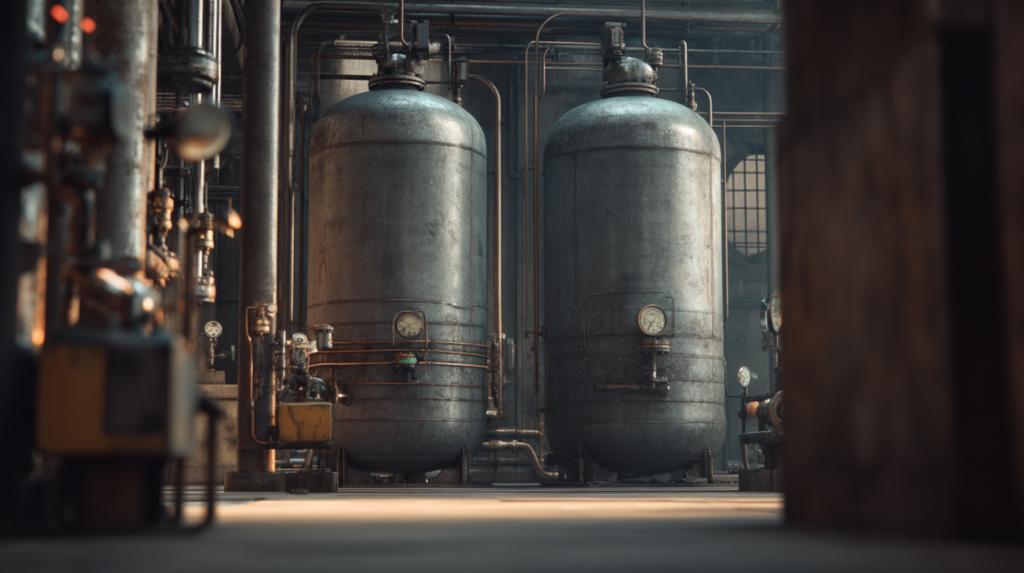
Choosing the wrong ASME division for a pressure vessel project leads to overbuilt vessels that waste material and budget, or underbuilt vessels that fail inspection and create safety risk. This guide is for engineers, procurement teams, and plant managers who need to understand the difference between ASME Section VIII Division 1 and Division 2 before specifying or ordering a vessel. You’ll learn how each division’s design approach, pressure limits, material requirements, and cost implications differ and when to use each one.
Overview of Pressure Vessel Design and Fabrication
Choosing between ASME Section VIII Division 1 and Division 2 impacts vessel safety, project costs, and long-term efficiency. Division 1 offers a conservative, rule-based approach, while Division 2 enables thinner, optimized designs via advanced stress analysis and material selections.
Why Choosing the Right ASME Division Matters
Within Section VIII, your choice of division affects material requirements, fabrication complexity, inspection protocols, and certification pathways. Division 1 is straightforward and widely used. Division 2 offers flexibility for high-pressure, custom-engineered applications.
What is ASME Section VIII Division 1?
Key Features of ASME SEC 8 Div 1 ASME SEC 8
Division 1 is a prescriptive standard detailing the design, fabrication, inspection, and testing of pressure vessels operating above 15 psig, emphasizing safety through conservative rules and conservative stress factors.
Design Criteria & Material Selection
Materials must meet rigorous standards, and design requires thicker walls and higher safety margins to ensure reliability.
Safety Considerations
Division 1 builds in higher design factors, prioritizing robust and time-tested construction methods.
What is ASME Section VIII Division 2?
Advancements in Division 2
Division 2 introduces more advanced design-by-analysis techniques, including fatigue assessment and finite element analysis, to optimize vessel designs
Pressure Integrity & Fatigue Assessment
Division 2 enables designs with thinner, high-strength materials and includes rigorous stress and fatigue analysis methods tailored to high-pressure applications.
Enhanced Material Standards in Division 2
Division 2 sets higher standards for material strength, facilitating the use of thinner, lighter materials without compromising vessel integrity.
Division 2’s Innovative Design Methodologies
It encourages innovation, with a performance-based code that allows for the application of state-of-the-art design methodologies.
ASME Section VIII Div 1 vs Div 2: Side-by-Side Comparison
Pressure Limits: Div 1 and Div 2 Face-Off
| Criteria | Division 1 | Division 2 |
|---|---|---|
| Design Methodology | Design‐by‐rule (prescriptive) | Design‐by‐analysis (performance‐based) |
| Applicable Pressures | Up to ~3,000 psi | Up to ~10,000 psi |
| Material Thickness | Thicker, standard-grade materials | Thinner, high-performance alloys |
| Cost Efficiency | Lower cost for standard applications | Cost-saving for bespoke, high-pressure systems |
| Manufacturing | Standard fabrication processes | Advanced analysis and fabrication methods |
| Quality Control | Standard inspection and testing | Enhanced NDE and detailed QA requirements |
Historical Evolution of ASME Section VIII
Division 1 may be more cost-effective for standard applications, whereas Division 2 can be cost-saving for complex, high-pressure needs due to material efficiencies.
Manufacturing Process Differences
The manufacturing processes under each division vary, with Division 2 often involving more sophisticated fabrication techniques.
Quality Assurance Protocols in Both Divisions
Both divisions maintain stringent quality assurance protocols, though Division 2’s are typically more comprehensive due to their custom nature.
The Historical Evolution of ASME SEC 8
Origins of ASME Pressure Vessel Standards
The origins of ASME standards date back to safety concerns of the industrial age, aiming to prevent accidents and ensure public safety.
Milestones in the Development of Division 1
Division 1 has evolved over time, incorporating feedback from industry use and technological advancements.
The Progressive Shift to Division 2
The shift to Division 2 reflects the industry’s move towards more efficient and optimized design practices.
Detailed Analysis of ASME SEC 8 Div 1 and Div 2 Design Codes
Stress Analysis Techniques in Div 1 and Div 2
Both divisions employ stress analysis, but Division 2 allows for a more detailed and refined approach.
The Impact of Design Pressure and Temperature
Design pressure and temperature are critical factors in both, but Division 2 offers more precise tools for assessment.
Fatigue Assessment in ASME SEC 8 Codes
Fatigue assessment is integral to both divisions, ensuring vessels can withstand cyclic loads over their lifespan.
ASME SEC 8 Div 1 and Div 2 for Business Owners
How ASME Divisions Affect Your Business
Choosing between ASME SEC 8 Div 1 and Div 2 can have significant implications for your business operations and bottom line. Div 1 may offer a cost-effective solution for standard pressure needs, while Div 2 can provide a customized approach for more demanding applications, potentially reducing long-term operational costs.
Compliance and Certification: What You Need to Know
Understanding the nuances, the National Board of Boiler and Pressure Vessel Inspectors oversees the registration of pressure vessels built to ASME standards, a step required for vessels operating in most U.S. jurisdictions. ASME compliance is crucial. Red River LLC ensures your pressure vessels meet all certification requirements, providing peace of mind and a clear path to market.
Risk Management in Line with ASME Standards
Adhering to ASME standards minimizes risk, ensuring the safety and durability of pressure vessels. Red River LLC’s commitment to these standards protects your business and reputation.
Case Studies: ASME SEC 8 Div 1 vs Div 2 in Action
Real-World Applications of Division 1 Standards
Our portfolio showcases successful applications of Div 1 standards across various industries, demonstrating our expertise and the versatility of this division.
Innovative Projects Using Division 2 Standards
Red River fabricates ASME U-stamp certified pressure vessels under both Division 1 and Division 2. Our engineering team evaluates operating pressure, temperature, material specifications, and budget to recommend the right division for each project and manages the full fabrication, inspection, and certification process from design through delivery.
Comparative Analysis of Project Outcomes
We provide a detailed comparison of outcomes from Div 1 and Div 2 projects, highlighting the tailored benefits and efficiencies achieved.
The Future of ASME SEC 8 and Industry Implications
Emerging Trends in Pressure Vessel Design
Finite element analysis software and advanced material testing have expanded what is achievable under Division 2, enabling vessels that were previously impractical to design and certify. These capabilities are increasingly relevant in high-pressure oil and gas, hydrogen storage, and chemical processing applications.
The Role of Technology in ASME Code Evolution
As computational tools improve stress and fatigue modeling, Division 2’s performance-based approach becomes more accessible for complex vessel geometries and high-cycle applications, reducing conservative over-design without compromising safety margins.
Predicting the Next Phase for ASME SEC 8
Red River fabricates ASME U-stamp certified pressure vessels under both Division 1 and Division 2. Our engineering team evaluates operating pressure, temperature, material specifications, and budget to recommend the right division for each project and manages the full fabrication, inspection, and certification process from design through delivery.
Why Choose Red River LLC for Your ASME SEC 8 Needs
Our Expertise in ASME SEC 8 Div 1 and Div 2
With deep expertise in both divisions, Red River LLC is your trusted partner for pressure vessel manufacturing.
Customized Solutions for Pressure Vessel Design
We offer bespoke design solutions that meet your unique requirements, ensuring optimal performance and compliance.
Commitment to Safety and Quality in Compliance with ASME
Our unwavering commitment to safety and quality underpins every project, aligning with the stringent standards of ASME SEC 8.
ASME Section VIII Division 1 vs Division 2: Making the Right Choice for Your Project
Division 1 remains the right choice for the vast majority of industrial pressure vessels — its prescriptive rules, wide material availability, and straightforward certification pathway make it cost-effective and reliable for standard applications. Division 2 earns its complexity premium when operating pressures are high, weight and material savings are commercially significant, or the application demands advanced fatigue assessment.
Most projects don’t require choosing one over the other in isolation — they require an engineering team that understands both codes well enough to recommend the right one for the specific vessel. Red River fabricates under both divisions and can help you make that determination before the design process begins.
Need a reliable partner?
Red River specializes in the design and manufacturing of pressure vessels. We also fabricate related items such as prefabricated spools and skid packages.
Reach Out to us today and experience the Red River difference. Where American-made and American Values come together, we care more.
Frequently Asked Questions
1. What are the key differences between ASME SEC 8 Div 1 and Div 2 for pressure vessel design and construction?
ASME SEC 8 Division 1 follows a prescriptive approach with specific guidelines for design, while Division 2 offers a more performance-based, flexible design approach. Div 1 is suitable for standard applications, while Div 2 caters to complex, high-pressure needs, often allowing for thinner materials, enhancing efficiency, and reducing long-term operational costs.
2. How does the choice between Div 1 and Div 2 affect the cost of pressure vessel projects?
The choice between Div 1 and Div 2 can significantly impact project costs. Division 1 may be more cost-effective for standard applications due to its conservative design approach, while Division 2’s advanced materials and design methodologies can lead to cost savings in complex, high-pressure environments.
3. Can you provide examples of real-world applications for both Division 1 and Division 2 standards?
Certainly! Division 1 is often used for applications like standard industrial boilers and pressure vessels. In contrast, Division 2 is ideal for applications requiring customization, such as high-pressure systems in the oil and gas industry, where optimizing design is crucial.
4. How have ASME Section VIII Division 1 and Division 2 evolved?
ASME SEC 8 Div 1 and Div 2 have evolved in response to industry needs. Division 1 has incorporated feedback from industrial use and technological advancements, while Division 2 represents a shift toward more efficient and optimized design practices.
5. How do Division 1 and Division 2 differ in stress analysis methods?
Both divisions employ stress analysis, but Division 2 allows for a more detailed and refined approach, considering factors like design pressure and temperature with greater precision. Division 2’s advanced analysis tools enable engineers to optimize designs for specific conditions.
Key Takeaways
- Division 1 uses a prescriptive design-by-rule approach, straightforward, widely used, and cost-effective for standard applications up to ~3,000 psi
- Division 2 uses design-by-analysis, enabling thinner, optimized vessels for high-pressure applications up to ~10,000 psi
- Division 2 requires more rigorous stress analysis, fatigue assessment, and NDE, increasing engineering cost but reducing material cost at scale
- Choosing the wrong division results in either over-designed vessels that waste budget or under-certified vessels that fail inspection
- Red River fabricates ASME U-stamp certified vessels under both divisions. Contact our team to determine which is right for your project
Related Blog Post
Can Condensate Storage Improve Reliability?
Where Do Condensate Tanks Fit in a Steam System?
Which Nozzles Simplify Maintenance on Pressure Vessels?
How to Vent Condensate Tanks in Steam Systems
How Do Baffle Layouts Affect Stratification in TES Tanks?
No subpillar set for this blog post.
About Author



