Data centers running high-density computing loads face a recurring problem chillers cannot always respond fast enough when server activity spikes, causing temperature instability that risks hardware damage and downtime. This guide is for data center engineers and facility managers evaluating thermal energy storage as part of their chilled water infrastructure. You’ll learn how TES tanks function as thermal buffers, how they integrate with chilled water storage systems, and what sizing and material decisions determine long-term performance.
How Do TES Tanks Support Data Center Cooling in Practical Applications
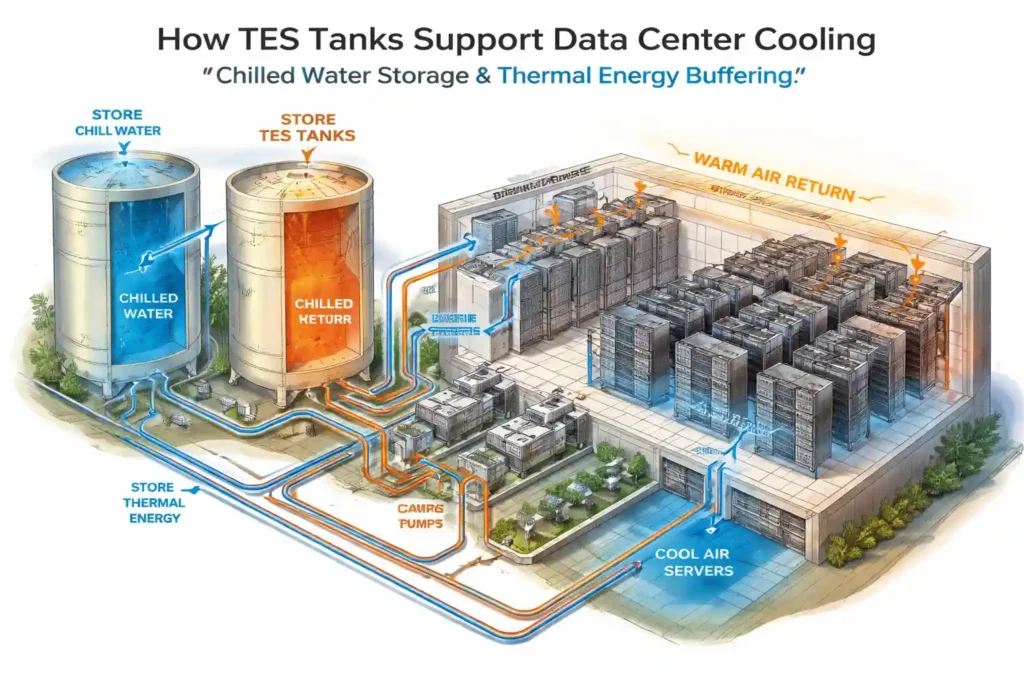
Thermal energy storage works by decoupling cooling production from cooling delivery. Instead of requiring chillers to match demand in real time, TES tanks store chilled water produced during low-demand periods and release it when server activity spikes. A data center’s cooling system must react instantly when server activity increases and heat output spikes. TES tanks act as a stored supply of chilled water that can be released immediately, helping maintain consistent temperatures when the cooling load shifts.
Instead of relying solely on mechanical chillers, facilities gain a secondary source of cooling energy. This extra thermal reserve makes the system more stable and responsive.
TES tanks often operate alongside Chilled Water Storage Tanks, which store large volumes of pre-cooled water for later use. Knowing what a chilled water storage tank is helps explain why both systems work so well together. They ensure chilled water is always available, even during peak usage or unexpected demand changes.
Designing these systems correctly also means understanding how much volume is needed for chilled water storage. The right tank size ensures enough cooling backup without overbuilding. Equally important is knowing which materials suit chilled water service, since tank longevity depends on corrosion resistance, structural strength, and long-term performance.
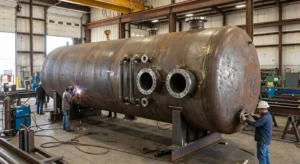
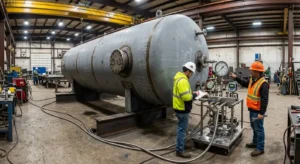
RedRiver LLC fabricates TES tanks designed to meet these needs, helping mission-critical facilities maintain dependable temperatures.
Why TES Tanks Improve Cooling Stability
One of the biggest advantages of TES systems is thermal stability. Server loads shift throughout the day, and cooling systems must respond quickly. TES tanks make that easier by supporting the chilled water loop when conditions change suddenly.
TES tanks improve cooling stability by offering:
- A dependable supply of chilled water on demand
- A buffer that absorbs sudden load increases
- Smoother temperature control across the entire system
- Better protection for hardware sensitive to heat
- More predictable hydronic performance
- Reduced strain on chillers and pumps
The stability advantage becomes most visible during rapid load changes such as batch computing jobs starting simultaneously across a server cluster. Without thermal storage, these events force chillers into emergency ramp cycles that stress compressors and increase energy costs. With TES tanks in the loop, stored chilled water absorbs the initial surge while chillers respond at a controlled rate.
How TES Tanks Support Energy Efficiency
Chillers consume the most energy of any mechanical system in a data center. TES tanks reduce that burden by storing cooling during off-peak hours when electricity rates are lower and releasing it during peak demand without requiring additional chiller output.
TES tanks support energy efficiency by enabling:
• Cooling production during off-peak periods
• Reduced reliance on continuous chiller operation
• Lower energy consumption during high demand
• More efficient use of chilled water storage tanks
• Smoother chiller cycling and less mechanical wear
For system sizing benchmarks, refer to ASHRAE thermal energy storage guidance.
Integrating TES Tanks With Chilled Water Storage Tanks
They’re part of a larger hydronic system that includes chillers, pumps, valves, controls, and chilled water storage tanks. When these components work together, cooling becomes more stable and efficient.
TES tanks and chilled water storage tanks complement each other by providing:
• A shared reservoir of pre-cooled water
• More balanced hydronic distribution
• Better control during peak heat load periods
• Stronger redundancy for mission-critical cooling
• Long-term scalability as data center needs grow
Facilities that rely on chilled water cooling benefit greatly from adding TES tanks, especially as computing demands increase.
Choosing the Right Materials for TES Tank Fabrication
Material selection determines how long a TES tank performs reliably in continuous chilled water service. The wrong material choice leads to internal corrosion, structural degradation, and premature failure particularly in systems using glycol or aggressive water treatment chemistry.
Materials that suit chilled water service often include:
• Carbon steel with protective coatings for durability
• Stainless steel for applications needing higher corrosion resistance
• Composite internal linings when chemical compatibility matters
• Structurally reinforced shells for long-term pressure management
For corrosion and scaling considerations, refer to EPA guidance on cooling water systems.
Determining Proper Storage Volume and System Capacity
Sizing is one of the most important parts of system design. Determining how much volume is needed for chilled water storage ensures that the facility has enough cooling backup when loads rise.
Proper tank sizing depends on factors such as:
• Cooling demand during peak server operation
• Desired duration of thermal backup
• Required redundancy levels
• How quickly the system must respond to load changes
• Chiller performance and cycling behavior
Choosing the right TES tank size improves efficiency, cooling stability, and long-term system reliability.
How TES Tanks Enhance Long-Term Cooling Resilience
TES tanks offer long-term value that extends beyond daily cooling needs. They help future-proof data center operations by providing flexible, scalable thermal energy reserves.
Long-term resilience benefits include:
• Supporting cooling system expansion
• Protecting against sudden load spikes
• Reducing mechanical wear and system fatigue
• Lowering energy costs over time
• Providing additional tolerance during maintenance events
Because TES tanks integrate easily into existing hydronic systems, they become a valuable investment for any facility that prioritizes uptime and reliability.
RedRiver LLC delivers TES tank solutions engineered for these long-term goals, ensuring dependable support year after year.
Partner With Red River for ASME-Certified TES Tank Fabrication
RedRiver LLC builds high-quality TES tanks that strengthen chilled water systems and support long-term data center cooling needs. If you’re exploring thermal energy storage, chilled water solutions, or custom tank fabrication, RedRiver LLC can help design the right system for your facility. Contact Red River to discuss TES tank specifications for your facility.
How Do TES Tanks Support Data Center Cooling with Greater Efficiency
TES tanks earn their place in data center cooling infrastructure by solving three problems simultaneously temperature instability, chiller strain, and lack of backup capacity during demand surges. TES tanks enhance chilled water systems by adding thermal energy reserves that improve responsiveness and reduce operational stress. With the right materials, proper sizing, and expert fabrication, TES tanks strengthen cooling performance and long-term reliability. Red River fabricates ASME-certified TES tanks to specification sized, configured, and documented for the demands of mission-critical data center environments.
Frequently Asked Questions
1. What ASME Section VIII applies to TES tanks?
TES tanks used in chilled water systems are typically fabricated under ASME Section VIII Division 1, which governs pressure vessels operating above 15 psig. Division 2 applies when higher pressure ratings or advanced stress analysis are required.
2. Can TES tanks reduce energy costs?
Yes. By storing chilled water during off-peak hours when electricity rates are lower, TES tanks reduce how often chillers run at full capacity during peak periods cutting both energy consumption and demand charges.
3. Which materials suit chilled water service for TES tanks?
Materials like carbon steel with protective coatings or stainless steel offer strong corrosion resistance and dependable long-term performance.
4. Why are TES tanks important for data center reliability?
They provide immediate thermal backup, help stabilize temperatures, and protect cooling systems from sudden load spikes.
5. Can TES tanks help during system maintenance?
They can supply cooling while equipment is offline, giving operators more flexibility for inspections and repairs.
Key Takeaways
- TES tanks decouple cooling production from real-time demand storing chilled water during off-peak periods and releasing it during server load spikes without requiring chiller intervention.
- Pairing TES tanks with chilled water storage tanks provides both short-duration surge absorption and sustained thermal reserve capacity for planned maintenance windows.
- Carbon steel with internal coating suits most standard chilled water applications stainless steel is required where glycol concentrations or aggressive water treatment creates elevated corrosion risk.
- Tank sizing starts with peak cooling load and desired backup duration undersizing reduces system resilience while oversizing wastes capital and increases thermal losses.
- Red River fabricates ASME-certified TES tanks with full material traceability and U-stamp documentation the compliance record data center operators need for client audits and uptime SLA verification.
Related Blog Post
Condensate Tanks: Types, Fabrication, and ASME Code
Which Tests Validate Deaeration in Pressure Systems?
Equalization Tanks: Design, Sizing, and Fabrication
What Are Thermal Storage Testing Standards for TES Vessels?