Metal working is the set of processes used to shape, cut, or join metal into finished parts, and the six most common types are forging, casting, welding, machining, extrusion, and rolling. Each method changes the metal in a different way, through force, heat, material removal, or a combination of the three. The right process depends on the part’s strength requirements, shape complexity, and production volume.
Key Takeaways
- Forging shapes metal with compressive force and improves grain structure and strength.
- Casting pours molten metal into a mold, best suited for complex geometries.
- Welding joins two or more metal pieces using heat, pressure, or both.
- Machining removes material with cutting tools to hit precise tolerances.
- Extrusion and rolling both start from stock metal and reshape it into consistent profiles or reduced thicknesses.
What Is Forging and How Does It Work?
Forging shapes metal by applying compressive force, typically with a hammer or press, and is performed either hot (above the metal’s recrystallization temperature) or cold (near room temperature). The process aligns the metal’s internal grain structure, which is why forged parts hold up better under repeated stress, a principle reflected in ASME’s Boiler and Pressure Vessel Code requirements for material integrity in code-stamped fabrication. Automotive components, aircraft parts, and hand tools are common forged products because they need that added toughness.
Hot forging heats metal above its recrystallization point before shaping. Cold forging shapes metal at or near room temperature, producing a finer surface finish. Warm forging sits between the two, balancing strength and ductility.
What Is Casting and When Is It Used?
Casting pours molten metal into a mold, where it cools and solidifies into the finished shape. It is the preferred method for complex geometries that would be difficult or costly to machine or forge, such as engine blocks, pump housings, and decorative parts.
Sand casting uses low-cost sand molds and works well for smaller production runs. Die casting uses reusable metal molds for high-precision, high-volume production.
How Does Welding Join Metal Together?
Welding joins two or more pieces of metal by heating them to their melting point and allowing them to fuse as they cool. The right welding method depends on the metal type, material thickness, and working environment.
MIG welding (Metal Inert Gas) uses a continuous wire feed and works well on thinner metals. TIG welding (Tungsten Inert Gas) produces precise, clean welds for critical joints. Stick welding is versatile and commonly used for outdoor or field welding.
Welding is central to construction, automotive manufacturing, and pipeline installation, wherever a strong, permanent joint is required.
What Is Machining and Why Is It Precise?
Machining removes material from a metal workpiece using tools such as lathes, mills, and drills to reach exact dimensions and tight tolerances. Because it is a subtractive process rather than a forming process, it is the method of choice when a part must meet strict specifications.
Turning rotates the workpiece against a cutting tool to shape its surface. Milling uses rotary cutters to remove material and create precise shapes. Drilling creates holes of specific sizes and depths.
Aerospace and automotive manufacturing rely heavily on machining because both industries work within tight tolerances.
What Is Extrusion and What Is It Used For?
Extrusion forces metal through a shaped die to produce long objects with a consistent cross-section, such as rods, pipes, and structural profiles. Aluminum extrusions are common in construction, automotive, and electronics because the process produces lightweight, strong parts with a uniform shape and is material efficient even for complex profiles.
What Is Rolling and How Does It Change Metal?
Rolling passes metal stock between rollers to reduce its thickness or change its mechanical properties, producing sheet metal, plates, and structural beams.
Hot rolling works at high temperatures to reduce thickness efficiently. Cold rolling works at room temperature and produces a smoother surface with higher strength.
Rolling is a core process in steel production, where consistent thickness and mechanical properties matter most.
Forging vs. Casting: Which Process Is Stronger?
Factor | Forging | Casting |
| Grain structure | Aligned, increases strength | Not aligned, can include porosity |
| Best for | High-stress, high-toughness parts | Complex geometries, decorative parts |
| Typical products | Automotive and aircraft components, tools | Engine blocks, pump housings |
How Red River Applies These Processes
Red River fabricates ASME-certified pressure vessels, pipe spools, and modular skid packages for oil and gas, power generation, and biogas operators from Gillette, Wyoming. Welding, machining, and plate forming are core to that fabrication work, applied under ASME Section VIII and IX code requirements and verified through Red River’s quality control process. For a pressure vessel or fabrication project, contact Red River at 1-307-257-5332 or request a quote directly.
Frequently Asked Questions
1. What is the difference between forging and casting?
Forging shapes metal with compressive force and aligns its grain structure for added strength, while casting pours molten metal into a mold, which allows for more complex shapes but can introduce porosity.
2. Can any metal be welded?
Most metals can be welded, but each metal requires a matched welding technique and filler material to produce a strong, defect-free joint.
3. How is machining different from forging or casting?
Machining is a subtractive process that removes material to hit precise dimensions, while forging and casting are formative processes that shape metal through deformation or solidification.
4. What metals are commonly extruded?
Aluminum is the most common extruded metal because of its malleability, though copper, steel, and magnesium alloys are also extruded for specific applications.
5. Is rolling used for large-scale manufacturing?
Yes, rolling is a standard process in large-scale steel production and is used to manufacture the sheet metal and plate stock used across numerous industries.
6. How do hot forging and cold forging differ?
Hot forging heats metal above its recrystallization temperature for easier shaping, while cold forging works at room temperature and produces a finer surface finish and tighter dimensional accuracy.
7. What safety equipment is required for welding?
Welders use protective gear including helmets, gloves, and aprons to guard against burns, UV radiation, and fumes generated during the welding process.
Related Blog Post
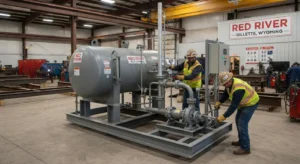
Can Condensate Storage Improve Reliability?
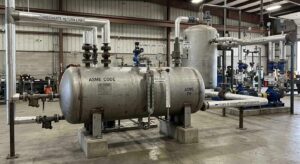
Where Do Condensate Tanks Fit in a Steam System?
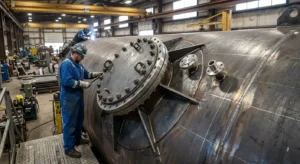
Which Nozzles Simplify Maintenance on Pressure Vessels?
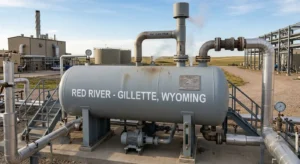
How to Vent Condensate Tanks in Steam Systems
How Do Baffle Layouts Affect Stratification in TES Tanks?
No subpillar set for this blog post.
About Author