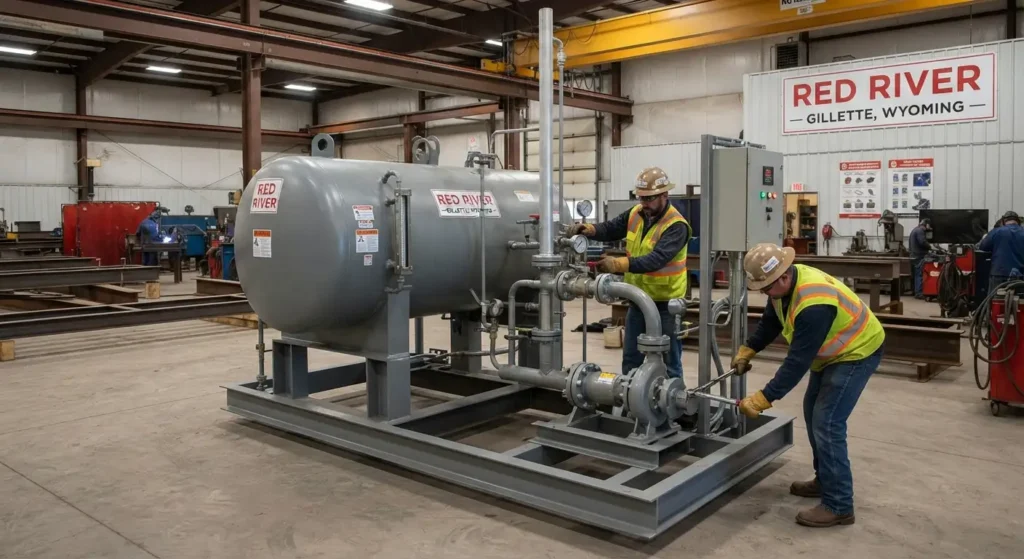
Yes. Condensate storage improves reliability by absorbing condensate return fluctuations, protecting the boiler feed pump from cavitation, and reducing cold makeup water introductions that stress the boiler, making a correctly sized storage vessel one of the most cost-effective reliability improvements in a steam plant.
Key Takeaways
- Condensate storage buffers the boiler feed pump against swings in condensate return rate, preventing the pump from running dry or cavitating during load changes and equipment trips.
- A larger condensate storage volume gives the operations team more time to respond to a system upset before the boiler feed pump loses suction and trips.
- Returning hot condensate rather than cold makeup water reduces thermal shock to the boiler, extends tube life, and lowers the risk of stress corrosion cracking in drum-type boilers.
- Correct sizing of the condensate storage tank requires confirming the maximum condensate return rate, the required response time, and the pump NPSH requirement at the storage temperature.
- When condensate storage is integrated into a modular skid package with the pump, level controls, and instrumentation, the entire feedwater system can be pre-tested and commissioned as a unit.
How Does Condensate Storage Buffer a Steam System Against Upsets?
Steam systems encounter two reliability-threatening conditions regularly: sudden drops in condensate return when a process shuts down or a steam trap fails, and sudden surges in condensate when multiple loads return condensate simultaneously. Condensate tank reliability steam system operators depend on comes from addressing both conditions with adequate storage volume. Both conditions stress the boiler feed pump and can force the boiler to accept cold, oxygenated makeup water if there is no storage volume available.
What Happens Without Adequate Condensate Storage
Without adequate condensate storage, the boiler feed pump draws directly against whatever condensate is available at any moment. When the return rate drops, the pump suction falls, fluid near saturation temperature begins to flash, and cavitation follows. When the return rate surges, the pump suction level rises but the overflow has nowhere to go if the vessel is undersized, and the excess condensate may need to be dumped to drain rather than returned to the boiler.
How Storage Volume Creates a Reliability Buffer
A condensate storage buffer boiler operators rely on absorbs both conditions. It holds a reserve of hot, treated condensate that the pump can draw on during low-return periods, and it accepts the surge during high-return periods without overflowing. The reliability benefit, and the condensate system uptime gain, comes from the time margin the storage provides: time for operations to respond to a trip, time for a steam trap to be replaced, and time for a load to restart without dragging the boiler feedwater system into a transient condition.
How Does Condensate Storage Improve Boiler Feed Pump Reliability?
The boiler feed pump is the piece of equipment most directly affected by the quality and stability of the condensate supply. Condensate storage tank reliability steam system benefits flow directly through the pump to the boiler.
How Stable Suction Reduces Cavitation Risk
Cavitation occurs when liquid at the pump suction flashes to vapor because the pressure drops below the saturation pressure at that temperature. Hot condensate near saturation temperature is inherently prone to this. Adequate condensate storage provides a stable liquid level at the pump suction, maintains positive head, and keeps the available NPSH above the pump’s required NPSH. A pump that cavitates regularly sees impeller erosion, vibration, and reduced efficiency that shortens its service life and increases maintenance frequency.
How Temperature Stability Affects the Pump Interface
When the condensate storage vessel runs low and makeup water is introduced, the temperature at the pump suction drops. That temperature drop can trigger thermal shock in the pump internals if the change is sharp. A larger storage volume damps these temperature swings by diluting the incoming cold makeup water with the larger volume of hot condensate already in the vessel before the mixture reaches the pump suction.
Red River’s Approach to Condensate Storage Vessels
Red River’s pressure vessel fabrication scope includes ASME-coded condensate storage vessels sized for the actual operating conditions of the steam system they serve. Every vessel is designed for its specific pump NPSH requirement, operating pressure, and condensate return rate. See Red River’s process tank and storage vessel scope for related vessel types in condensate and feedwater service.
How Does Adequate Storage Volume Reduce Boiler Stress?
Every time the boiler feed pump draws cold makeup water instead of hot condensate, the boiler experiences a thermal difference between the incoming feedwater and the steam drum contents. Over thousands of cycles, this thermal cycling contributes to fatigue in the steam drum, the downcomers, and the boiler tubes.
The Cost of Repeated Cold Water Introductions
Cold water introductions also bring dissolved oxygen into the boiler, accelerating corrosion in the drum and tubes unless chemical treatment keeps pace. Reducing the frequency and volume of makeup water additions by maintaining more condensate in storage reduces both the thermal cycling load on the boiler and the oxygen introduction risk. Facilities that track boiler tube failures and chemical consumption often find that both improve when condensate storage volume is increased.
Hot Condensate as a Reliability Asset
Hot, chemically treated condensate that has already been deaerated is the best possible feedwater for a boiler. Every gallon of hot condensate returned to the boiler is a gallon of cold, oxygenated makeup water that does not enter it. Condensate storage is the physical asset that makes that hot condensate available to the boiler continuously rather than intermittently.
How Does Condensate Storage Help After a System Trip?
System trips, whether from a steam trap failure, a process shutdown, a power interruption, or a boiler safety event, create the most severe condensate system transients. This is where condensate storage delivers its clearest reliability benefit.
Maintaining Feed During a Trip
When a system trips, condensate returned from process loads drops sharply or stops entirely. Without storage, the boiler feed pump immediately faces a low-suction condition and may trip on low-level protection. With adequate storage, the condensate reserve holds the pump suction level stable while the cause of the trip is identified and corrected. That additional time is the difference between a controlled response and a cascading shutdown that affects other systems.
Reducing Restart Transients
On restart after a trip, cold makeup water that entered the system during the shutdown reaches the boiler all at once. A large condensate storage buffer dilutes that cold water pulse with the reserve of hot condensate, flattening the temperature transient and reducing the thermal load on the boiler. This is especially important on drum-type boilers, where thermal gradients drive stress in the drum shell.
How Is a Condensate Storage Buffer Sized for Reliability?
Sizing a condensate storage buffer for reliability, rather than just for minimum function, requires looking beyond the three-to-five-minute rule that covers basic pump protection.
Response Time as the Primary Sizing Input
The reliability sizing question is: how much time does the operations team need to respond to a condensate return loss before the pump loses suction? That response time, multiplied by the maximum condensate return rate, sets the minimum storage volume for reliability purposes. A facility with continuous monitoring and rapid response may size for five minutes. A facility with infrequent rounds or remote operation may size for fifteen to twenty minutes to provide adequate margin. Red River’s fabrication capabilities include working through these sizing discussions during the engineering review phase before fabrication scope is defined.
NPSH Margin as a Secondary Sizing Input
The depth of the condensate storage vessel at minimum operating level determines the available NPSH at the pump suction. A vessel that provides five feet of liquid head above the pump centerline at its low-level trip point delivers more NPSH margin than one that provides two feet. That margin is a direct measure of how close to cavitation the pump operates during a low-condensate event.
What Role Does Modular Integration Play in Condensate System Reliability?
When condensate storage is integrated into a modular skid package with the boiler feed pump, level controls, makeup water connection, and instrumentation, the entire feedwater system can be factory-tested as a unit before it reaches the site.
Why Factory Testing Improves Field Reliability
Factory testing of the complete skid eliminates the commissioning unknowns that appear when individual components are assembled in the field: incorrect pump rotation, wrong level transmitter calibration, mismatched valve sizing, and improper vent piping. A pre-tested condensate storage skid package arrives at the plant ready for utility connections and process tie-ins, with known-good interfaces between every component in the package. Red River’s modular skid packages and prefabrication services cover complete condensate feedwater systems for power generation, oil and gas, and biogas applications.
Biogas and Remote Industrial Applications
For biogas processing facilities and remote oil and gas sites, the modular approach also reduces the dependence on local commissioning expertise. A skid that has been loop-checked, bump-tested, and functionally verified at the fabrication shop requires only connection-level commissioning in the field, not system-level troubleshooting.
Condensate Storage Vessels Built for System Reliability
Can condensate storage improve reliability? Yes, when the vessel is correctly sized, built to ASME code, and integrated into the feedwater system as a deliberate reliability asset rather than a minimum-compliance item. Red River fabricates ASME-certified condensate storage vessels and complete condensate feedwater skid packages from Gillette, Wyoming, since 2003. The National Board maintains registration records for all ASME-stamped vessels Red River delivers. Red River holds active ASME U Stamp and NBBI R Stamp certifications.
Ready to Size Your Condensate Storage for Reliability?
Request a quote or call 1-307-257-5332 to discuss condensate storage sizing, ASME certification, and fabrication scope with Red River’s team. The reliability analysis starts before the fabrication scope is defined.
Frequently Asked Questions
1. Can Condensate Storage Improve Steam System Reliability?
Yes. Condensate storage improves reliability by buffering pump suction against swings in condensate return rate, providing response time during system trips, reducing cold makeup water introductions that stress the boiler, and enabling factory-tested modular skid packages that simplify commissioning. The reliability benefit scales with storage volume: more storage provides more time margin during upsets.
2. How Much Condensate Storage Volume Is Needed for Reliable Operation?
Minimum reliable operation uses three to five minutes of storage at the maximum condensate return rate. For reliability-focused sizing, the correct volume depends on the operations response time available during a condensate loss event and the available NPSH at the pump suction at minimum vessel level. Facilities with infrequent rounds or remote operations typically size for fifteen to twenty minutes of storage.
3. Does Condensate Storage Reduce Boiler Tube Failures?
Yes, indirectly. Condensate storage reduces the frequency of cold makeup water introductions that cause thermal cycling in the boiler drum and tubes. It also reduces the oxygen load entering the boiler by substituting deaerated, chemically treated hot condensate for cold, oxygenated makeup water. Both mechanisms reduce the fatigue and corrosion conditions that contribute to tube failures over time.
4. How Does Condensate Storage Protect the Boiler Feed Pump?
Condensate storage provides a stable liquid level at the pump suction, maintaining positive NPSH and preventing cavitation. It also damps temperature swings at the suction during makeup water introductions. Pumps fed from adequate condensate storage cavitate less frequently, run at more consistent temperatures, and require less frequent maintenance than pumps drawing against minimal or unstable condensate supply.
5. Can a Condensate Storage Tank Be Part of a Modular Skid Package?
Yes. Condensate storage skid packages integrate the vessel with the boiler feed pump, level controls, makeup water connection, flash steam vent, and instrumentation into a pre-tested assembly. Factory testing of the complete package eliminates commissioning unknowns that appear when components are assembled individually in the field, making the modular approach well-suited to remote sites and compressed construction schedules.
Related Blog Post
Where Do Condensate Tanks Fit in a Steam System?
Which Nozzles Simplify Maintenance on Pressure Vessels?
How to Vent Condensate Tanks in Steam Systems
How Do Baffle Layouts Affect Stratification in TES Tanks?
What Delta T Drives Volume in Thermal Storage Tanks?
About Author