ASME does not define a strict minimum physical size for a pressure vessel. What the code defines is a minimum operating pressure threshold of 15 psig, above which a vessel falls within the scope of ASME Boiler and Pressure Vessel Code Section VIII regardless of its dimensions or volume.
Key Takeaways
- ASME Section VIII applies to vessels operating above 15 psig internal pressure; physical size alone does not determine whether a vessel requires code compliance.
- Vessels with an inside diameter of six inches or less are generally exempt under Section VIII, but local jurisdiction requirements can override that exemption.
- Even small vessels handling hazardous fluids, operating under vacuum, or subject to external pressure loads may require full ASME certification regardless of volume.
- Paragraphs U-1(c) and UG-2 of ASME Section VIII are the definitive reference for exemptions and scope limits; industry rules of thumb are not substitutes.
- Non-compliance with applicable code requirements creates liability exposure, insurance risk, and potential for regulatory enforcement regardless of vessel size.
What ASME Section VIII Actually Governs
ASME Boiler and Pressure Vessel Code Section VIII is divided into three divisions. Division 1 covers general pressure vessels and is the most widely applied standard across industrial applications. Division 2 provides alternative rules for higher-performance designs requiring more rigorous stress analysis. Division 3 applies to vessels designed for pressures above 10,000 psig.
For most general-purpose industrial applications, Division 1 is the governing standard. It applies to vessels that operate at greater than 15 psig internal pressure or that are subject to external pressure conditions including vacuum service. The code does not set a minimum cubic-foot volume or a minimum shell diameter as a universal threshold. It sets a pressure boundary, and from there, exemptions are determined by a combination of pressure, size, service type, fluid properties, and jurisdiction.
The Pressure Threshold
The 15 psig threshold is the primary scope boundary. A vessel operating at or below 15 psig is outside the scope of Section VIII Division 1. A vessel operating above that threshold, regardless of whether it is the size of a coffee mug or a refinery column, falls within scope and must comply unless a specific exemption applies.
External pressure conditions are treated separately. A vessel operating under vacuum experiences compressive stress on its shell rather than tensile stress from internal pressure, and ASME Section VIII addresses external pressure design requirements independently from the internal pressure rules. A vessel under vacuum is not exempt from code requirements simply because its internal gauge pressure is zero or negative.
ASME Section VIII Minimum Size and Pressure Exemption Table
The table below summarizes the primary conditions under which a vessel may fall outside ASME Section VIII scope or qualify for an exemption. These are starting points for scoping, not engineering determinations. Always verify against ASME BPVC Section VIII Paragraphs U-1(c) and UG-2 and confirm with the Authority Having Jurisdiction (AHJ) for the installation location.
| Condition | Threshold | Section VIII Required? | Reference |
|---|---|---|---|
| Internal operating pressure | 15 psig or below | No | U-1(c)(2) |
| Inside diameter | Six inches or less | Generally exempt | U-1(c); verify jurisdiction |
| Fluid service | Non-hazardous, air or water, low pressure | May be exempt | U-1(c); depends on pressure and volume |
| External or vacuum pressure | Any size | Code applies | Section VIII external pressure rules |
| Hazardous fluid service | Any size | Code applies | No size exemption for hazardous media |
| Jurisdiction requirement | Any size | Code applies | State and local AHJ requirements override federal exemptions |
The six-inch diameter guideline referenced in industry is commonly cited but is not a blanket exemption. Jurisdiction, fluid type, and pressure all factor into whether a small vessel must be certified. A three-inch diameter sample cylinder operating at 3,000 psig in an oil and gas lab requires ASME compliance. A five-gallon air receiver for a commercial compressor system above 15 psig typically requires it as well.
For more on how safety factors are applied in ASME vessel design regardless of size, see the typical safety factor for pressure vessels. For a broader look at what code compliance means in practice, see ASME code-stamped pressure vessels.
Factors That Determine Whether Your Vessel Needs Certification
- Operating pressure and temperature: Any vessel above 15 psig falls within scope. Elevated or cryogenic temperatures introduce additional material and design requirements under ASME Section II Part D, which provides allowable stress values at specific temperatures.
- Material and wall thickness: Thin-walled small vessels require the same scrutiny as large ones. Material strength, corrosion allowance, and weld joint efficiency all affect whether the calculated wall thickness meets ASME requirements for the specified design pressure.
- Fluid service type: Vessels handling hazardous chemicals, corrosive media, or compressed gases at elevated pressures carry no size exemption. Vessels handling air or water at lower pressures in specific configurations may qualify for exemptions, but these must be verified against the applicable code paragraphs rather than assumed.
- External loads: Vessels subject to wind loading, seismic forces, vacuum conditions, or mounting loads that create significant external stress may require ASME compliance regardless of their internal operating pressure.
- Jurisdiction requirements: Some states and municipalities require all pressure vessels to be ASME certified regardless of size or operating pressure. The AHJ for the installation location determines the applicable regulatory requirement and overrides any federal exemption that would otherwise apply.
What Red River Applies
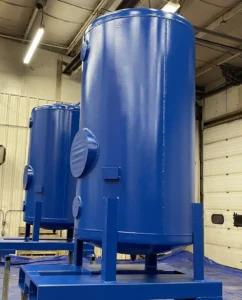
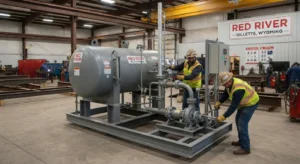
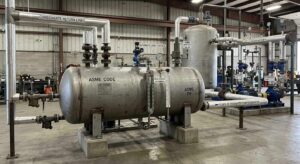
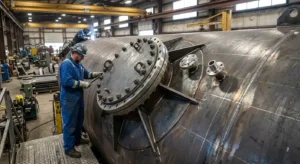
Red River fabricates ASME U-Stamp certified pressure vessels across a full range of sizes and service conditions for oil and gas, power generation, and biogas applications. Every vessel, regardless of diameter or volume, goes through the same documentation process: material test reports, weld inspection records, and ASME Authorized Inspector approval before the vessel ships.
For clients uncertain whether their application requires certification, Red River’s engineering team reviews the operating conditions, fluid service, and installation jurisdiction before fabrication begins. The right answer on code applicability is determined by the design requirements, not by the physical size of the vessel.
What This Means
The most common mistake when evaluating small pressure vessels is assuming that size determines compliance. It does not. A vessel six inches in diameter operating at 3,000 psig in a hazardous gas application requires the same code compliance as a vessel six feet in diameter in the same service. The code follows the pressure and the risk, not the dimensions.
Engineers and procurement managers specifying small-scale pressure equipment should confirm operating pressure, fluid type, external load conditions, and AHJ requirements before assuming a vessel falls outside ASME scope. Getting that determination wrong after fabrication means either recertification or replacement, both of which cost significantly more than getting it right at the design stage.
Ready to Confirm Whether Your Vessel Requires ASME Certification?
Red River designs and fabricates ASME U-Stamp certified pressure vessels and modular skid packages for oil and gas, power generation, and biogas applications. Whether the project involves a small-diameter coded vessel or a large custom build, design pressure, service conditions, and jurisdiction requirements are reviewed before fabrication begins. Request a quote or contact the team to discuss your vessel specifications.
Frequently Asked Questions
1. Does ASME define a minimum size for pressure vessels?
No. ASME Section VIII does not define a minimum physical size. It defines a minimum operating pressure threshold of 15 psig, above which a vessel falls within scope regardless of its dimensions or volume.
2. What is the minimum pressure that triggers ASME Section VIII compliance?
Vessels operating above 15 psig internal pressure fall within the scope of ASME Section VIII Division 1. Vessels at or below 15 psig are generally outside scope, but vacuum and external pressure conditions are addressed separately and may still require compliance.
3. Are vessels under six inches in diameter exempt from ASME requirements?
Generally, vessels with an inside diameter of six inches or less may qualify for an exemption under Section VIII U-1(c), but this is not a universal rule. Fluid service type, operating pressure, and jurisdiction requirements all affect whether the exemption applies. Always verify against the applicable code paragraph and the AHJ for the installation site.
4. Can a small vessel handling hazardous materials skip ASME certification?
No. There is no size exemption for vessels handling hazardous fluids under pressure. A small-diameter vessel in hazardous gas service at pressures above 15 psig requires full ASME compliance regardless of its volume.
5. What sections of ASME should I reference to confirm whether my vessel is exempt?
Paragraphs U-1(c) and UG-2 of ASME Boiler and Pressure Vessel Code Section VIII Division 1 are the definitive references for scope and exemptions. These should be reviewed against the actual operating conditions and the requirements of the AHJ for the installation location.
6. What happens if a vessel that requires ASME certification is fabricated without it?
Operating a non-certified vessel in an application that requires ASME compliance creates significant liability exposure, may void equipment insurance, and can result in regulatory enforcement action. In many jurisdictions, non-certified vessels in code-required applications must be removed from service or recertified before continued operation is permitted.