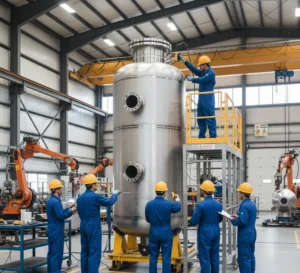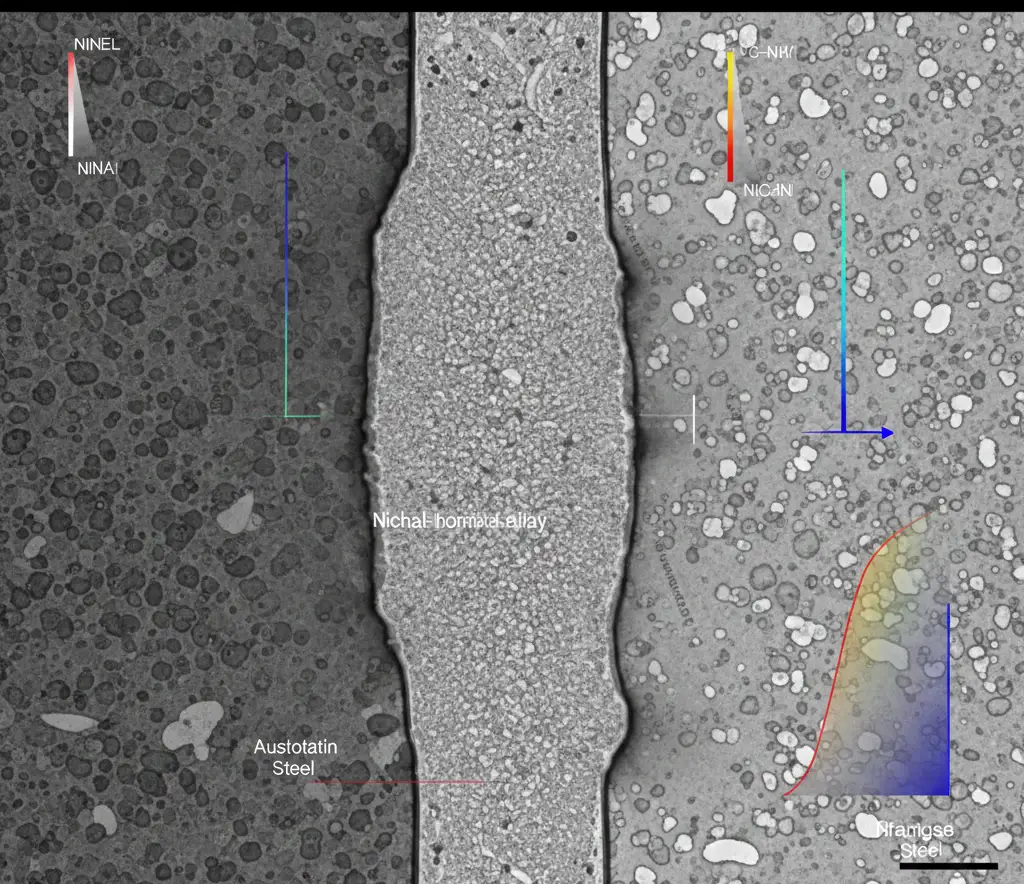
Dissimilar metal welding in pressure vessels combines different metals to optimize performance and corrosion resistance but introduces challenges like thermal expansion mismatch, carbon migration, galvanic corrosion, and brittle phase formation. Success relies on proper filler selection, specialized welding techniques, thorough testing, and ongoing monitoring to ensure long-term safety and reliability.
Understanding Dissimilar Metal Welding Pressure Vessels Applications
Modern industrial pressure vessels often require combining different metals to optimize performance, cost, and corrosion resistance. While using dissimilar metals provides significant advantages, the welding process introduces complex challenges that demand specialized knowledge and careful execution. Understanding these challenges is essential for ensuring the safety, reliability, and longevity of pressure vessels in demanding industrial applications. For a deeper understanding of vessel types, see our types of industrial pressure vessels guide.
Why Pressure Vessels Often Require Dissimilar Metal Joints
The need for dissimilar metal welding in pressure vessel manufacturing stems from practical economic and engineering considerations. Many vessels require corrosion-resistant materials only in specific areas exposed to aggressive media, while using less expensive materials for the remainder of the structure. For example, a carbon steel vessel might need stainless steel nozzles or cladding in areas with corrosive process fluids. Understanding pressure vessels definitions and thresholds also helps in material selection.
Common Dissimilar Metal Combinations in Industry
Several dissimilar metal combinations are commonly encountered in pressure vessel fabrication:
- Carbon steel to austenitic stainless steel (304L, 316L)
- Low-alloy steel to stainless steel
- Carbon steel to nickel alloys (Inconel, Monel)
- Stainless steel to nickel alloys
- Copper alloys to ferrous materials
- Aluminum to steel (through transition joints)
For insights on choosing the right materials, explore our ideal material for pressure vessel fabrication article.
Critical Performance Requirements in Pressure Containment
The pressure-containing function imposes strict quality requirements on dissimilar metal welds. Welds must maintain their mechanical properties under varying pressures and temperatures while resisting corrosion and environmentally-assisted cracking. Joint integrity must persist throughout the vessel’s design life, often extending to decades. Learn more about quality assurance in custom pressure tank manufacturing.
Key Metallurgical Challenges in Dissimilar Metal Welds
Differences in Thermal Expansion Coefficients
One of the most significant challenges involves mismatched thermal expansion rates. When different metals expand and contract at different rates during heating and cooling cycles, residual stresses develop at the joint interface, potentially causing premature fatigue failure in cyclic service.
Carbon Migration and Diffusion Issues
Welding carbon or low-alloy steels to stainless steels introduces carbon migration concerns. Carbon atoms can diffuse from carbon-rich steel into stainless steel, creating a soft zone in the carbon steel and chromium depletion in stainless steel, reducing corrosion resistance. Read our guide on failure criteria for pressure vessels for further insight.
Galvanic Corrosion Concerns
Dissimilar metals exposed to electrolytes can form galvanic cells, accelerating corrosion of the anodic material. Strategies for minimizing galvanic corrosion are critical for pressure vessels in industrial applications.
Formation of Brittle Intermetallic Compounds
Certain combinations, like steel-aluminum, form brittle Fe-Al intermetallics, making direct welding impractical. Explore our guide to metal fabrication for more on handling difficult material combinations.
Practical Solutions and Best Practices
Proper Filler Metal Selection Strategies
Filler metal selection is perhaps the most critical decision in dissimilar metal welding pressure vessels. The ideal filler often doesn’t match either base metal but instead provides a chemical composition that accommodates both while avoiding problematic metallurgical reactions.
For carbon steel to stainless steel joints, nickel-based fillers (such as ERNiCr-3 or ENiCrFe-3) are frequently used because they:
- Limit carbon migration
- Accommodate differences in thermal expansion
- Provide good corrosion resistance
- Maintain adequate mechanical properties
For more guidance, review our three types of metal fabrication resource.
Optimizing Welding Procedures and Parameters
Specialized welding procedures ensure success. Key techniques include:
- Controlling heat input to minimize dilution and material mixing
- Using butter layers to create transitional compositions
- Implementing precise preheat and interpass temperature controls
- Employing specific torch manipulation techniques to manage dilution
- Carefully sequencing multiple-pass welds to gradually transition between materials
Our welding positions guide provides step-by-step explanations for proper joint execution.
Post-Weld Heat Treatment Considerations
PWHT requires careful balancing for dissimilar metals. Solutions involve localized heat treatment, controlled heating/cooling rates, or alternative stress relief methods. Check safety and compliance in pressure vessel design for best practices.
Solutions often involve:
- Localized PWHT techniques
- Carefully controlled heating and cooling rates
- Alternative stress relief methods
- Detailed analysis to determine optimal compromise conditions
Each dissimilar metal welding pressure vessels application requires specific PWHT evaluation to balance the needs of both materials while maintaining joint integrity.
Buttering and Transition Joint Techniques
Depositing intermediate layers before the final weld creates a metallurgical transition zone that reduces abrupt property changes. For details, see metal fabrication examples.
Quality Assurance and Testing Methods
Non-Destructive Examination Approaches
Dissimilar metal welding pressure vessels require particularly thorough inspection protocols. Standard methods include:
- Radiographic testing to detect internal discontinuities
- Ultrasonic testing, often with specialized techniques for dissimilar metal interfaces
- Liquid penetrant or magnetic particle testing for surface defects
- Advanced methods like phased array ultrasonics for difficult geometries
Mechanical Testing Requirements
Mechanical testing for dissimilar metal welds often exceeds standard requirements. In addition to basic tensile and bend tests, fabricators might perform:
- Nick-break tests to examine the fracture surface
- Microhardness traverses across the joint
- Impact testing at service temperatures
- Corrosion testing of the completed joint
Explore our ASME certified pressure vessels article for compliance standards.
Service Life Prediction and Monitoring
Long-term performance of dissimilar metal welding pressure vessels often requires ongoing monitoring. Advanced operators implement:
- Corrosion monitoring systems
- Periodic thickness measurements
- Scheduled inspection intervals
- Temperature and strain monitoring at critical locations
Learn more about pressure vessel pressurization.
Mastering Dissimilar Metal Welding in Pressure Vessels
Dissimilar metal welding offers performance and cost benefits but requires careful attention to thermal expansion differences, carbon migration, galvanic corrosion, and brittle phase formation. Success depends on proper filler selection, specialized welding techniques, thorough inspection, and ongoing monitoring to ensure long-term safety, reliability, and operational efficiency.
Need a reliable partner?
Red River specializes in the design and manufacturing of pressure vessels. We also fabricate related items such as prefabricated spools and skid packages.
Reach out to us today and experience the Red River difference. Where American-made products and American Values come together, we care more.
Frequently Asked Questions
1. Which dissimilar metal combinations are most challenging to weld in pressure vessels?
Steel to aluminum combinations present the greatest challenges due to formation of brittle intermetallic compounds and vastly different thermal properties. These combinations typically require specialized transition joints or mechanical joining methods rather than direct welding. Steel to copper alloys also present significant challenges, particularly in thicker sections.
2. How do you prevent galvanic corrosion in dissimilar metal pressure vessel welds?
Prevention strategies include selecting filler metals that minimize the electrical potential difference between materials, applying protective coatings over the completed joint, using transition materials with intermediate electrical potentials, ensuring thorough post-weld cleaning to remove conductive residues, and where possible, keeping the joint area dry or isolated from electrolytes.
3. What inspection methods are most effective for dissimilar metal welds?
Radiographic testing combined with ultrasonic testing generally provides the most comprehensive assessment of dissimilar metal welds. The different densities in radiography help identify the precise weld interface and any discontinuities, while ultrasonic testing can detect lack of fusion or laminar defects that might be difficult to see radiographically.
4. Are there special code requirements for dissimilar metal joints in ASME vessels?
Yes, ASME Section IX includes specific provisions for dissimilar metal welds, including separate qualification requirements and essential variables. The code recognizes the unique challenges these joints present and requires procedure qualification that specifically addresses the actual materials being joined.
5. How does post-weld heat treatment affect dissimilar metal welds?
Post-weld heat treatment requires careful consideration with dissimilar metals, as treatments beneficial to one material may harm the other. For example, stress relief beneficial to carbon steel may cause sensitization in stainless steel. Solutions often include local PWHT, carefully controlled temperatures, and sometimes heat sinks to protect sensitive components.
6. What filler metal selection principles apply to dissimilar metal welding?
The primary principle is selecting a filler metal compatible with both base metals that will produce a joint with acceptable mechanical and corrosion properties. Often, this means choosing a more noble alloy than either base metal, such as nickel-based fillers for joining carbon steel to stainless steel. The filler should also accommodate thermal expansion differences and resist formation of brittle phases.
7. How do you address differences in thermal expansion between dissimilar metals?
Strategies include using filler metals with intermediate expansion coefficients, joint designs that allow for some movement, buttering techniques that create gradual transition zones, controlling heat input to minimize the heat-affected zone size, and in some cases, incorporating flexible elements in the design to accommodate movement.
Key Takeaways
- Dissimilar metal welding in pressure vessels requires specialized knowledge of metallurgical compatibility and behavior
- Thermal expansion differences, carbon migration, galvanic corrosion, and brittle phase formation represent key challenges
- Proper filler metal selection is critical to successful dissimilar metal joints
- Specialized techniques like buttering and transition joints can overcome difficult material combinations
- Comprehensive testing and inspection protocols are essential for quality assurance
- Long-term monitoring helps ensure continued safe operation throughout the vessel’s service life
Related Blog Post
Pressure Vessel Design & Engineering: Concept to Launch
What is Pressure Vessel Design and Engineering: Code-Ready Guide
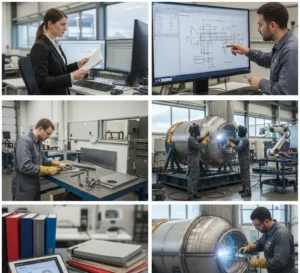
What are the Key Factors in Pressure Vessel Engineering
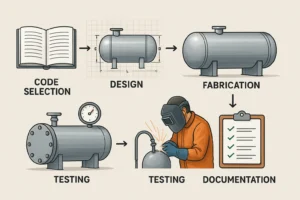
How Do You Design a Pressure Vessel: A Step-By-Step Guide