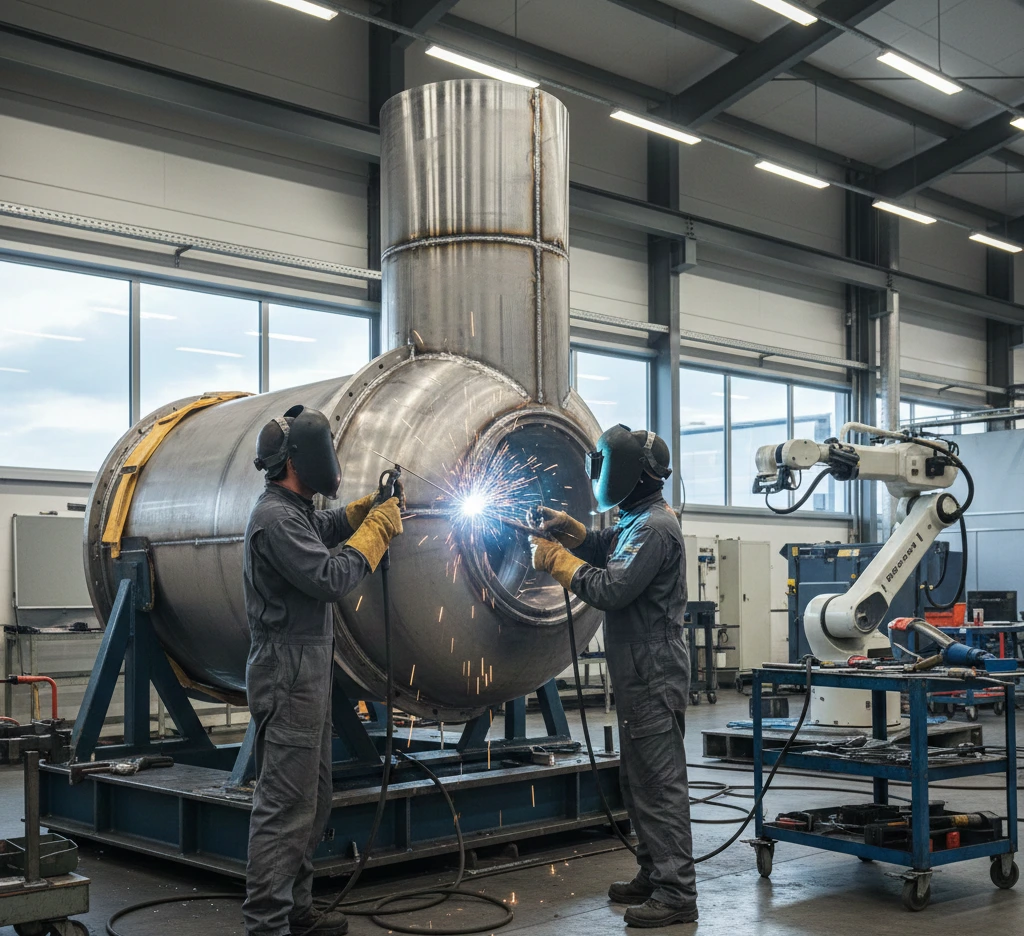
Understanding how pressure vessel fabrication is done reveals a complex process of precise design, expert welding, careful assembly, and rigorous testing to ensure safety and performance. RedRiver LLC leverages decades of engineering expertise to deliver reliable, compliant, and high-quality pressure vessels for industries handling high-pressure fluids and gases.
Exploring How is Pressure Vessel Fabrication Done in Detail
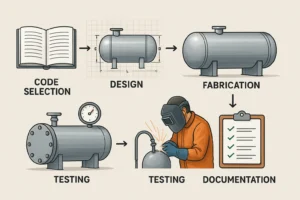
How is pressure vessel fabrication done is a question that highlights the complexity of building equipment capable of withstanding intense pressure. Pressure vessel fabrication and manufacturing combine science, engineering, and craftsmanship to produce safe and efficient containers for various industrial applications.
This process demands not only technical knowledge but also adherence to strict international standards like the ASME Boiler and Pressure Vessel Code (BPVC). Pressure vessel design and engineering requires that each stage from design to testing be performed with precision to prevent failure and ensure durability, and pressure vessel design and engineering plays a crucial role in ensuring every vessel meets safety and performance requirements.
Understanding What is Pressure Vessel Fabrication and Manufacturing
Before delving deeper into how is pressure vessel fabrication done, it’s important to understand what pressure vessel fabrication and manufacturing is. It refers to the process of designing, building, and inspecting vessels that hold gases or liquids at different pressure levels.
Pressure vessels are critical in many industries, including:
- Power generation
- Oil and gas
- Chemical processing
- Food and beverage production
- Pharmaceutical manufacturing
Each industry relies on these vessels for tasks like heating, cooling, storing, and transporting pressurized materials safely. Companies like RedRiver LLC ensure that every vessel meets its intended use by applying cutting-edge design, precision fabrication, and advanced inspection techniques.
The Process: How is Pressure Vessel Fabrication Done
Each industry relies on these vessels for tasks like heating, cooling, storing, and transporting pressurized materials safely. Companies like RedRiver LLC ensure that every vessel meets its intended use by applying cutting-edge design, precision fabrication, and advanced inspection techniques.
Design and Engineering
Every pressure vessel begins with a detailed design phase. Engineers determine the vessel’s shape, thickness, and structure based on the pressure it will contain. Using software like CAD and FEA (Finite Element Analysis), they simulate stress distribution and identify potential weak points before fabrication begins.
Material Selection
Choosing the right material is crucial for performance and longevity. When discussing what materials are used in pressure vessel manufacturing, several options stand out:
- Carbon Steel: Durable, cost-effective, and ideal for general industrial applications.
- Stainless Steel: Offers corrosion resistance and hygiene for food, pharmaceutical, and chemical applications.
- Nickel Alloys: Resist oxidation and extreme temperatures in petrochemical operations.
- Duplex Alloys: Provide strength and resistance to cracking.
- Titanium: Lightweight and ideal for environments involving aggressive chemicals.
At RedRiver LLC, material choice depends on the vessel’s purpose, ensuring each product is engineered for optimal safety and efficiency.
Cutting and Forming
Sheets of metal are cut and shaped into the desired form using plasma cutters, rolling machines, and hydraulic presses. Cylindrical and spherical shapes are common because they evenly distribute pressure across the vessel walls.
Welding and Assembly
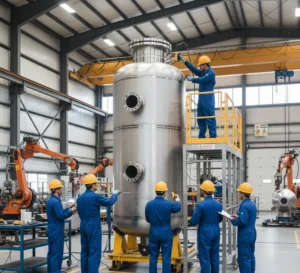
Once the shell components are formed, they are welded together using specialized techniques like MIG, TIG, or submerged arc welding. Every weld must be flawless, as even the smallest defect could compromise safety. RedRiver LLC employs certified welders who follow ASME standards and utilize automated systems for precision and consistency. Learn more about welding positions and 5G welding techniques.
Heat Treatment and Stress Relief
After welding, the vessel undergoes heat treatment to relieve stress and strengthen the metal, a critical step in producing ASME-certified pressure vessels. This step improves ductility and prevents cracking under pressure cycles or temperature fluctuations, ensuring the reliability expected from ASME-certified pressure vessels.
Surface Preparation and Coating
Surface finishing ensures protection against corrosion and contamination. Techniques like sandblasting, passivation, or epoxy coating extend the vessel’s life and maintain cleanliness particularly important for chemical and food applications.
Inspection and Testing
Every completed vessel goes through rigorous testing before approval. Non-destructive testing methods such as ultrasonic, magnetic particle, and radiographic inspections detect flaws without damaging the vessel. Hydrostatic testing confirms its strength and leak-tightness.
Through each of these stages, RedRiver LLC guarantees safety, reliability, and compliance for every pressure vessel fabricated.
The Role of Technology in Pressure Vessel Fabrication and Manufacturing
Modern pressure vessel fabrication and manufacturing integrates advanced technology to enhance accuracy, safety, and productivity. Automation and digital systems have transformed how engineers approach each stage.
Innovations shaping the future include:
- CNC Machining and Robotic Welding: Increase precision and reduce human error (Learn more about metal fabrication).
- Digital Inspection Systems: Allow for real-time monitoring and quality verification.
- Finite Element Analysis (FEA): Identifies potential stress points during the design phase (Failure theories in pressure vessels).
- Sustainable Fabrication: Incorporates eco-friendly materials and waste reduction strategies.
By leveraging these technologies, RedRiver LLC continues to improve manufacturing efficiency and deliver superior pressure vessels built for high-performance environments.
Challenges in Pressure Vessel Fabrication
Even with modern advancements, fabricating pressure vessels presents unique challenges, especially when handling stainless steel and carbon steel vessels. Each challenge demands attention to detail and experienced engineering oversight to ensure that stainless steel and carbon steel vessels meet strict performance, safety, and durability requirements.
- Ensuring consistent weld quality and structural integrity (Learn more about welders).
- Managing variations in material properties (Choosing the right materials).
- Complying with changing safety codes and standards (ASME certification).
- Preventing corrosion and metal fatigue in harsh conditions (Surface finishing).
- Maintaining quality control under tight production timelines (Prefabrication capabilities).
Through disciplined project management and advanced inspection systems, RedRiver LLC effectively addresses these challenges to produce vessels of exceptional quality and longevity.
How is Pressure Vessel Fabrication Done
Understanding how is pressure vessel fabrication done reveals the precision, expertise, and safety measures behind every vessel produced. It’s a process that combines advanced design, skilled craftsmanship, and rigorous testing to ensure that each product performs reliably under high pressure.
With deep industry experience and a commitment to innovation, RedRiver LLC remains a trusted partner in the world of pressure vessel fabrication and manufacturing, delivering products that meet global standards for quality, efficiency, and safety.
Partner with RedRiver LLC
When you need expertly designed and fabricated pressure vessels, RedRiver LLC provides end-to-end solutions backed by engineering precision and certified compliance. The company’s focus on innovation, safety, and customer satisfaction ensures every project is executed to the highest standards.
Visit RedRiver LLC to discover how their expertise in pressure vessel fabrication and manufacturing can elevate your next project.
Frequently Asked Questions
1. How is pressure vessel fabrication done?
It involves design, material selection, forming, welding, finishing, and rigorous testing to ensure safety and performance.
2. What is pressure vessel fabrication and manufacturing?
It is the process of designing and building containers that safely hold liquids or gases under pressure, meeting strict international safety standards.
3. What materials are used in pressure vessel manufacturing?
Common materials include carbon steel, stainless steel, nickel alloys, duplex alloys, and titanium, depending on the vessel’s application.
4. Why are standards like ASME important?
ASME codes ensure vessels meet legal and safety requirements, protecting both personnel and equipment.
5. What industries rely on pressure vessel fabrication?
Sectors such as energy, food processing, pharmaceuticals, and petrochemical industries depend heavily on pressure vessels for daily operations.
6. How does RedRiver LLC ensure quality?
RedRiver LLC employs certified engineers and welders, follows ASME guidelines, and conducts thorough non-destructive testing for all projects.
7. Can pressure vessels be customized?
Yes, pressure vessels are often custom-engineered to meet specific client requirements, including size, material, and operating conditions.
8. What happens during pressure testing?
The vessel is filled with water or gas at high pressure to check for leaks, structural integrity, and safety compliance.
Key Takeaways
- How is pressure vessel fabrication done involves detailed engineering, welding, and inspection to create safe and durable containers.
- The process is guided by international standards such as ASME BPVC for quality and compliance.
- Material selection plays a crucial role in performance and longevity.
- Modern technology enhances accuracy, safety, and sustainability in fabrication.
- RedRiver LLC leads the industry with expertise, innovation, and a commitment to excellence in every project.
Related Blog Post
Pressure Vessel Design & Engineering: Concept to Launch
What is Pressure Vessel Design and Engineering: Code-Ready Guide
What are the Key Factors in Pressure Vessel Engineering
How Do You Design a Pressure Vessel: A Step-By-Step Guide
What is Pressure Vessel Fabrication and Manufacturing
About Author