
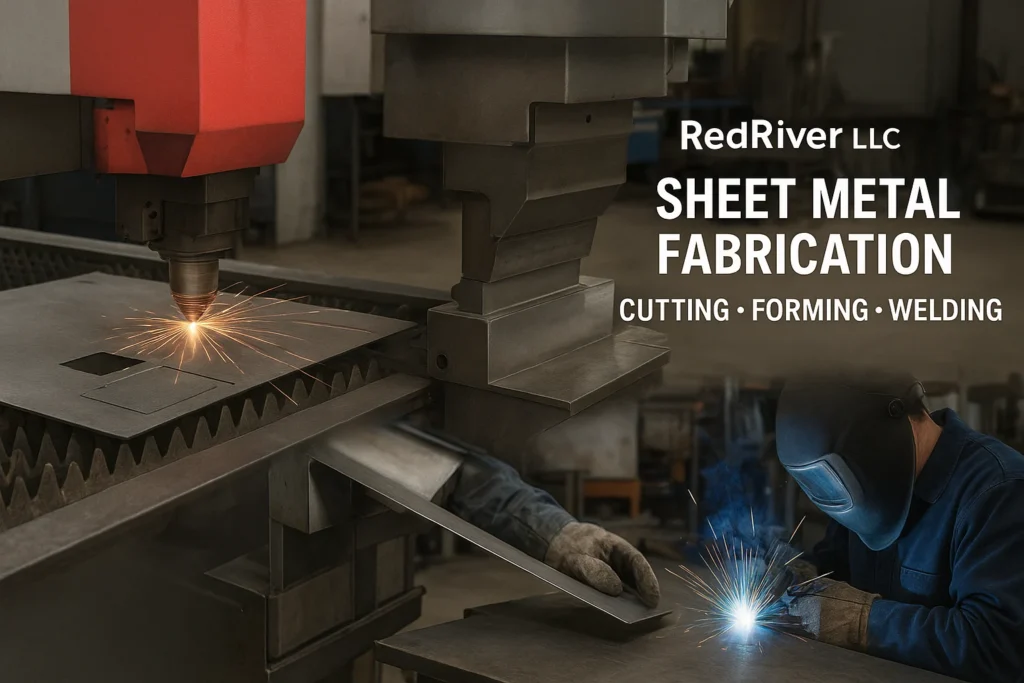
The sheet metal fabrication process turns flat metal sheets into strong, customized products through precision cutting, forming, and assembly. Red River LLC ensures every phase meets the highest industry standards for quality, safety, and efficiency.
Understanding What Is the Sheet Metal Fabrication Process
Ever wondered how a flat sheet becomes functional parts? So, what is the sheet metal fabrication process? It involves cutting, forming, and assembling metal, often using precise welding and joining methods. Skilled technicians rely on advanced welding and joining methods to create durable, accurate components for everyday and industrial use.
In this article, you’ll explore the basics of the sheet metal fabrication process, discover each stage from design to final finishing, and learn how industry leaders like Red River LLC follow strict quality standards to ensure top-notch results.
Understand What Is the Sheet Metal Fabrication Process
The phrase “what is the sheet metal fabrication process” refers to a series of steps that reshape metal sheets into parts or products ready for real-world applications. You’ll see this happen in industries like construction, engineering, automotive, aerospace, and even consumer electronics.
Here’s a quick rundown of why it matters:
- Sheet metal is often cost-effective and easy to transport.
- Fabrication allows for precise customization, whether you need a single prototype or a full-scale production run.
- Different metals (like aluminum, stainless steel, or carbon steel) can be chosen to match the exact performance you need.
- End products include everything from specialized machine parts to everyday furniture frames.
Companies such as Red River LLC not only use advanced software and equipment to shape metal but also focus on prefabrication, preparing certain parts off-site in a controlled environment to reduce on-site labor hours and improve safety. (Red River LLC).
If you’d like to dive deeper, you can explore the sheet metal fabrication process in more detail. But let’s break down the major phases step by step.
Discover Design and Planning
Before any cutting or bending happens, the crucial first phase is planning. This is where you define your project’s objectives and make sure you have the correct specs for the part or product.
- Assess the end-use of the metal part (pressure vessels vs. structural components).
- Choose the right metal type (stainless steel, aluminum, or carbon steel) based on factors like strength, weight, and corrosion resistance.
- Use specialized software to produce accurate 3D models and blueprints (capabilities).
- Validate your design with the fabricator or potential manufacturer to confirm feasibility.
Red River ensures quality by assessing each product’s use and standards; explore custom sheet metal fabrication.
Cut the Metal Effectively
Once you have your design in hand, the next step is cutting, which removes excess material and carves out the shape you’ve envisioned. Several cutting methods exist:
- Laser Cutting: Precise, ideal for intricate designs.
- Waterjet Cutting: Handles thicker sheets or heat-sensitive metals.
- Plasma Cutting: Quick for heavier metals.
- Mechanical Shearing: Traditional, ideal for simple shapes.
Each method offers unique benefits, so your choice depends on metal thickness, shape complexity, and budget. Companies like Red River LLC use precise metal forming techniques and skilled operators to ensure accuracy. Advanced metal forming techniques complement clean cuts, setting a solid foundation for producing durable, high-quality final products.
Form Shapes with Precision
Cut pieces are usually still flat. Forming is where they get their curves, angles, and other dimensions. Here are a few popular forming techniques:
- Bending: Using press brakes to fold or bend sections at precise angles.
- Rolling: Passing metal through rollers to create cylindrical or conical shapes.
- Stamping: Employing dies and presses to punch, coin, or emboss metal sheets, often for large-scale runs.
- Drawing: Pulling metal into a cavity to achieve a desired shape, vital for more intricate geometries.
Red River LLC relies on skilled operators and rigorous processes to ensure accuracy during this stage.
Assemble with Accuracy
After forming, you’ll likely have countless parts that need joining. This assembly stage, often referred to as “joining,” is where smaller metal pieces come together to create a final product or sub-assembly. Common joining methods include:
- Welding: Fusion-based process for strong joints. Different welding approaches (MIG, TIG, stick) suit various metal types.
- Riveting or Bolting: Ideal for metals prone to distortion under high heat.
- Adhesives: Useful for thin sheets or precise bonding, though typically reserved for smaller parts.
Red River, recognized for its experience in assembling complete modular packages, emphasizes both safety and consistency. They operate in a controlled environment to reduce costly errors and keep hazard exposure low on job sites (Red River LLC). You can also get more insight into specialized processes by visiting precision sheet metal fabrication.
Focus on Finishing Touches
Just like polishing a piece of fine furniture, sheet metal often needs extra finishing to protect its surfaces, enhance appearance, or boost performance:
- Painting or Powder Coating: Adds color and corrosion resistance.
- Plating or Anodizing: Electrochemical processes that protect metal from rust, wear, or harsh environmental conditions.
- Deburring: Removing sharp edges or burrs for safer handling and a smoother look.
- Polishing or Buffing: Achieving a reflective finish, often used for decorative items or sanitary equipment.
Finishing ensures durability; stainless steel parts often require passivation to enhance rust resistance and longevity.
Prioritize Quality Control
Quality control (QC) ensures your final product matches all the design criteria and meets regulatory standards. If the product requires certification, as with many pressure vessels or other ASME components, inspection must be conducted by authorized inspectors. Here’s how QC typically unfolds:
- Dimensional Inspection: Checking measurements, angles, and overall geometry for consistency.
- Material Traceability: Ensuring the metal used is compliant and safe for the intended application.
- Welding Inspection: Confirming welds are structurally sound, often via non-destructive testing.
- Pressure or Stress Testing: In projects like oil and gas, your part might be subjected to actual operating conditions.
Red River follows strict QC, reviewing welds under an ASME inspector to ensure safety and compliance.
Mastering What Is the Sheet Metal Fabrication Process
Mastering what is the sheet metal fabrication process means understanding every stage and choosing skilled partners like Red River LLC, ensuring components meet exact specifications, safety codes, and long-term performance goals.
Start Your Project with RedRiver LLC Today
Ready to bring your metal fabrication project to life? Red River LLC offers end-to-end expertise in prefabrication, modular assembly, and industrial fabrication. Contact our team today to discuss precision, efficiency, and results for your next build.
Frequently Asked Questions
1. How Does the Sheet Metal Fabrication Process Work?
This process works by transforming flat metal sheets into finished components using a combination of design, cutting, forming, joining, and finishing techniques. Each step ensures accuracy, durability, and functionality in the final product.
2. What Are the Steps in the Sheet Metal Fabrication Process?
The typical steps include: design and engineering, cutting, forming, joining (welding, riveting, or adhesive bonding), finishing (painting, polishing, or coating), and quality inspections. Each stage ensures that the final product meets specifications and standards.
3. How thick can sheet metal be for fabrication?
Although there’s flexibility, sheet metal typically refers to metal sheets up to about a quarter-inch thick. Thicker materials are often considered plate metal, requiring specialized machinery for forming or cutting.
4. Why is Prefabrication Significant in these Projects?
Prefabrication, done under controlled conditions, helps reduce errors, speed up production, and cut labor costs. It also lowers on-site exposure risks, crucial for meeting safety standards.
5. What Role Does Software Play in Modern Fabrication?
Computer-Aided Design (CAD) tools help engineers create precise models and spot design issues early. Specialists like Red River LLC also use Building Information Modeling (BIM) to coordinate complex projects, improving speed and accuracy.
6. Does Environmental Impact Matter in Sheet Metal Fabrication?
Absolutely. Many companies, including Red River, focus on eco-friendly, lean manufacturing methods that reduce waste, cut emissions, and lower energy usage. These practices benefit both the planet and your project costs.
Key Takeaways
- Thorough design and planning lay the groundwork for a successful fabrication project.
- Cutting techniques, such as laser or waterjet, cater to different material thicknesses and shapes.
- Forming methods like bending and rolling transform flat sheets into complex 3D parts.
- Proper assembly, whether by welding or riveting, ensures structural integrity and longevity.
- Quality checks, including inspection and testing, maintain compliance, safety, and consistent performance.
Related Blog Post
Pressure Vessel Design & Engineering: Concept to Launch
What is Pressure Vessel Design and Engineering: Code-Ready Guide
What are the Key Factors in Pressure Vessel Engineering
How Do You Design a Pressure Vessel: A Step-By-Step Guide
What is Pressure Vessel Fabrication and Manufacturing
About Author



